Grow very hot cayenne peppers for fresh salsa or dried seasoning through winter.
A slender pepper with serious heat
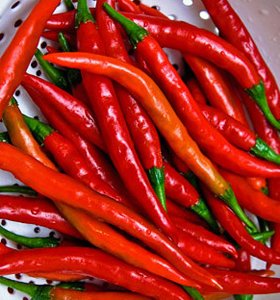
Cayenne Round Thin produces pendant fruit about 5 to 6 inches long and roughly 3/4 inch wide. The peppers are very hot and can be used fresh or dried for winter cooking. String fully colored fruit to dry or spread it in a warm, airy place, then crumble a little into soups, beans, or sauces. The plants mature in about 75 days. A small handful of fruit can season many meals, so pick and dry in batches.
Set plants out after nights warm
Cayenne is a warm-season pepper. Start seed indoors or use transplants, then move plants to the garden after frost danger has passed and nights are consistently warm. Give them full sun and well-drained soil. Set transplants 18 to 24 inches apart and keep moisture even while flowers and young peppers develop. Dry soil can interrupt fruit set. A layer of mulch helps keep the bed from swinging between soaked and parched after summer rain.
Harvest with care
Cut fruit rather than pulling it from the stem. Green peppers can be used in recipes that call for an immature chile; fully colored fruit is ready for drying. Wear rubber gloves when handling hot peppers, and avoid touching your face. If you work without gloves, clean the peppers under running water as you prepare them. Keep fresh fruit separate from mild peppers in the kitchen so the heat does not surprise anyone at the cutting board.
Make a winter supply
Dry the extra peppers while the garden is producing. Once crisp and fully dry, crush them into flakes or keep them whole in an airtight jar. Add a little at a time to chili, beans, eggs, or a pot of soup. Cayenne's narrow shape makes it easy to dry and store. Label the jar clearly and keep it away from children, pets, and curious hands. A few dried pods are enough to sharpen a whole pot.
Cautions
Use rubber gloves, or clean hot peppers under running water to avoid skin burn from the pepper juice.

 Ask Daisy