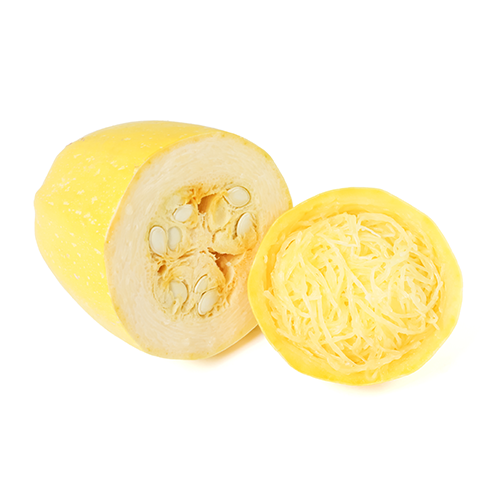
Grow cream-skinned spaghetti squash with buttery yellow strands for a harvest you can serve as a simple side.
A squash with strands inside
Spaghetti squash matures in about 85 days and produces cylindrical fruit with creamy-colored skin. Inside, the flesh separates into spaghetti-like strands with a buttery yellow color. Roast a whole squash until tender, then rake the flesh with a fork for a simple side or a base for tomato sauce. A fork separates the cooked flesh into long strands; scrape gently so the softened shell can still hold a serving. This is a useful garden choice when you want winter squash with a different texture from dense, smooth-fleshed varieties.
Give the vines room to run
Squash vines spread across a bed, so choose the edge of the garden or a spot where they will not smother smaller crops. Plant in warm soil after frost danger has passed. Set the row where you can water at the base and reach the fruit without stepping on vines. Keep moisture consistent while the plants are growing and while fruit develops. Mulch can help conserve water and keep weeds from competing as the leaves fill the space.
Wait for mature fruit
Plan for maturity in about 85 days, then check the rind before harvest. Winter squash should be harvested when the shell is hard and before frost. Cut fruit from the vine with a short stem attached rather than pulling it loose. Handle carefully; bruises and broken stems shorten storage life. Store intact squash in a cool, dry place, and cut only what you plan to prepare. Once opened, refrigerate the remaining flesh and use it soon.
Turn the strands into dinner
After roasting, the yellow strands can stand in for pasta under a meat sauce, pesto, or sauteed vegetables. For an easy supper, fill the roasted shell with the loosened strands and a spoonful of sauce, then warm it briefly. Seeds can be scooped out before roasting or after cooking. Keep the seasoning simple the first time so you can judge the squash's own mild flavor. One fruit can supply a side for several plates.

 Ask Daisy