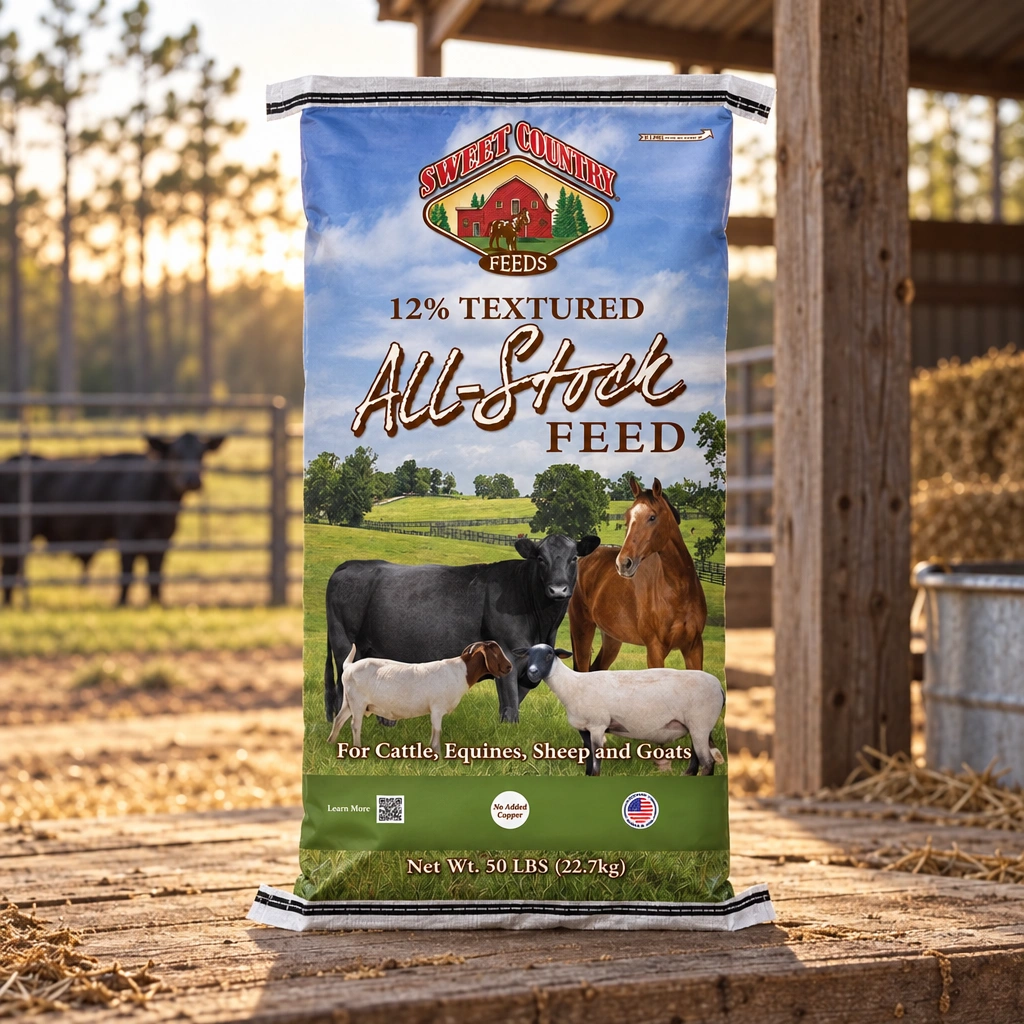
A textured, no-added-copper feed for weaned cattle on pasture, equine maintenance, and all classes of sheep and goats.
One feed option for a mixed livestock group
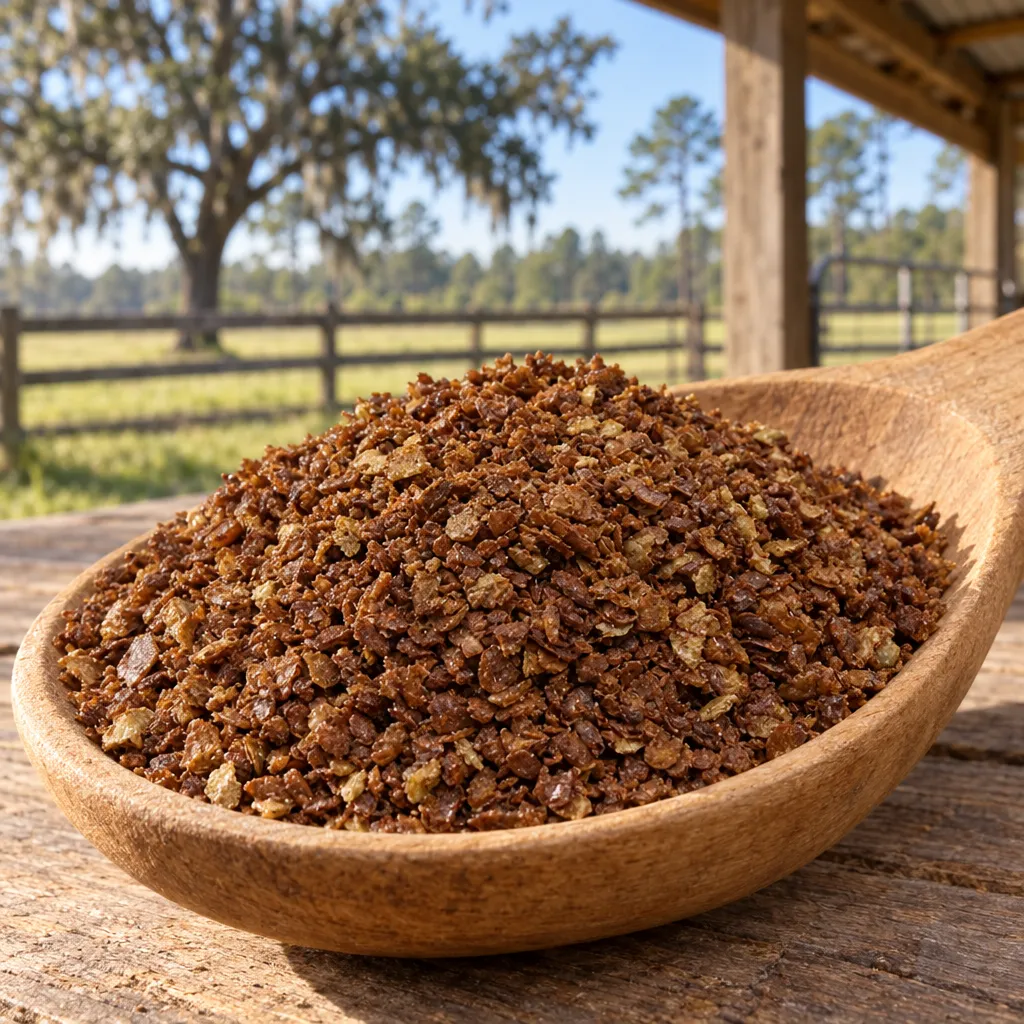
When a property keeps more than one kind of livestock, managing separate feed routines can take time. Sweet Country 12% All Stock Sweet Feed is formulated for weaned cattle on pasture, equine maintenance, and all classes of sheep and goats. Its no-added-copper formulation makes it a practical option for a mixed group that includes sheep. The textured blend includes cracked corn, recleaned oats, processed grain by-products, molasses products, plant protein products, and roughage products. This broad intended use can make feed-room planning simpler when several livestock classes are kept on the same farm.
Keep forage at the center of the ration
This feed belongs alongside hay or pasture, not in place of it. Kalmbach’s program calls for hay or pasture equivalent each day, plus free-choice species-appropriate trace mineralized salt and clean water. That forage foundation matters when deciding how much additional feed an animal needs. The feeding range is based on bodyweight, but the amount can vary with body condition and the quantity and quality of forage available. Consider each animal and its current forage before setting a portion.
A measured portion gives you room to adjust
Use measured feedings rather than leaving the product out for unrestricted access. Divide the daily amount into regular feedings and introduce a change over time. This gives the caretaker a repeatable routine and makes it easier to notice when an animal’s body condition or forage supply calls for an adjustment. Retain forage, water, and appropriate mineral support around it. Overheated or overworked equines need gradual rehydration.
For maintenance and pasture-based feeding
The product’s uses center on weaned cattle kept on pasture, equines at maintenance, and sheep and goats across classes. It suits farms where animals share a feed room but still need attention to their own condition and forage access. A textured feed may suit keepers who prefer a blend with visible grain and other feed components. Start with the manufacturer’s directions, then account for the animal, forage, and the rest of its balanced program. Keeping those needs in view helps prevent a convenient shared feed from becoming a substitute for individual care.
Guaranteed analysis
| Nutrient | Amount |
|---|
| Crude Protein (min) | 12.00% |
| Crude Fat (min) | 4.00% |
| Crude Fiber (max) | 18.00% |
| ADF (max) | 20.00% |
| NDF (max) | 32.00% |
| Calcium (Ca) (min) | 0.70% |
| Calcium (Ca) (max) | 1.20% |
| Phosphorus (P) (min) | 0.40% |
| Salt (NaCl) (min) | 0.50% |
| Salt (NaCl) (max) | 1.00% |
| Potassium (K) (min) | 1.00% |
| Selenium (Se) (min) | 0.3 ppm |
| Zinc (Zn) (min) | 60 ppm |
| Vitamin A (min) | 4,000 IU/lb |
| Vitamin D (min) | 1,000 IU/lb |
Ingredients
Cracked Corn, Whole Recleaned Oats, Processed Grain By-Products, Molasses Products, Plant Protein Products, Roughage Products, Calcium Carbonate, Salt, Dicalcium Phosphate, Monocalcium Phosphate, Vitamin A Supplement, Vitamin E Supplement, Vitamin D Supplement, Ferrous Sulfate, Manganese Sulfate, Ethylenediamine Dihydroiodide, Cobalt Sulfate, Zinc Sulfate, Sodium Molybdate, Biotin, Folic Acid, Choline Chloride, Niacin, Vitamin B-12 Supplement, Riboflavin, d-Calcium Pantothenate, Ethoxyquin (a preservative), Menadione Sodium Bisulfite Complex (Source of Vitamin K Activity), Propionic Acid, Thiamine Mononitrate, Pyridoxine Hydrochloride, and Sodium Selenite.
Feeding directions
Feed at a rate of 1 to 2% of animal bodyweight per day. The amount being fed can vary depending on individual animal body condition and the amount and quality of the forage being fed. Do not feed free-choice or exceed the maximum recommended feeding levels. Make all feeding changes gradually over a period of 1 to 2 weeks. Animals should be fed at least twice daily at regular, even intervals. Sweet Country® 12% All Stock should be part of a balanced and well-managed feeding program that includes the following: Plenty of clean, fresh water at all times (with the exception of overheated or overworked equines that need to be rehydrated gradually); Free-choice, species appropriate trace mineralized salt; A minimum of 1% bodyweight in hay or pasture equivalent daily.

 Ask Daisy