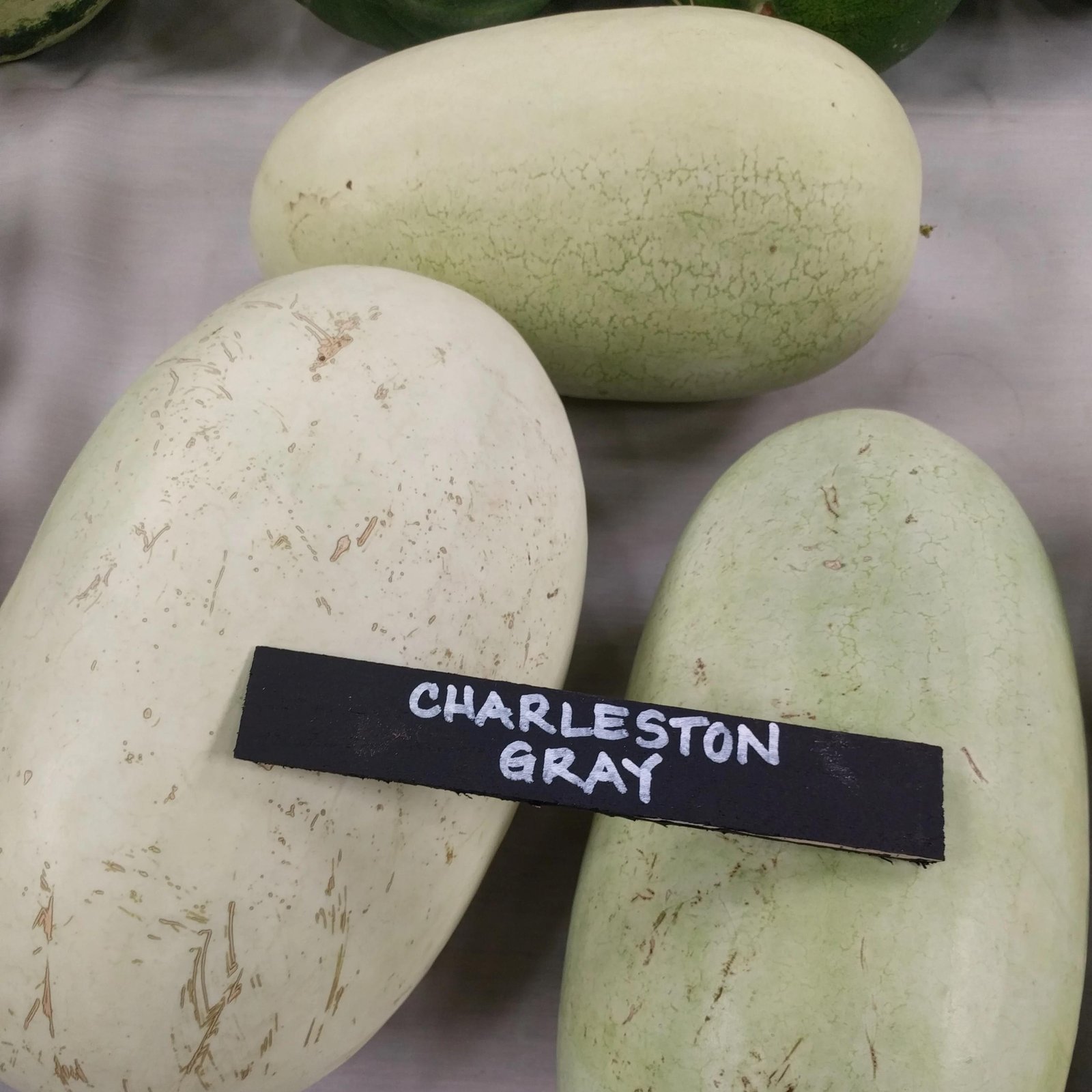
Large, elongated melons with a pale gray-green rind and crisp red flesh.
A long melon for generous slices
Charleston Gray produces large, cylindrical watermelons with a light greenish-gray rind. Inside is crisp, fiberless red flesh. This is a full-size melon, commonly reaching about twenty-eight to thirty-five pounds, so it suits a harvest intended for sharing. The long shape gives you a different cutting format from a small round icebox watermelon. Allow for handling a substantial fruit when deciding how many plants to grow and how you will use the harvest.
Plan for the whole growing season
The approximate maturity is eighty-five days. That figure is a planning guide; weather and growing conditions affect the actual harvest. Watermelons need warmth, and cold soil can delay germination. In North Florida, choose the local warm-season planting window after the danger of frost has passed. Give the vines a sunny area with enough room to spread beyond the original planting spot. A small plant at sowing time will not remain a small patch through fruit development.
Support the fruit before it is ready
Prepare well-drained soil and keep weeds from competing while vines establish. Maintain moisture through dry weather, particularly while the plant is supporting developing fruit. Avoid repeatedly disturbing roots with deep cultivation once vines have begun to spread. Watermelon flowers depend on bee activity for pollination. Protect that activity when managing pests, and follow any pesticide label restrictions around bloom. A healthy vine with flowers still needs successful pollination before it can carry the large melons this variety is grown to produce.
Judge ripeness on the vine
The pale rind is a Charleston Gray trait, so skin color alone is a poor reason to pick. Look for several ripeness signs together, including a yellow ground spot and drying of the tendril nearest the fruit. Check the underside where the melon rests on the soil. Watermelons do not continue to sweeten after harvest. Leaving a fruit to ripen properly on the vine is therefore more useful than cutting an immature melon and hoping storage will improve its flavor.

 Ask Daisy