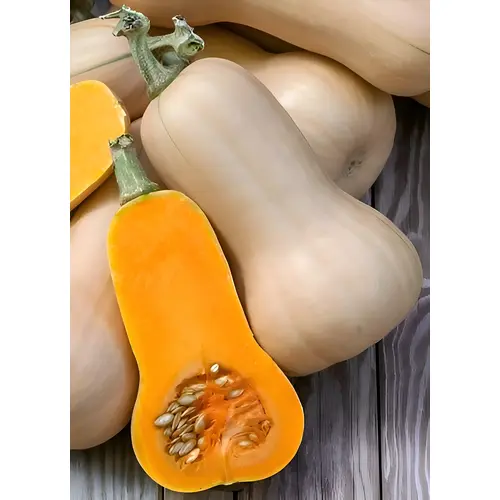
Grow Waltham Butternut for mature winter squash with dry, sweet orange flesh suited to baking and pies.
A winter squash with dry, sweet flesh
Waltham Butternut makes winter squash with sweet, dry orange flesh. The texture suits baking, roasting, and pies. Unlike summer squash, winter squash stays on the vine until mature, then can be stored after harvest under suitable conditions. Expect about 85 days to maturity. This is a sprawling crop, so plan space before planting rather than trying to redirect long vines through a crowded bed.
Set hills in a sunny place
Sow outdoors after frost danger has passed, in a sunny location. Sow five seeds spread over a hill 9 to 12 inches tall and about 2 feet across. Plant seed 1 inch deep. Keep hills 4 feet apart and rows 6 feet apart. When seedlings reach 3 inches tall, cut back to the three strongest plants. A raised hill drains more freely than a flat basin and gives vines room to run.
Let the fruit mature on the vine
Allow squash to reach full maturity before harvest. A hardening rind and developed color are useful signs, while immature fruit will not store as well. Handle squash carefully after cutting; bruises can shorten storage life. Bring mature fruit under cover before frost damages it. The 85-day figure helps with planning, but timing changes with weather and growing conditions. Keep vines free of heavy weed competition while they spread.
Handle mature fruit gently
Roast the halves cut-side down until a fork passes through the flesh, then scoop out the seeds and mash the soft flesh. Use the thawed pulp in pies or soup. The dry texture works in pies, soup, or as a side. For freezing, select firm, mature squash with a hard rind, cook until soft, remove the pulp from the rind, mash, cool, pack with ½ inch headspace, and freeze. Leave whole fruit uncut until use; refrigerate leftovers after cutting. Field-cure uninjured fruit in dry weather for 7 to 10 days, until small cuts scab over; bring it inside if hard frost threatens.

 Ask Daisy