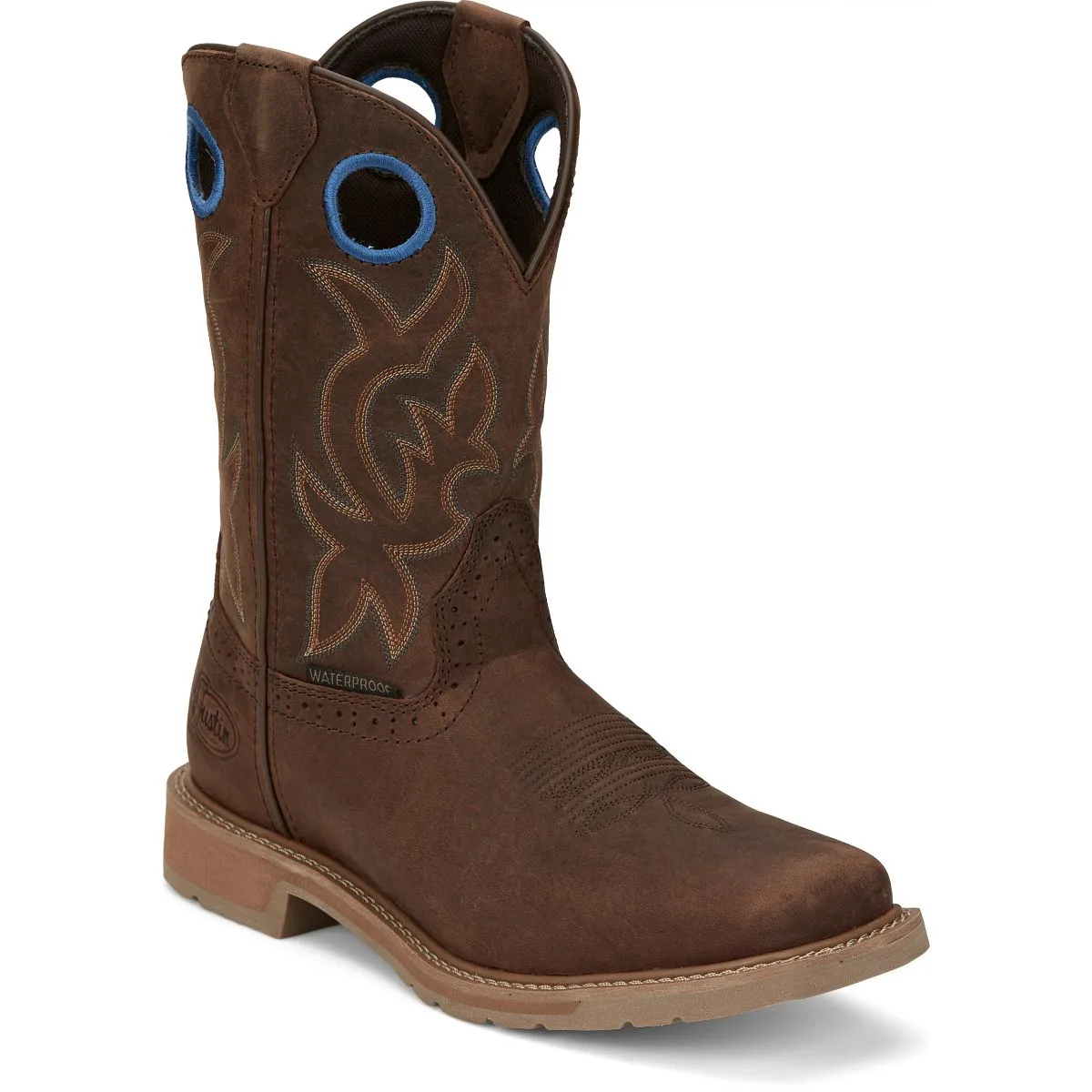
This is the boot for the days when the ground is wet and the work still has to get done. The full-grain leather upper is built to be waterproof, so walking wet pasture or hosing out a pen doesn't leave you soggy by noon.
The removable insert gives your foot support through a long shift, and the oil- and slip-resisting rubber outsole holds its grip on wet concrete and greasy shop floors. The boot is electric hazard rated, tested up to 18,000 volts, and it meets ASTM F2892 safety footwear standards. The square toe gives your toes room on a long day on your feet.
Highlights
- Waterproof full-grain leather upper for wet pasture and wash-down
- Removable orthotic insert for support on long shifts
- Oil- and slip-resisting rubber outsole for wet concrete
- Electric hazard rated, tested up to 18,000 volts
- Square toe with room for your toes
- Meets ASTM F2892 safety footwear standards
Why choose a waterproof work boot
A waterproof work boot pays off the first time the chores run into a downpour. Leather that keeps water out keeps your socks dry, and dry feet are easier to stand on through a long afternoon. For anyone working outside on a wet Panhandle morning, that's worth paying for.
Waterproofing and slip resistance do different jobs, and you want both on a wet day. Waterproof leather keeps the water out, while the outsole keeps you upright on a wet ramp, a slick feed room floor or a muddy gate. This boot suits anyone who works the barn, the wash rack and the shop with one pair.
At a glance
| Upper | Full-grain leather |
|---|
| Lining | Woven |
|---|
| Insole | Removable orthotic insert |
|---|
| Toe shape | Square |
|---|
| Construction | Cement |
|---|
| Outsole | Rubber |
|---|
| Safety | Waterproof, EH, oil and slip resisting, ASTM F2892 rated |
|---|
How to fit and wear them
Try the boots on with the socks you'll wear on the job. A new boot slips a little at the heel at first, and that settles as the leather breaks in. Measure your feet late in the day, when they have swelled, and check that your toes have room to move.
Walk the aisle for a few minutes before you buy. The insert should feel supportive without pushing your toes forward, and the heel should stay put as you step. Wear the boots around the place for a few short days before a full wet shift so the leather settles to your foot.
Good to know
- Wear them with work jeans or canvas pants. The square toe and the pull-on shaft look right on the job and in town.
- Knock off mud and manure while it's still damp, then let the boots air dry away from a heater and direct sun so the leather doesn't crack.
- Work a leather conditioner in a few times a season to keep the full-grain upper supple.
- If water does get inside, pull the removable insert and dry it separately from the boot. Keep a dry pair of socks in the truck for the drive home.
- For the right fit, the boot should feel snug over the instep with a little room for your toes. A new boot slips a little at the heel at first, and that settles as the leather breaks in.
About Justin
Justin has made Western boots since 1879, when H.J. Justin started a boot business in Texas. The company's line now covers Western, work and casual footwear, and the All Around carries that heritage into the wet work of the farm and shop.
Try a pair on before the next stretch of wet weather sets in.




 Ask Daisy