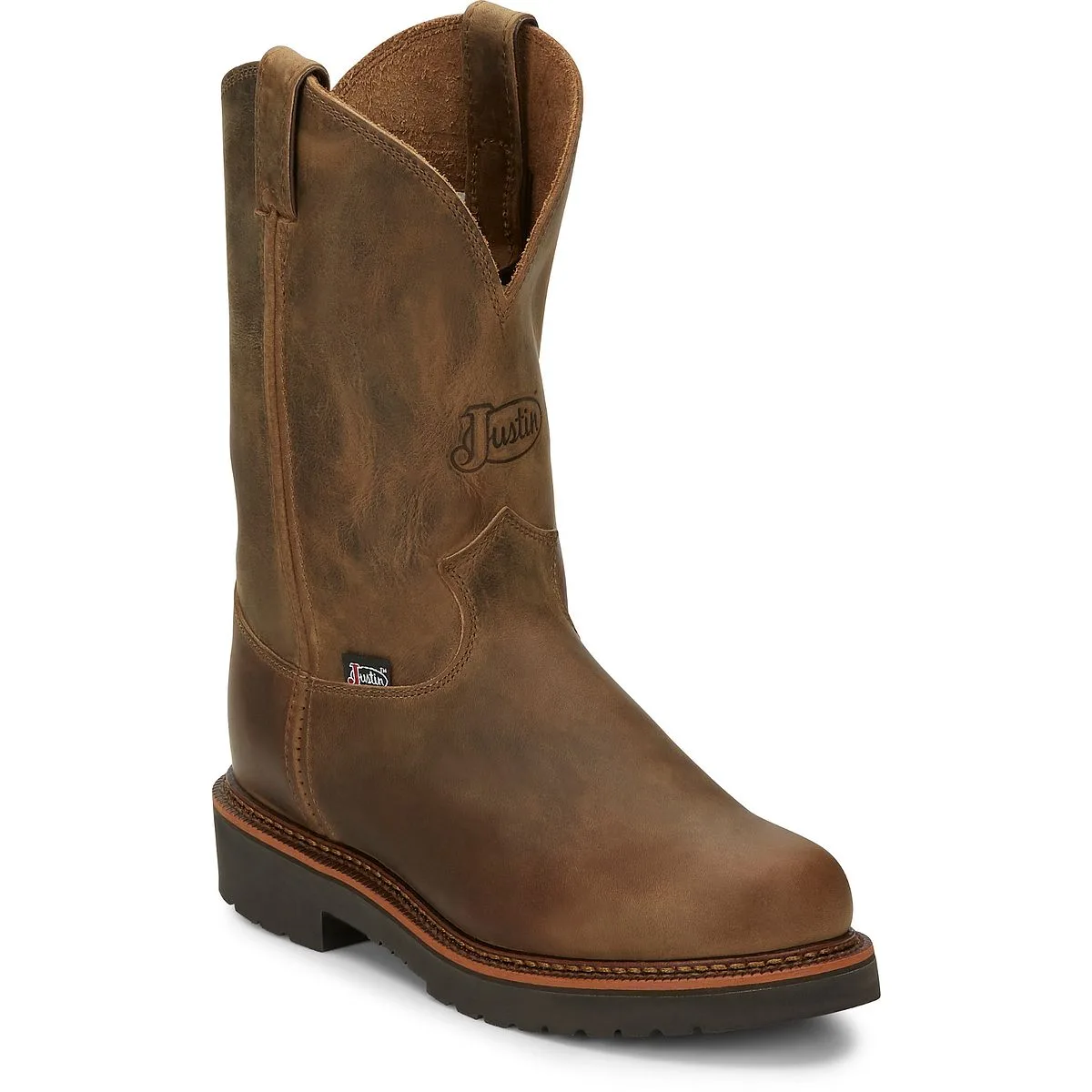
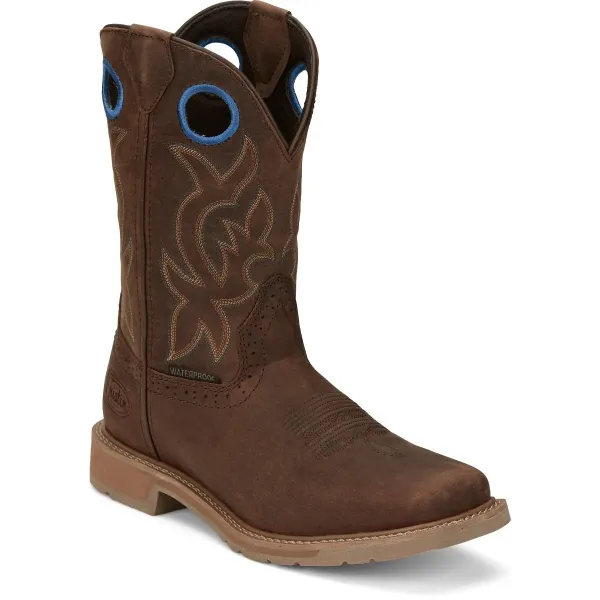
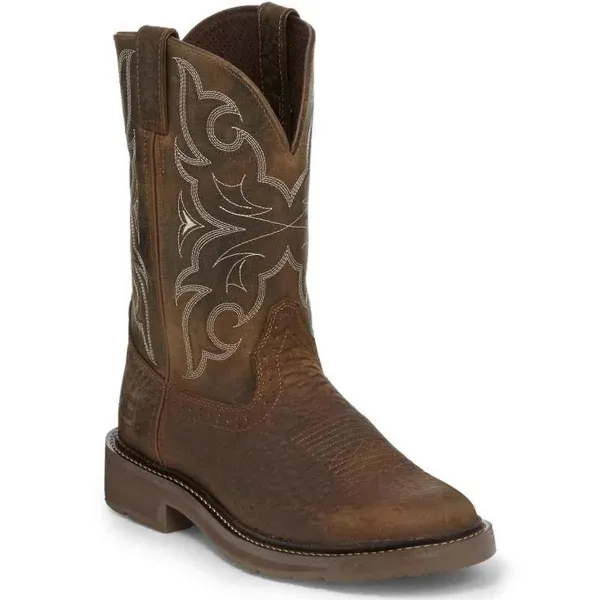
Long days start before sunup, and the Blueprint is built to keep pace with them. It is a pull-on work boot for the person who spends the day in the shop, the pasture or the feed lot and wants a boot that feels settled from the first step.
Under your foot, the removable orthotic insert cushions every step, and you can pull it out to refresh the fit or let it dry. Sewn seat construction holds the upper and sole together for long-lasting wear. The rubber outsole has a defined heel and a slip-resisting tread, so it grips wet concrete and muddy ground.
Pull them on with jeans or canvas work pants, get the chores done, and rinse the day off at the hose. The Blueprint is made in the USA with global parts at the El Paso, Texas factory.
Highlights
- Full-grain leather upper takes daily scuffs
- Removable orthotic insert cushions every step
- Slip-resisting rubber outsole with a defined heel
- Sewn seat construction for long wear
- Electric hazard protection tested up to 18,000 volts
- Meets ASTM F2892 safety footwear standards
Why choose a pull-on work boot
A pull-on is the boot you can get on at the back door in a few seconds, before the coffee cools. A lace-up takes longer to tie and retie with cold fingers, while a pull-on stays on through a full shift and comes off just as fast at supper. For someone who moves between the barn, the shop and the truck all day, that quick on and off adds up.
Work boots earn their keep on wet and slick ground. A slip-resisting outsole keeps you steady on a wet ramp or a greasy shop floor, and a full-grain leather upper keeps the boot in shape through repeated wet and dry days.
At a glance
| Upper | Full-grain leather |
|---|
| Lining | Woven fabric |
|---|
| Insole | Removable orthotic |
|---|
| Toe shape | Round |
|---|
| Construction | Sewn seat |
|---|
| Shank | Non-metallic |
|---|
| Outsole | Slip-resisting rubber with defined heel |
|---|
| Safety | EH, meets ASTM F2892 safety footwear standards |
|---|
How to fit and wear them
A new work boot should feel snug at the heel and roomy in the toe. A new boot slips a little at the heel at first, and that settles as the leather breaks in, so don't size up to fix it. Measure your feet late in the day, when they have swelled from a shift.
Walk around the store for a few minutes before you buy. Check that your toes can move at the front and that the heel doesn't lift with each step. Try the boot with the insert in and out to see which feels right for your foot.
Good to know
- Pair them with jeans or canvas work pants. The pull-on shaft tucks under a hem either way, so the same boot works on the job and in town.
- Wear the work socks you'll actually use when you try them on. Thick and thin socks change the fit more than most people expect.
- Brush off mud and dust after the day, then let the leather air dry away from a heater or a hot truck dash. Heat dries leather out and leads to cracking.
- Work a leather conditioner into the full-grain upper now and then to keep it supple. Rotate with a second pair so each one dries completely between wears.
About Justin
Justin has made Western boots since 1879, when H.J. Justin started a boot repair business in Spanish Fort, Texas. Today the company builds Western, work and casual footwear, and the Blueprint carries that boot-making tradition into everyday work.
Get fitted before the next round of feed runs, so your everyday pair is broken in when the busy season starts.



 Ask Daisy