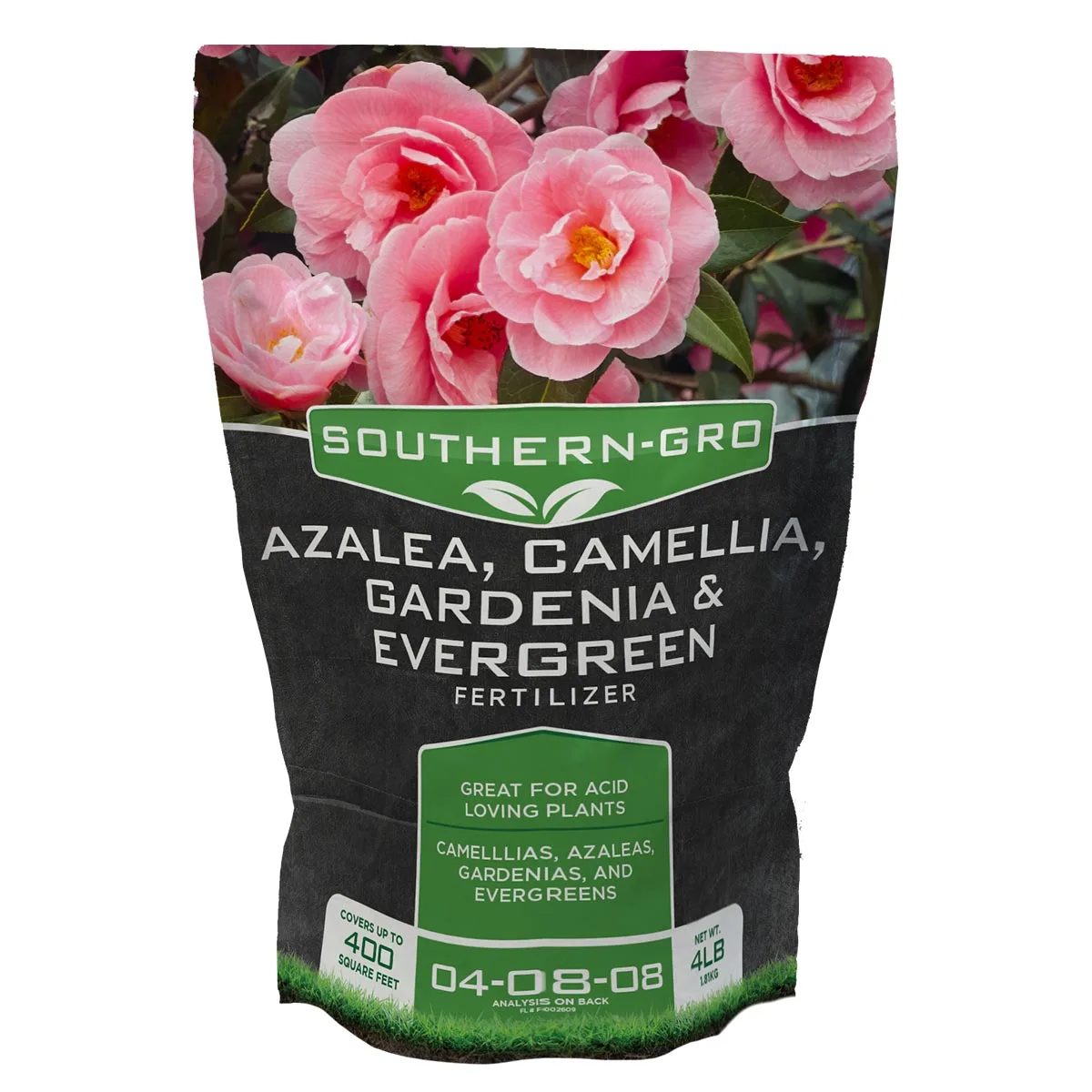
Acid-loving shrubs have their own set of needs, and this fertilizer is built around them. Use it at planting or around established plants to encourage strong roots, sturdy stems, lush leaves and vibrant flowers.
The 4-8-8 analysis is 4 percent total nitrogen, 8 percent phosphate and 8 percent potash, made from ammonium sulfate, diammonium phosphate and muriate of potash. It is made for in-ground azaleas, camellias, gardenias and evergreens, not for container-grown plants.
Azaleas, camellias and gardenias do best in acidic soil. The ammonium sulfate in the blend is one of the nitrogen sources that tends to keep soil on the acid side over time, which suits the plants it was made for.
Highlights
- Feeds acid-loving shrubs from new planting through established beds
- Encourages strong roots, sturdy stems, lush leaves and vibrant flowers
- Balanced 4-8-8 analysis with nitrogen, phosphate and potash
- Water in after applying so nutrients reach the roots
- Made for in-ground azaleas, camellias, gardenias and evergreens
Why acid-loving shrubs need their own food
Azaleas, camellias, gardenias and many evergreens grow best in acidic soil. In alkaline soil they often yellow, because they struggle to take up iron and other nutrients. A general lawn or vegetable fertilizer is not built for that, so a blend made for acid-loving plants is the better choice.
Choose it for the everyday jobs: a new planting, a yard of established shrubs, or an evergreen hedge that gets fed through the growing season. It gives a new planting the nutrients it needs to get established, and it keeps established shrubs fed.
At a glance
| For | Acid-loving shrubs such as azaleas, camellias, gardenias and evergreens |
|---|
| Use | New plantings and established plants |
|---|
| Application | Spread evenly and water thoroughly |
|---|
| Bed planting | Apply to evergreen hedges or beds and water well |
|---|
| Not for | Container-grown plants |
|---|
| Coverage | Up to 400 sq ft |
|---|
How to use it
Apply at planting, around established plants, or across evergreen hedges and beds, then water in.
- New plantings: Remove loose soil from the planting hole and mix the fertilizer thoroughly with the soil from the hole. Use 1/2 cup for plants 1 to 2 feet tall and 1 cup for all other plants. Replace the soil, press it firmly with your foot, and water after planting.
- Established plants: Apply 1 cup for every 4 feet of height, spread evenly around the drip line. Do not cultivate deeply, because some of these shrubs have shallow roots. Water thoroughly.
- Evergreen hedges or bed planting: Apply 1 lb per 100 sq ft or per 50 ft row. Make the first application in early spring after the last frost, then repeat every 4 weeks during the growing season. Water well after every application.
Good to know
- Water thoroughly after each application so the fertilizer moves down to the root zone.
- For established shrubs, spread the fertilizer around the drip line, where the feeder roots are working.
- Mark the first feeding after the last frost on the calendar, then repeat every 4 weeks through the season.
- Feed on schedule rather than extra. More fertilizer does not give you bigger blooms, and too much can burn tender roots.
About Southern-Gro
Southern-Gro Fertilizer is a small business that makes fertilizers for lawn, garden, agricultural and wildlife food plot uses.
Cautions
WARNING: This product is not intended for container grown plants.
Have it on hand for that first feeding after the last frost, when acid-loving shrubs start pushing new growth.

 Ask Daisy