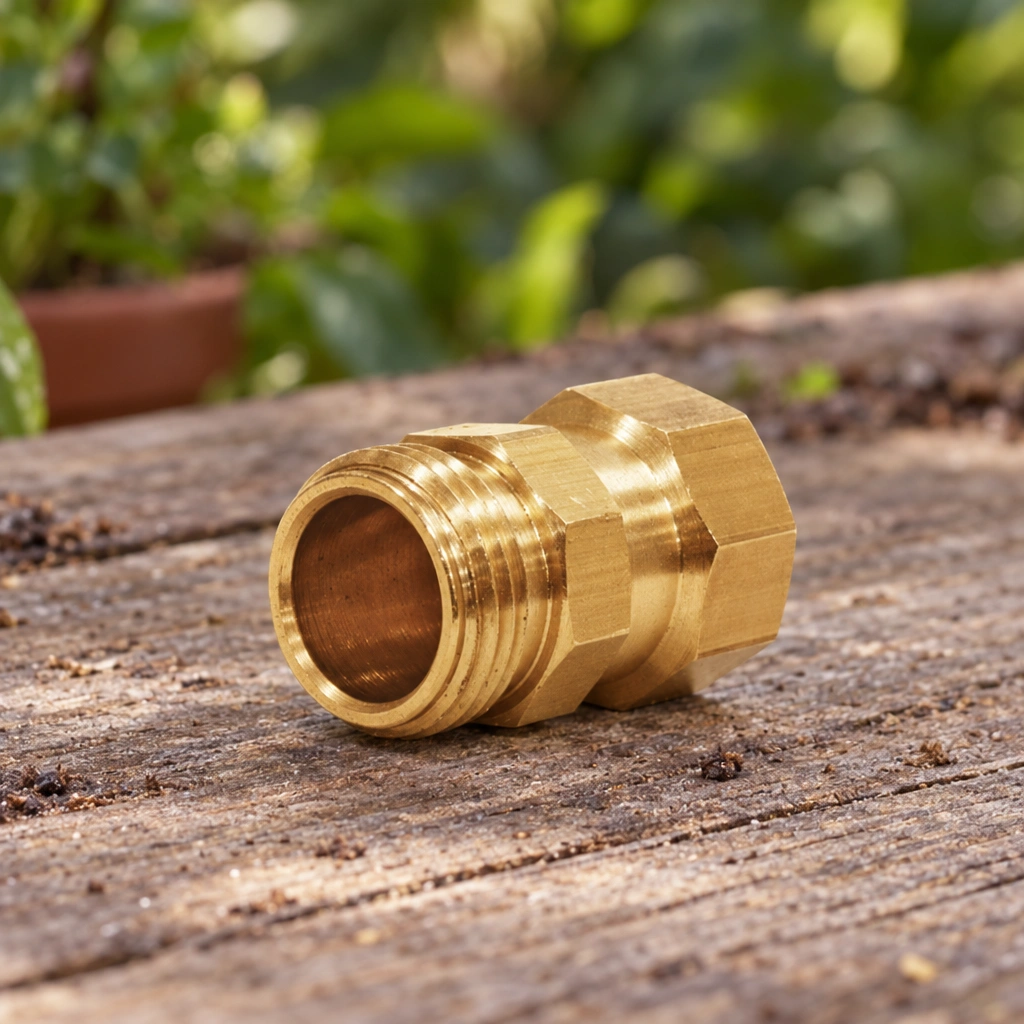
A live brass swivel lets a hose-end watering tool turn independently while water is flowing.
Start with the job this tool does
A hose can pull a watering wand off course as the user moves around a bed or container group. This fitting sits between the hose and the attachment, letting the tool turn without dragging the hose through every change in direction. Its live-swivel design continues to rotate under pressure. That can reduce hose twisting and make hand watering less awkward when a nozzle or wand needs to be aimed repeatedly. It is a connector accessory, not a shutoff valve or a spray head.
Use the product's controls with care
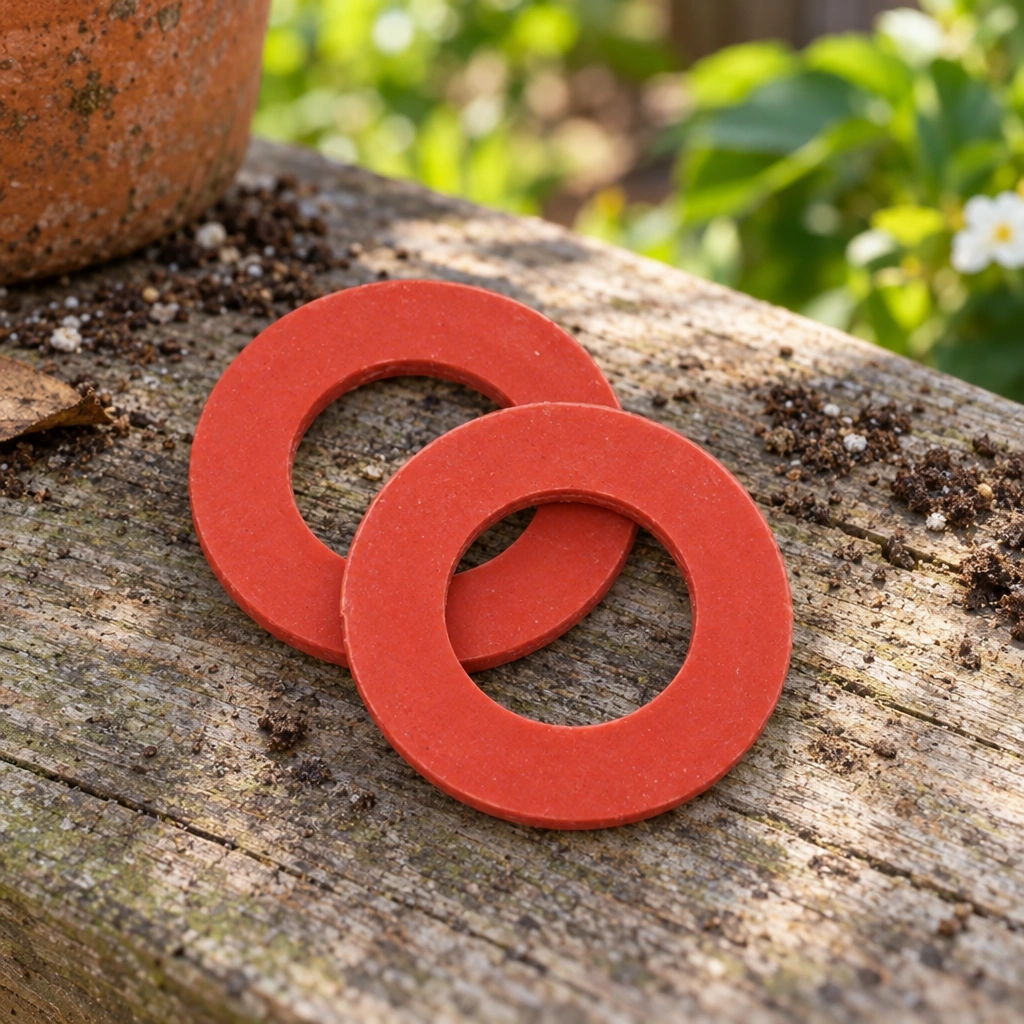
Install the swivel between a compatible garden hose and the watering attachment. It uses 3/4-inch hose thread. Check both mating ends and the sealing washers before tightening the connections. Turn water on gradually and inspect the joints for leaks. Once installed, the swivel lets the hose-end accessory change orientation while the hose can remain on the ground. It can help free a wand that would otherwise twist the hose, though good hose routing still matters around corners and obstacles.
Fit the tool to the area
The fitting is useful for ordinary yard watering where the user moves a hose tool by hand. The professional listing gives an 18-gallon-per-minute flow figure, though delivered flow also depends on the faucet, hose and attachment. It does not eliminate kinks elsewhere along the line, so uncoil enough hose before starting and avoid tight bends. Shut off the faucet before disconnecting the swivel, particularly when the hose remains pressurized. Inspect its washers if a connection begins to drip, and remove it for winter storage with the rest of the hose fittings. Lay the hose with slack so the swivel can turn without pulling against a tight corner. If a wand keeps winding the hose, stop the water and straighten the hose before continuing. The swivel addresses twisting at the tool connection, while sharp bends farther along the hose still restrict movement and can reduce flow. After attaching it, rotate the hose slowly through the directions you use while watering. If the fitting catches, check the washer and threads instead of forcing the connection. This is especially useful at a faucet that sits close to a wall or planter.

 Ask Daisy