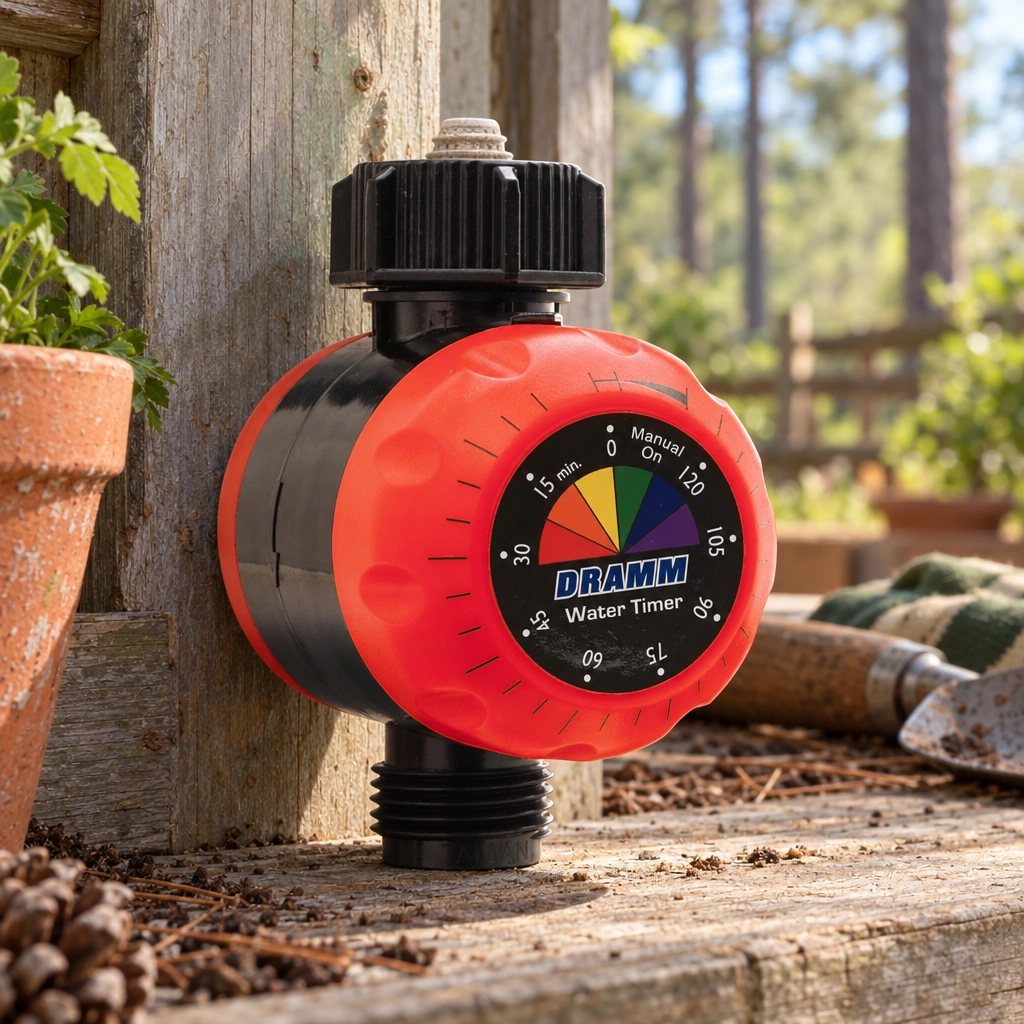
The manually set hose timer closes water flow after a selected duration, up to two hours.
Start with the job this tool does
The timer gives a hose-fed bed, lawn patch or container group a defined watering window. It starts only after the faucet is opened, then shuts the flow off when the selected time ends. The control is mechanical, with no battery or digital program to maintain. This makes it useful when a sprinkler or soaker hose should run for a set period while the gardener handles another task. It does not sense soil moisture or open the faucet, so users still choose the duration and watch the first cycle to judge whether the water reaches the root zone without running off.
Use the product's controls with care
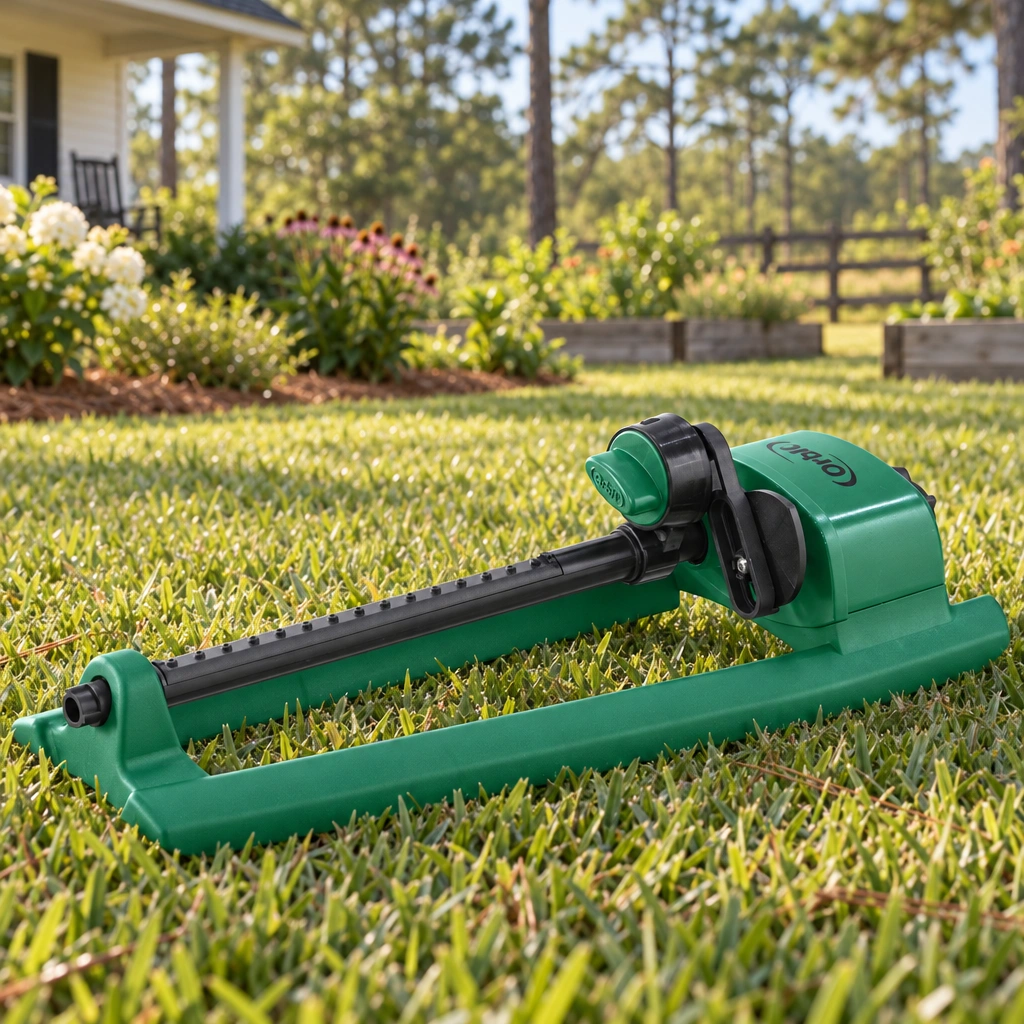
A dial sets the watering interval. Attach the timer between the faucet and hose, select a duration within the marked range, then open the faucet to begin the cycle. The timer suits one watering line, such as a sprinkler on a lawn patch or a soaker hose serving a bed. It does not store recurring schedules or control several zones. For separate areas with different needs, move the hose and reset the duration for each one. Keep the faucet accessible so you can stop the flow if water begins to pool or escape the planting area.
Fit the tool to the area
Choose a duration based on the planting, soil and watering tool. A light spray over containers may need less time than a sprinkler reaching a lawn section, but the timer cannot determine that for you. Check the area while it runs. For a newly planted bed, test a short cycle first and dig a small check hole afterward to see whether moisture reached the root zone. Record the useful dial setting for that hose and season, then reassess when weather or plant growth changes. If water begins to pool or leave the bed, stop and shorten the next session; if the soil remains dry below the surface, adjust the duration or reposition the sprinkler. Close the faucet before disconnecting the timer. Inspect hose washers and threaded connections for leaks, and protect the timer from freezing conditions before seasonal storage.


 Ask Daisy