Repair a damaged hose section or replace a worn faucet or tool-end coupling with a clamp-style fitting sized for 5/8 or 3/4 inch hose.
Choose the repair that matches the damage
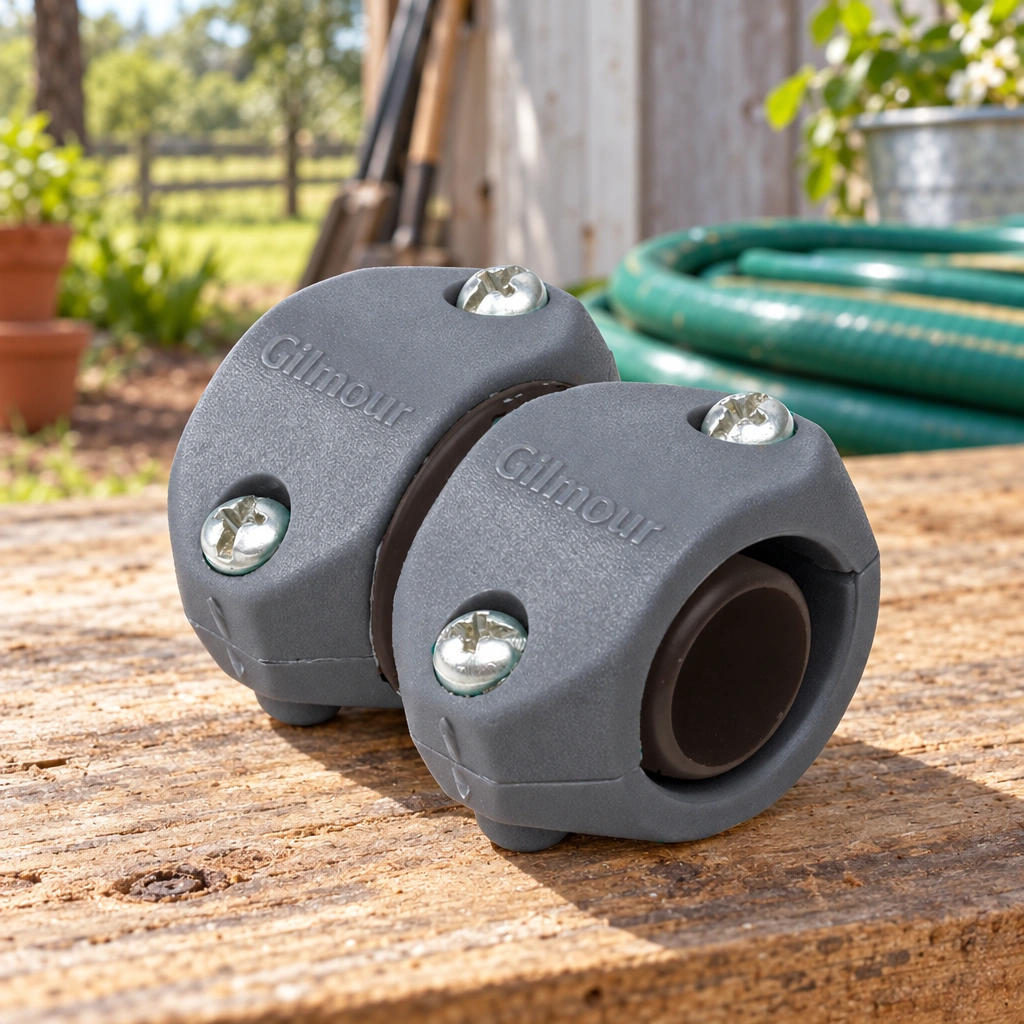
A leak in the middle of a garden hose calls for a mender. Cut out the damaged portion and join the sound hose ends to restore a continuous run. This works when the hose body is split or punctured but its faucet and tool connections remain usable. An end coupling solves a different problem. Choose the female coupling for the faucet end, or the male coupling for the end that connects to a nozzle or other watering tool. Replacing a worn end can keep a serviceable hose in use without buying a whole new length. Locate the damage first, then choose the repair type: a mender joins hose to hose, while an end coupling restores a connection to another fitting.
Match the fitting to the hose
These fittings are intended for 5/8-inch or 3/4-inch garden hose. Check the hose marking or compare the size with the existing fitting before cutting. A clamp holds the hose against a polymer fitting, and stainless steel screws secure the clamp. This reusable construction suits rubber or plastic hose. Match the type to the fault, then make sure the surrounding hose is sound enough to hold. If the hose is brittle or damaged in several places, a small repair may not restore a dependable run. Removing a damaged section also shortens the hose, so check that it will still reach the work area.
Plan around the watering setup
Use a mender for a mid-hose splice with sound hose on both sides. Put the female coupling at the faucet end, where it meets faucet threads. Put the male coupling at the tool end, where a watering attachment connects. Choosing by function helps avoid a fitting with the correct hose size but the wrong connection style. Consider how the hose is stored and moved. Leave room for a repaired end to turn without being pulled sideways, and keep a splice away from reel edges or sharp bends that can strain it. After assembly, inspect the clamp area and any threaded connection while water flows. Shut off the faucet before adjusting the repair, and keep the joint visible during its first use so a leak is easy to spot.

 Ask Daisy