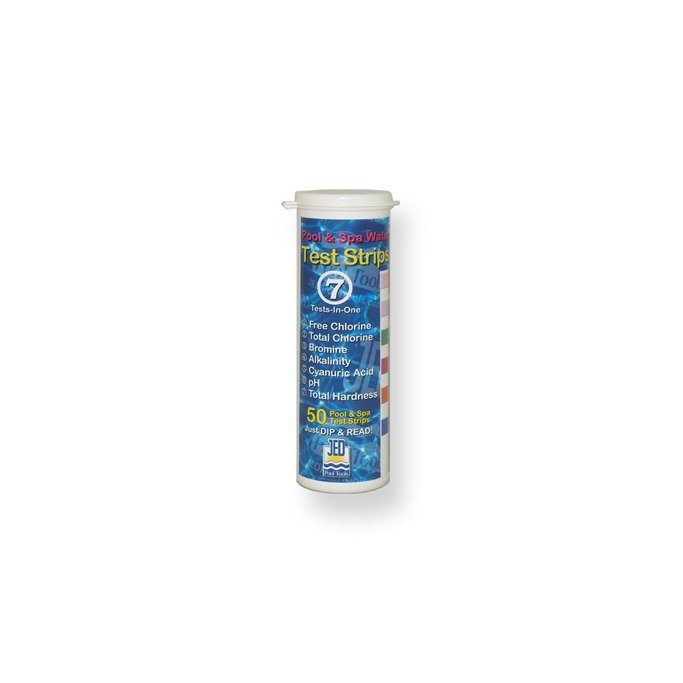
Pool and spa test strips covering sanitizer readings and key water-balance factors in one sample.
Several factors from one water sample
JED Insta-TEST 6–7 strips check free and total chlorine, with an alternate bromine scale, alongside pH, total alkalinity, total hardness and cyanuric acid. That combination is useful when a routine water check needs to cover more than sanitizer alone. Read the scale that matches your chlorine or bromine treatment. The different pads and scales describe different properties of the sample, so one acceptable reading does not automatically place all the others in balance.
Free chlorine and total chlorine
Free chlorine is the part available for sanitizing. Total chlorine also includes combined chlorine formed as chlorine reacts with material in the water. Looking at both readings helps distinguish the amount present overall from the amount available to do the disinfecting work. The difference between total and free chlorine is combined chlorine. Keep those results separate in your maintenance notes rather than recording a single number labeled only chlorine.
pH is different from buffering capacity
pH tells you how acidic or basic the water is. Total alkalinity indicates how strongly the water resists a change in pH. Reading them together helps explain why a pool's pH may change readily or resist adjustment. pH also affects chlorine's performance, so a sanitizer reading should not be interpreted in isolation. A treatment decision can require attention to balance as well as the amount of sanitizer in the sample.
Hardness and stabilizer add context
Total hardness reflects calcium and magnesium in the water. It helps you follow the mineral balance associated with scale formation or aggressive water conditions. Cyanuric acid is the chlorine stabilizer used to reduce sunlight's effect on chlorine in outdoor pools. Its reading is a separate part of managing a stabilized chlorine system. Use each result with the operating guidance for your pool instead of assuming a strip color identifies one chemical to add.
Compare each pad with its own chart
Follow the reading time and method on this product's container. Match each pad to its corresponding scale, since pad colors do not share one meaning. Keep unused strips dry and close the container promptly so moisture does not start a reaction before the strip reaches the sample. When a result is unclear, repeat or confirm it with an appropriate test method before changing the treatment. A short record of readings helps show what changed after an adjustment.


 Ask Daisy