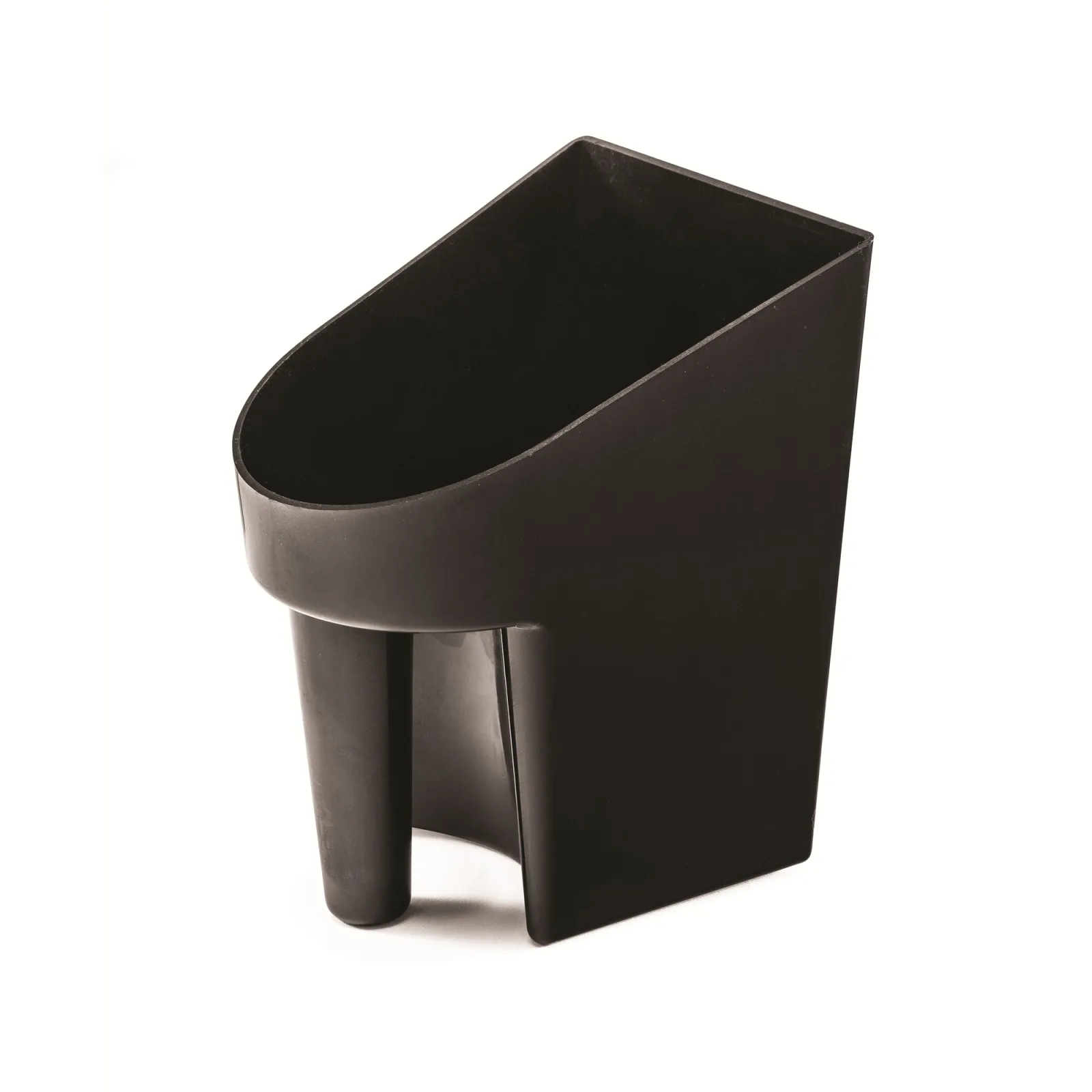
A 2 qt scoop is the one you reach for most days. It's the right size for a daily grain measure, a scoop of pellets or a supplement that goes out with every feeding. The KD-119 is light in the hand, so it stays easy to use when the feeding round runs long.
It's made of high impact material, light enough for everyday use and durable enough for the bumps of a feed room. It measures volume, which makes it a repeatable tool for daily feeding. When feed directions call for pounds, weigh a filled scoop, because feed density varies.
Pair it with a smaller scoop for the small portions, and you have a feed room that covers both the big and small jobs with simple tools.
Highlights
- 2 qt capacity for everyday portions
- Lightweight, durable everyday scoop
- Built for grain, pellets and supplements
- Measures volume for repeatable portions
- Compact, 7.875 by 5.625 by 6.5 inches
Why a light scoop that measures volume helps
Feeding by volume is practical in a barn. Each scoop lands the same, so the routine stays repeatable from day to day, even when more than one person does the chores.
A light scoop is easier on your wrist when you're scooping twice a day. This one suits the daily work of a backyard flock, a horse or goat routine, or a barn that feeds from a shared bin. It's easy to grab on the way past and easy to keep right beside the bin.
Good feed room habits start with the scoop. Keep one scoop for each feed, and the routine stays clean and the portions stay right.
At a glance
| Capacity | 2 quarts |
|---|
| Measurement | Measures volume |
|---|
| Dimensions | 7.875 × 5.625 × 6.5 inches |
|---|
| Material | High impact material |
|---|
How to use it
Scoop from the bin, level the top, and pour into the pan or bucket. Use the same scoop for the same feed, so the portion stays consistent.
- Fill the scoop from the bin.
- Level it off so each scoop matches the last.
- Weigh a filled scoop when the feed directions call for pounds.
Rinse the scoop after dusty or damp feed, dry it fully, and keep it near the bin. Damp feed left in a scoop can sour and carry into the next portion.
Good to know
- Use color to organize feed routines. Give each feed or supplement its own scoop so nobody mixes them up.
- Pair it with a smaller scoop for small portions, so the big and small jobs each have the right tool.
- Pair it with a feed tub or bucket. The scoop is the everyday measure, and the tub or bucket holds the feed.
- Replace the scoop when the handle cracks or the rim splits, so broken pieces never end up in the feed.
About K&D Equestrian
K&D designs its barn gear with horsemen and tests it on the family-owned F-Bar Ranch in Gainesville, Texas.
Keep a spare scoop by the feed room door, since the one on the bin always goes missing first.


 Ask Daisy