
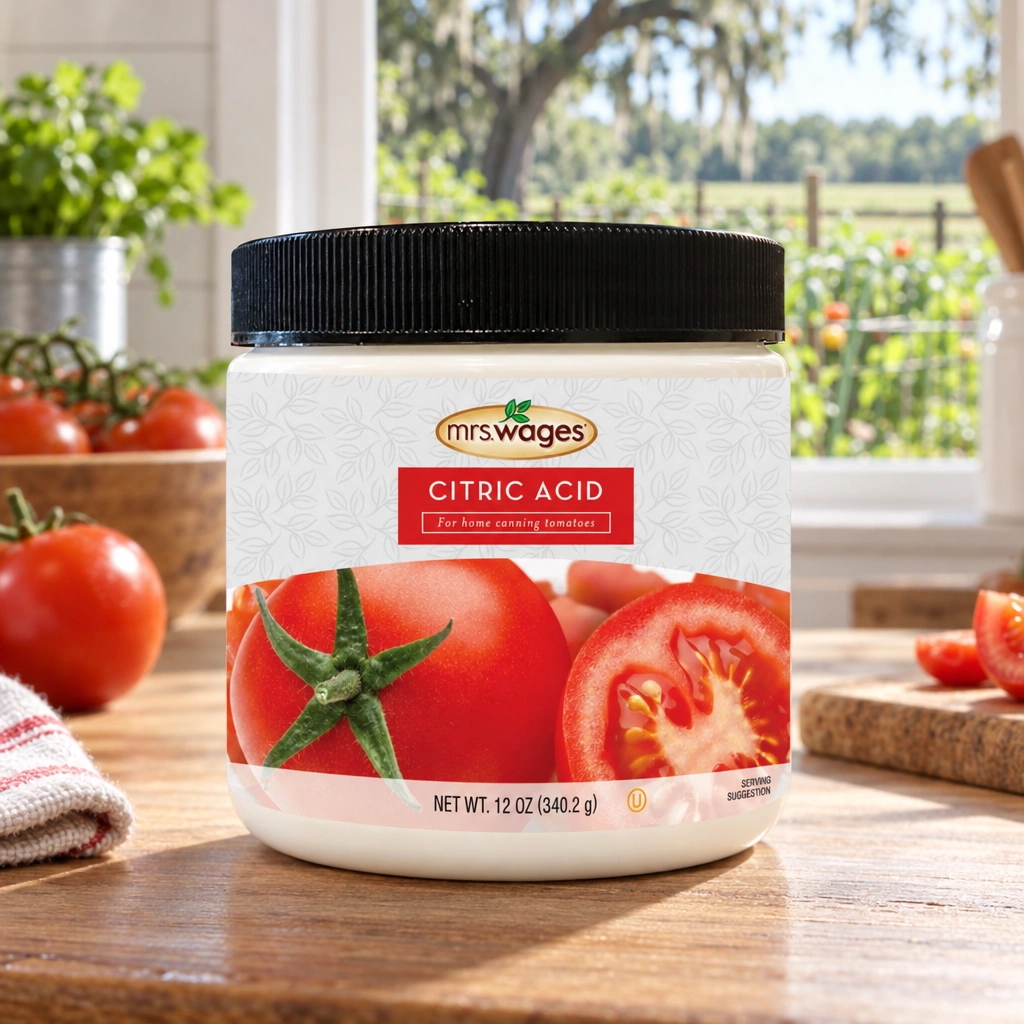
Citric Acid
Citric acid for tomato recipes that call for this measured ingredient.
$8.70
12 ozIn stock at the store
Want to see it first? Stop in at the store, or call the counter with questions.
- SKU
- 5744
- Department
- Canning Supplies
Nothing matches that yet. Try a brand or an animal, or call us at (850) 537-1000.
Citric acid for tomato recipes that call for this measured ingredient.
$8.70
12 ozIn stock at the store
Want to see it first? Stop in at the store, or call the counter with questions.
Citric acid for tomato recipes that call for this measured ingredient.
Citric acid is used in tomato canning to raise acidity and lower pH. Tomatoes can vary in acidity, including ripe fruit that looks and tastes normal. The measured addition matters because acidity is part of the tested preservation method. This dry ingredient can be added directly to the jar in a small amount, without pouring extra liquid into the tomatoes. That makes it a useful option when a recipe calls for acidification but the cook wants to avoid lemon flavor. Acidification is important for whole, crushed or juiced tomatoes because a sound-looking fruit is not a reliable measure of its acidity. A measured dose is part of controlling that variation.
Choose a tested tomato recipe and read its acidification step before preparing the jars. Recipes may name citric acid, bottled lemon juice or another approved option, and the instructions are specific to the food and jar size. Keep the ingredient with the recipe so the right measure is used for the right batch. The canister suits households that preserve tomatoes repeatedly through the season and want the dry ingredient ready in the pantry. The method applies to tomato products named in the recipe, not every food that happens to contain tomatoes.
Use a clean, dry measuring spoon and add the exact amount specified for each jar. Stirring it into the pot or substituting an amount from another recipe can change the method. The separate directions table gives the standard tomato measure by jar size. Follow the recipe’s remaining preparation and processing steps as written, including the selected canning method and any adjustments it specifies.
Keep the powder dry and close the canister after measuring. A cool, dry cupboard helps prevent moisture from collecting in the container. Store it beside the tomato recipe or preserving notes so it is easy to find during the next batch. Clear labeling also keeps the acid distinct from seasoning mixes and other pantry powders. With the measured dose and full method ready, preserving tomatoes becomes easier to plan around the harvest.
| Type of acid | Pints | Quarts |
|---|---|---|
| Bottled lemon/lime juice from concentrate | 1 Tablespoon | 2 Tablespoons |
| Citric acid | ¼ teaspoon | ½ teaspoon |
| Vinegar, 5% acidity | 2 Tablespoons | 4 Tablespoons |
Order online or call ahead and we’ll have it ready for pickup at 5791 Hwy 4. Free delivery within 5 miles, and a flat $15 out to 20 miles.
All hours Central Time. Call for holiday hours.

 Ask Daisy