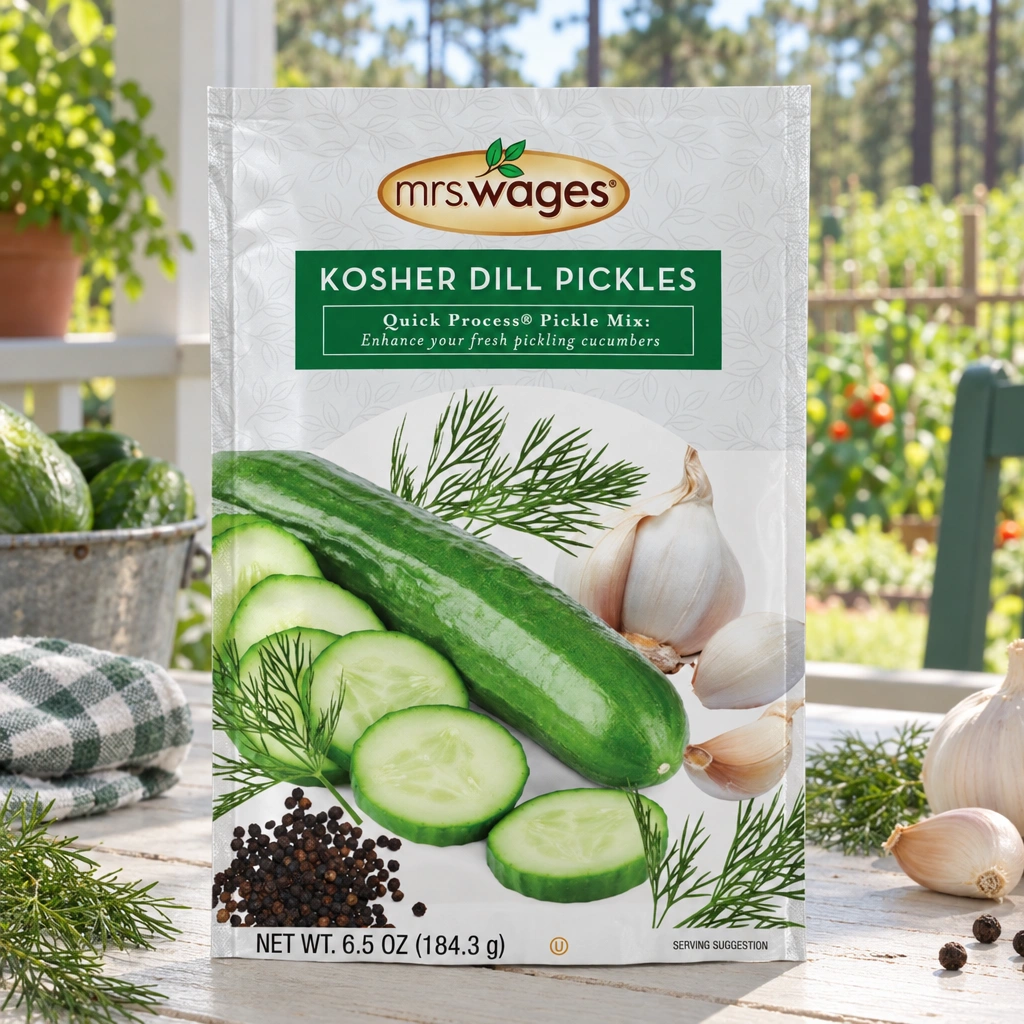
Garlic-forward quick-process kosher dill seasoning for cucumber pickles.
Dill with garlic
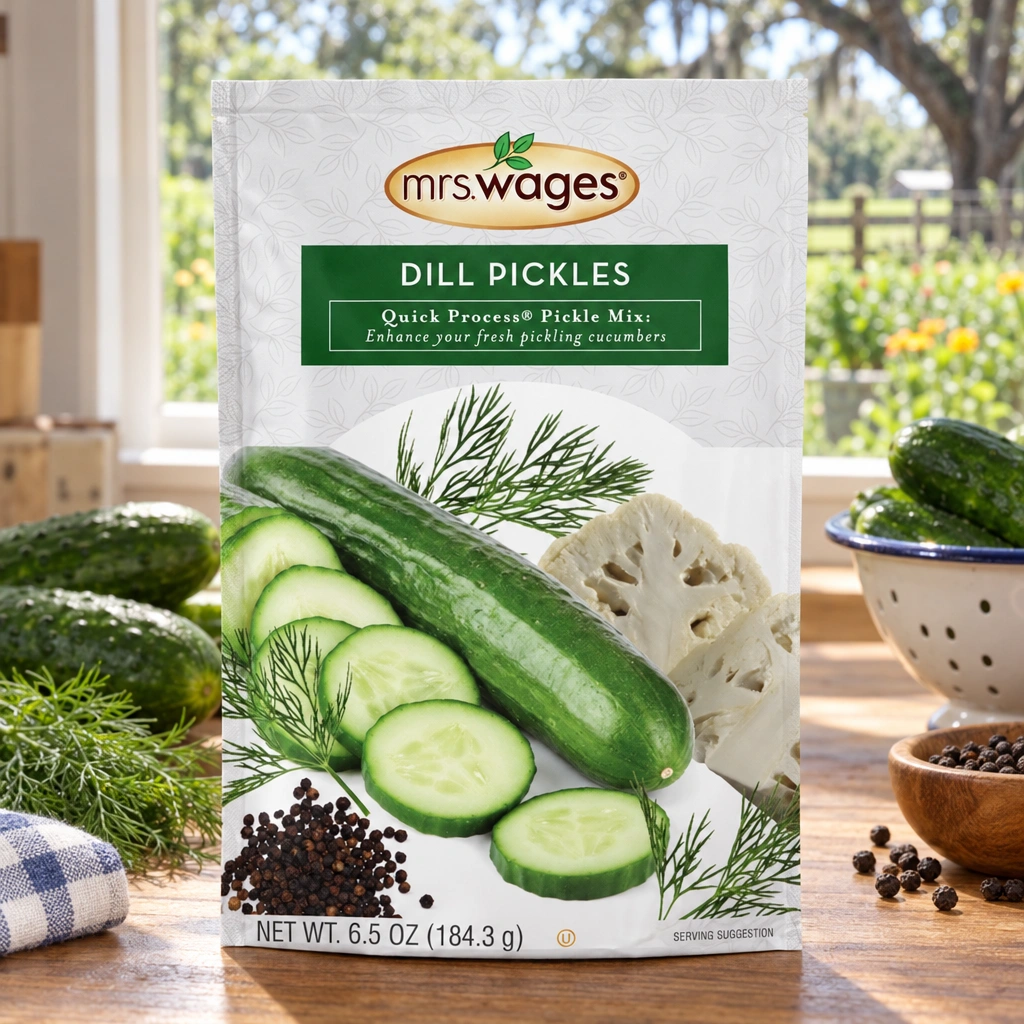
This quick-process mix brings garlic and dill seasoning to a cucumber pickle recipe. The pouch contains the dry spices; vinegar and water are added separately. The result is the robust, savory style associated with kosher dill pickles. It is a complete seasoning component for the recipe, but it is not a standalone brine or a replacement for the specified produce and liquids.
Choose by batch size and method
The 6.5-ounce pouch is intended for a seven-quart batch. That is a good fit when cucumbers are ready in quantity and there is room to process or store several jars. A smaller refrigerator-pickle version also exists, with a different pouch and preparation. Check the Quick Process wording before starting so the large-batch directions match the item in hand.
Gather the equipment
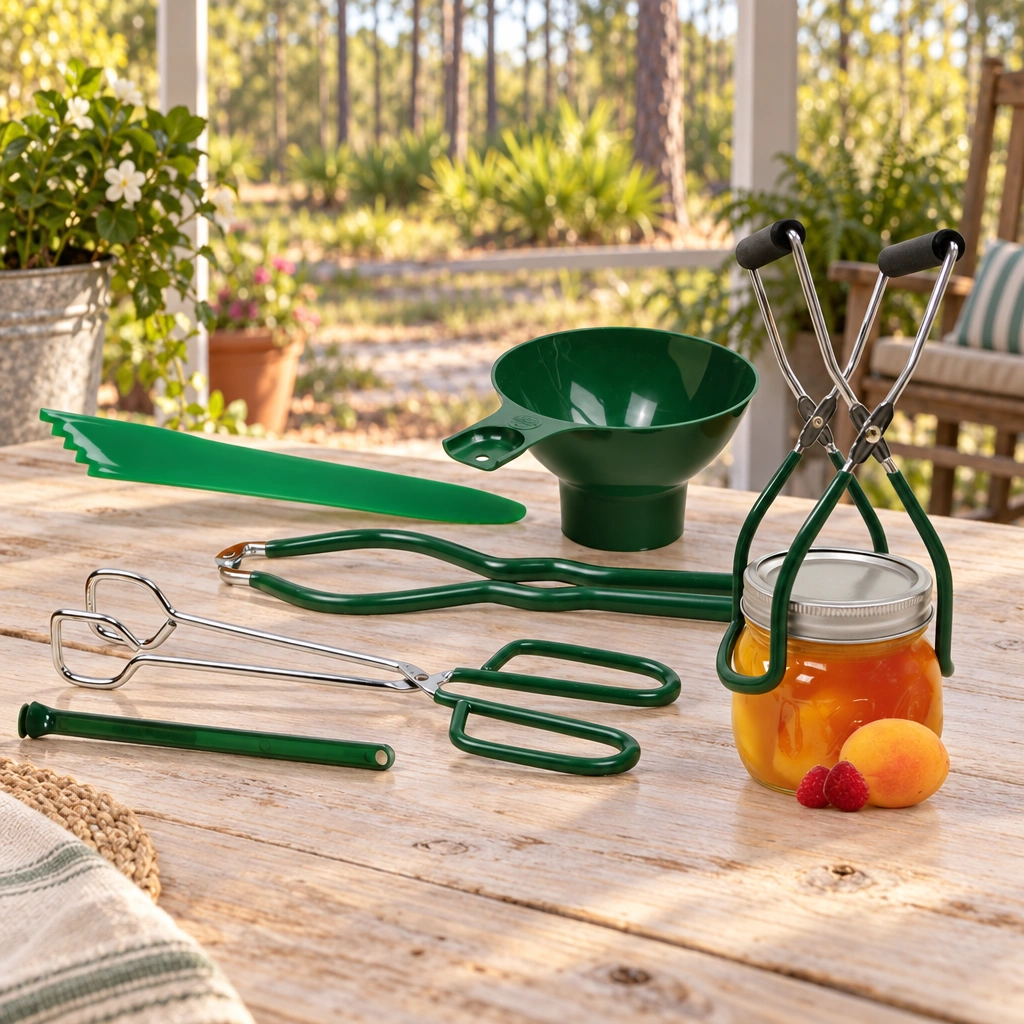
Set out the cucumbers, matching jars and canning equipment before preparing the hot liquid. Use a nonreactive saucepan and follow the recipe’s stated vinegar, water and seasoning amounts. The directions specify cucumber preparation and headspace. Keep the recipe visible through filling because the hot liquid and jar steps belong to this exact mix.
Follow tested canning directions
Use the complete package recipe for processing, cooling and storage. It includes a water-bath process and altitude adjustments. Do not use another pickle recipe’s proportions or make a shelf-stable product by simply refrigerating a jar. Current USDA or National Center for Home Food Preservation guidance can help with general equipment and seal checks, while the specific formula controls the food and process.
A practical fit
The garlic and dill profile suits a relish tray or a sandwich where a sharper pickle flavor is wanted. The seven-quart yield is practical for a garden harvest but may exceed what a small household needs at once. Consider whether there is enough refrigerator or pantry room for the finished batch before starting. The recipe, not the pouch alone, sets the storage route.
For the pantry
Garlic makes this version more savory than plain dill. It is a useful distinction when laying out several flavors for a picnic or filling jars for different households.
KOSHER DILL PICKLES Makes 7 Quarts
Makes 7 Quarts
YOU WILL NEED
- 9-11 lbs of pickling cucumbers (about 50–3 to 4 inches)
- 3 ⅓ cups Mrs. Wages® White Distilled Vinegar (5% acidity)
- 7 ⅓ cups water
- 1 pouch Mrs. Wages® Kosher Dill Pickle Mix
DIRECTIONS
PREPARE & PROCESS home canning jars and lids according to manufacturer’s instructions for sterilized jars. Keep jars hot.
WASH cucumbers and drain. Cut a 1/16-inch slice off blossom end and discard. Leave cucumbers whole, cut into spears or slice.
COMBINE Mrs. Wages® White Distilled Vinegar, water, and Mrs. Wages® Kosher Dill Pickles Mix into a large non-reactive saucepan. Do not use aluminum. Bring mixture just to boil over medium heat, stirring constantly until mixture dissolves. Remove from heat.
PACK cucumbers into sterilized hot jars, leaving ½-inch headspace. Evenly divide hot pickling liquid among the packed jars, leaving ½-inch headspace. Unused brine may be stored in a non-reactive container up to 1 week in refrigerator. Remove air bubbles, wipe rim and cap each jar as it is filled. If more liquid is needed for proper headspace, add a mix of 1 part hot vinegar and 2 parts hot water.
PROCESS pints 10 minutes**, quarts 15 minutes**, in a boiling water bath canner. Turn off heat, carefully remove canner lid, and let jars stand for 5 minutes in canner. Remove jars. Let jars sit undisturbed to cool at room temperature for 12 to 24 hours. Test jars for airtight seals according to manufacturer’s directions. If jars do not completely seal, refrigerate and consume within 1 week.
Product is ready to eat after 24 hours. Before serving, chill to enhance flavor and crispness. Store properly processed shelf-stable product in a cool place, and use within 1 year.
**Processing time listed is for altitudes less than 1000 feet. At Altitudes of 1000 feet or more, increase processing time 1 minute for each 1000 feet of altitude.

 Ask Daisy