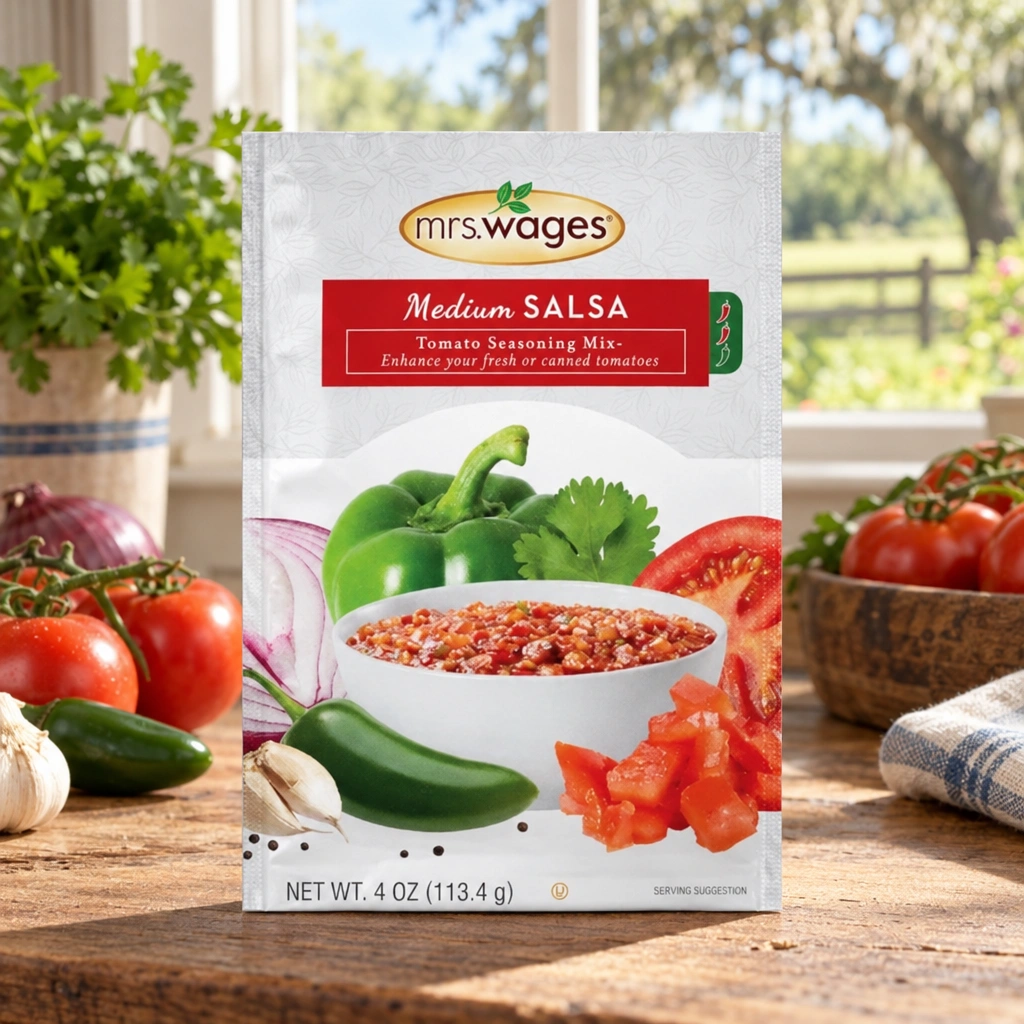
Medium salsa mix for tomato batches with fresh or canned tomatoes.
Seasoning for tomato salsa
This pouch blends dehydrated vegetables, salt and spices for medium salsa. It is combined with tomatoes and vinegar in the stated recipe. Fresh tomatoes work when ripe produce is available; canned tomatoes are another option named in the same instructions. The mix provides seasoning, while the recipe determines texture, cooking and storage.
Choose by yield and heat
One four-ounce pouch makes five pints according to the formula. That makes it easier to plan tomatoes and containers before cooking. The medium version includes jalapeño and chili pepper among its ingredients. Check the label if choosing for a household with different heat preferences or dietary needs.
Decide how to store it
The salsa instructions describe serving fresh, freezing or canning, with separate steps for each route. Choose the storage plan before filling containers. Canning uses a specific hot-fill and boiling-water process, while fresh salsa is refrigerated and frozen salsa uses freezer-safe containers. Those methods are not interchangeable; keep the selected directions with the batch.
Stay with the published recipe
Use the complete formula for tomato preparation, vinegar amount, simmering and storage. Do not add low-acid vegetables or change the ingredient balance without a tested recipe. For pantry storage, follow the precise jar size and processing directions, including altitude changes. If a jar does not seal, follow the recipe’s instructions for that situation rather than storing it on a shelf.
A practical fit
Medium salsa works as a dip, a topping or a cooked accompaniment. The five-pint recipe makes a useful amount for sharing or setting aside for later meals. If using fresh tomatoes, allow time for washing and preparation; the canned-tomato route has its own instruction. Keep the salsa separate from untested improvisations if it will be stored outside the refrigerator.
For the pantry
For the fresh-tomato version, plan for washing, coring and chopping before measuring the prepared produce. A canned tomato option is also included in the recipe. The recipe distinguishes fresh tomatoes from canned tomatoes and gives a separate yield for each route. Follow the matching path from start to finish. This keeps the seasoning, produce preparation and finished texture together as intended.
MEDIUM SALSA Makes 5 Pints
Makes 5 Pints
YOU WILL NEED
- 6 lbs fresh tomatoes (about 18 medium) or 6 cans (14.5 oz each) petite diced regular or low sodium tomatoes, undrained
- ½ cup Mrs.Wages® White Distilled Vinegar (5% acidity) or cider vinegar
- 1 pouch Mrs. Wages® Medium Salsa Mix
DIRECTIONS
WASH fresh tomatoes. Scald 3 minutes in boiling water. Dip into cold water. Cut out cores, remove skins and chop coarsely. This should yield about 10 cups tomatoes. If using canned tomatoes, do not drain liquid.
COMBINE tomatoes, Mrs.Wages® White Distilled Vinegar and Mrs.Wages® Medium Salsa Mix in a large non-reactive saucepan. Do not use aluminum. Bring mixture to a boil. Stir occasionally. Reduce heat and simmer 10 minutes. Stir occasionally. Salsa is ready!
SERVE. Pour into containers and let cool. Cover and refrigerate at least 30 minutes before serving. Store covered in refrigerator up to 1 week.
FREEZE. Pour into freeze-safe containers and let cool. Store covered in freezer up to 1 year. Store thawed product in refrigerator up to 1 week.
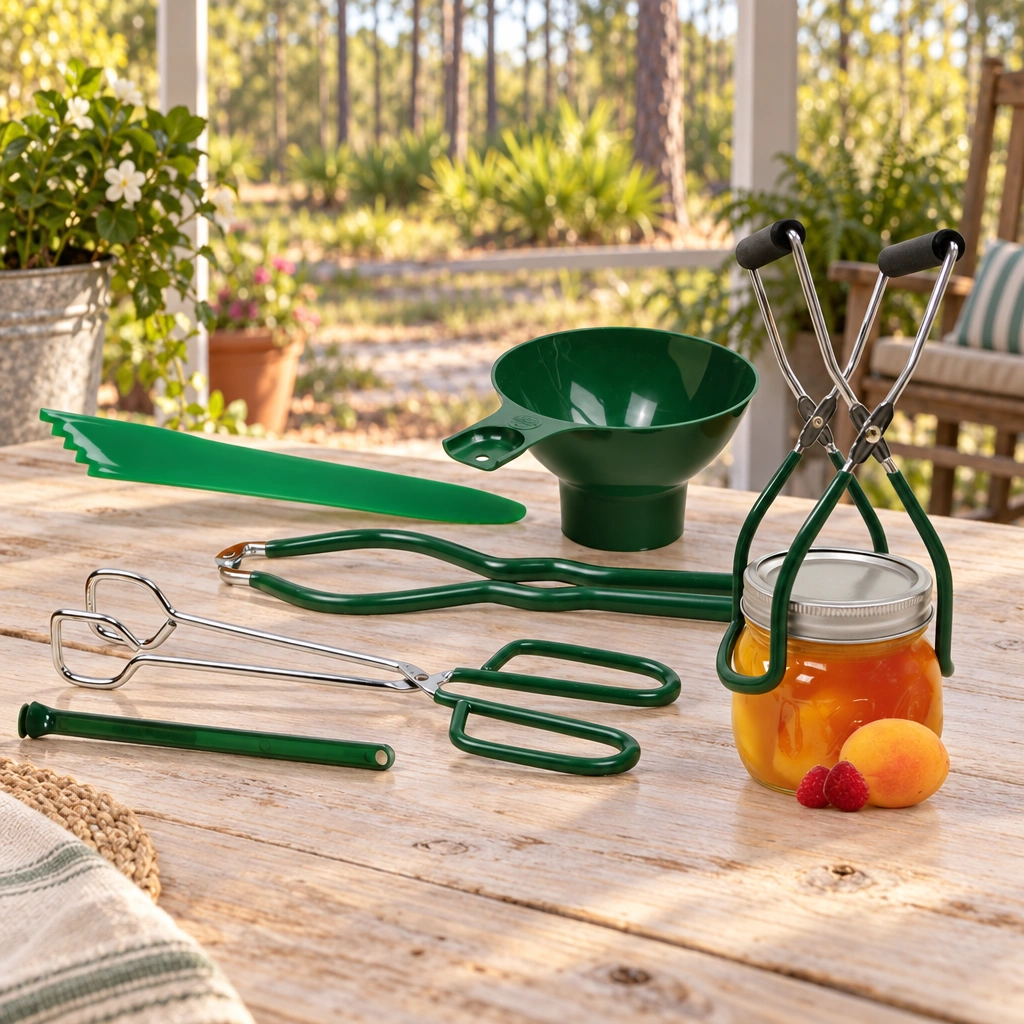
CAN. Prepare home canning jars and lids according to manufacturer’s instructions for sterilized jars. Pour hot salsa into clean hot pint canning jars, leaving ½-inch headspace. Remove air bubbles, wipe rim and cap each jar as it is filled. Process jars for 40 minutes* in boiling water bath canner. Turn off heat, carefully remove canner lid, and let jars stand for 5 minutes in canner. Remove jars. Let jars sit undisturbed to cool at room temperature for 12 to 24 hours. Test jars for airtight seals according to manufacturer’s directions. If jars do not completely seal, refrigerate and consume within 1 week. Use shelf-stable product within 1 year
*Processing time listed is for altitudes less than 1000 feet. At Altitudes of 1000 feet or more, increase processing time 1 minute for each 1000 feet of altitude.

 Ask Daisy