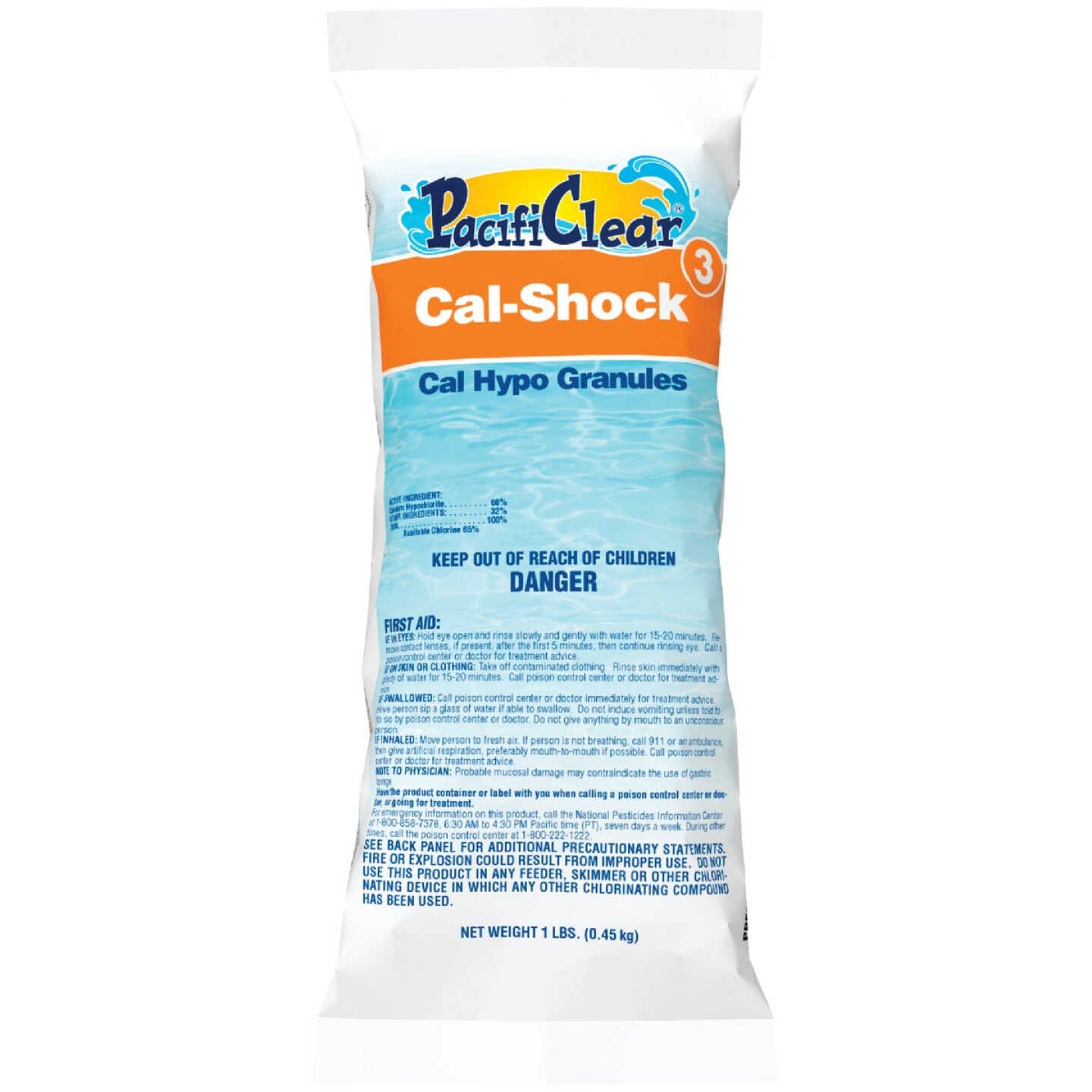
Calcium hypochlorite pool sanitizer and shock treatment granules.
A concentrated chlorine shock
Cal-Shock is a granular calcium hypochlorite pool sanitizer with 68% calcium hypochlorite and 65% available chlorine. Its role is shock treatment: a measured dose raises the free-chlorine residual to address conditions that can strain ordinary pool maintenance. The package is a single-use shock bag for pools of 10,000 gallons or larger. Use the full contents when the bag is opened, and match that treatment to the pool volume rather than assuming one bag fits every pool.
Use the shock rate for the pool volume
The shock range is 10 to 20 ounces per 10,000 gallons, applied every seven days or as needed. That range is intended to provide 5 to 10 ppm available chlorine. More may be needed after visible algae, high swimmer loads, heavy wind or rain, unpleasant odors, or eye irritation. A one-pound bag contains 16 ounces, which falls inside that range for the 10,000-gallon reference volume. Larger pools require a dose calculated for their actual capacity. Test free chlorine after treatment and do not add more by guesswork.
Circulate and spread the granules
Add the measured treatment during evening hours while the filter pump is running. Broadcast it evenly over a wide area in the deepest part of the pool. If granules settle on the bottom, brush them to disperse. Keep the skimmer clear of debris and other chemicals. A skimmer method is limited to a properly recirculating pump with no automatic chemical feeder present. Add slowly so the product moves through at the same rate instead of building up in the skimmer.
Check water balance and chlorine
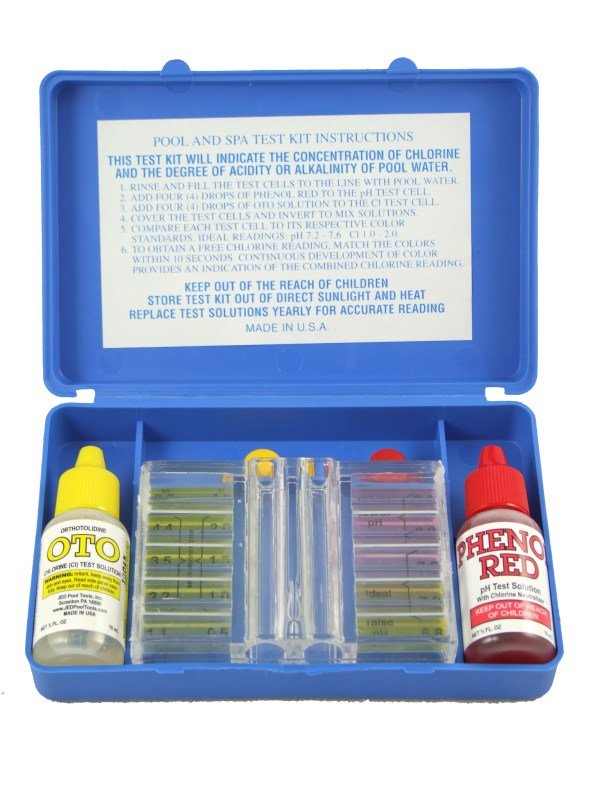
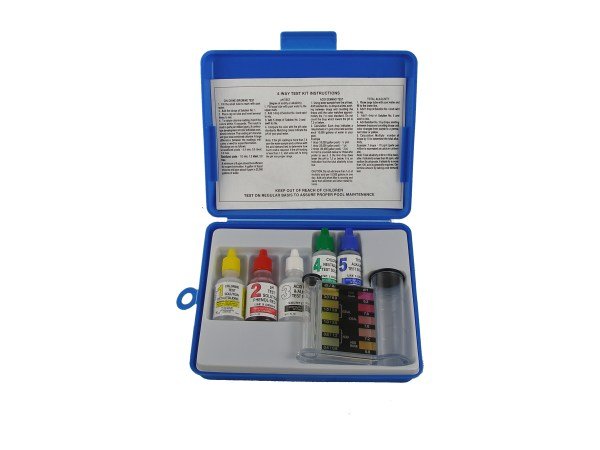
Before treatment, bring pH into the 7.2 to 7.6 range. Maintain total alkalinity from 60 to 120 ppm and calcium hardness above 200 ppm. These readings are separate from free chlorine, so use a test kit that measures each one. After a shock dose, continue circulation and test the water before swimmers return. Do not allow reentry while the chlorine residual is above 4 ppm. Pool size and the measured result decide the next step, not the appearance of the water alone.
Keep the oxidizer uncontaminated
Calcium hypochlorite is a strong oxidizer. Keep the single-use bag dry and away from heat, moisture, organic matter, acids, and other pool chemicals. Contamination can generate heat and chlorine gas or cause fire or explosion. Never place the granules in a feeder, skimmer, or dispenser that has held another chlorinating compound. Avoid breathing dust. Wear rubber gloves and protective eyewear, wash after handling, and keep the bag away from children. Store unopened product in a cool, dry place.
Active ingredients
ACTIVE INGREDIENT: Calcium Hypochlorite 68%. OTHER INGREDIENTS 32%. TOTAL 100%. Available Chlorine 65%.
Directions for use
EPA Reg. No. 69681-6. EPA PPLS identifies Cal-Shock as an alternate brand. This one-pound retail pack is a single-use shock bag for pools of 10,000 gallons or larger. Use the entire contents when opened. Add the required dose during evening hours while the filter pump is running. For direct addition, broadcast evenly over a wide area in the deepest part of the pool. Brush any granules that settle. Reentry into treated pools is prohibited above 4 ppm chlorine residual.
| Label shock treatment | Rate per 10,000 gallons | Timing or target |
|---|
| Shock treatment / superchlorination | 10–20 oz | Every 7 days or as necessary to provide 5–10 ppm available chlorine; additional shock may be required for visible algae, high bathing loads, heavy wind and rain, odors or eye irritation |
Before treatment adjust pH to 7.2–7.6. Maintain total alkalinity 60–120 ppm and calcium hardness above 200 ppm. Use a reliable test kit. The label provides a skimmer method only when the pump is on and properly recirculating, the skimmer is empty, no automatic chemical dispensing device is present, and addition is slow enough that the product is drawn through at the same rate without accumulating. Do not use a feeder, skimmer, or other chlorinating device in which another chlorinating compound has been used. Package-specific bag directions govern when opened; routine measured rates and winterizing directions on the master label are for other container configurations.
Cautions
KEEP OUT OF REACH OF CHILDREN. DANGER. Highly corrosive. Causes skin and eye damage. May be fatal if swallowed. Do not get in eyes, on skin or on clothing. Do not handle with bare hands. Irritating to nose and throat. Wear rubber gloves and protective eyewear such as goggles, face shield or safety glasses. Do not breathe dust and fumes. Wash thoroughly with soap and water after handling and before eating, drinking, chewing gum, using tobacco or using the toilet. Remove and wash contaminated clothing before reuse.
FIRST AID: If in eyes, hold eye open and rinse slowly and gently with water for 15–20 minutes. Remove contact lenses, if present, after the first 5 minutes, then continue rinsing eye. Call a poison control center or doctor for treatment advice. If on skin or clothing, take off contaminated clothing and rinse skin immediately with plenty of water for 15–20 minutes. Call a poison control center or doctor for treatment advice. If swallowed, call a poison control center or doctor immediately for treatment advice. Have person sip a glass of water if able to swallow. Do not induce vomiting unless told to do so by poison control center or doctor. Do not give anything by mouth to an unconscious person. If inhaled, move person to fresh air. If person is not breathing, call 911 or an ambulance, then give artificial respiration, preferably mouth-to-mouth if possible. Call poison control center or doctor for treatment advice. NOTE TO PHYSICIAN: Probable mucosal damage may contraindicate the use of gastric lavage. Have the product container or label with you when calling a poison control center or doctor, or going for treatment. For emergency information, call the National Pesticides Information Center at 1-800-858-7378, 6:30 AM to 4:30 PM Pacific time, seven days a week. At other times call poison control at 1-800-222-1222.
FIRE OR EXPLOSION COULD RESULT FROM IMPROPER USE. DO NOT USE THIS PRODUCT IN ANY FEEDER, SKIMMER OR OTHER CHLORINATING DEVICE IN WHICH ANY OTHER CHLORINATING COMPOUND HAS BEEN USED.
ENVIRONMENTAL HAZARDS: This pesticide is toxic to fish and aquatic organisms. PHYSICAL AND CHEMICAL HAZARDS: CONTAMINATION MAY CAUSE FIRE OR EXPLOSION! MIX ONLY INTO WATER. DANGER: STRONG OXIDIZING AGENT: Mix only with water. Use clean, dry utensils. Do not add this product to any dispensing device containing remnants of any other product. Such use may cause a violent reaction leading to fire or explosion. Contamination with moisture, organic matter, or other chemicals will start a chemical reaction with generation of heat, chlorine gas and possible generation of fire and explosion. In case of contamination or decomposition, do not reseal container. If possible, isolate container in open air or well ventilated area. Flood with large volumes of water if necessary.


 Ask Daisy