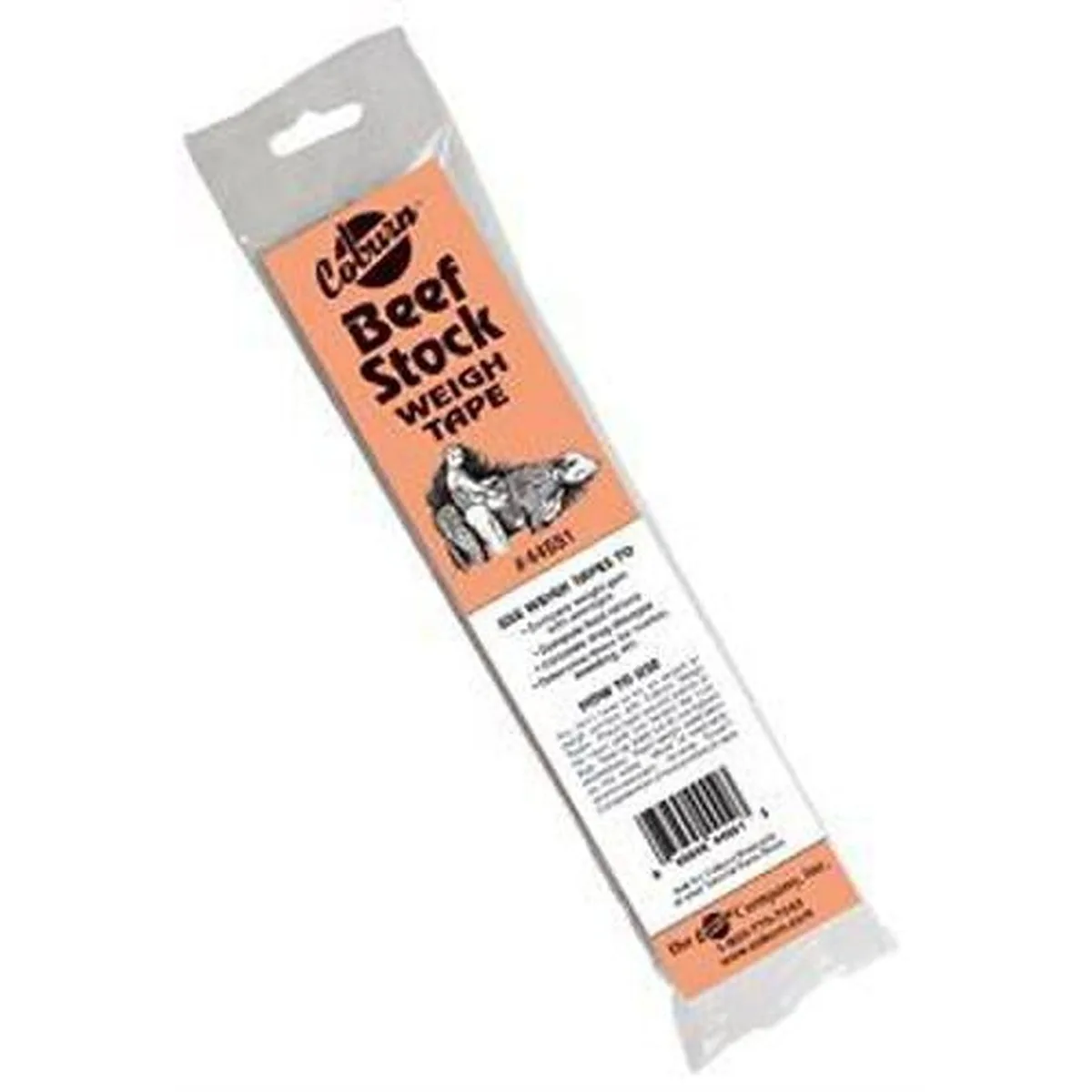
A weigh tape takes the guesswork out of a cattle check. Wrap it around the heart girth, read the scale and you have a working weight for the animal in front of you, whether you're sorting a pen, figuring a ration or setting up a feeding plan.
This tape is scaled for body condition from thin to very fleshy, so a rangy heifer and a fleshy steer both land on a usable number. One side reads in inches and pounds, the other in centimeters and kilograms, for animals up to 1,600 lb or 734 kg. At 108 inches (274 cm) it is long enough to wrap a big-framed cow, and the double-thick Tyvek resists rips, rot and mildew.
Highlights
- Reads weight in pounds or kilograms
- Covers cattle up to 1,600 lb or 734 kg
- Scaled for thin to very fleshy body condition
- Double-thick Tyvek resists rips, rot and mildew
- 108 inches (274 cm) long
- Comes with instructions and helpful tips
Why choose a weigh tape
A cattle scale gives the best number, but most folks don't have one in the barn lot. A weigh tape gives you a repeatable estimate you can take to the pasture, the sale barn or the feed room. The numbers matter when you're figuring a ration, deciding when to sell or checking whether a pen is gaining the way it should.
Repeatable is the key word. Measuring the same way each time makes week-to-week comparisons meaningful. A tape that resists rips and mildew keeps its printed scale clean and easy to read through mud and manure, and that is worth more than a fancy gadget that quits on the first wet day.
It suits a cattle owner running a few head, a stocker operation tracking gain, a 4-H family or a small herd manager who wants a number without a trip to the scale. Keep one in the truck and one in the barn, and you'll never be without a weight when a question comes up at the fence.
At a glance
| Material | Double-thick Tyvek |
|---|
| Length | 108 in / 274 cm |
|---|
| Weight range | Up to 1,600 lb / 734 kg |
|---|
| Scales | Inches and pounds on one side, centimeters and kilograms on the other |
|---|
| Includes | Instructions and helpful tips |
|---|
How to use it
A few habits make the reading repeatable from one check to the next:
- Find a level floor and get all four legs under the animal.
- Keep the head up in a normal position, not lowered toward the ground.
- Remove heavy dirt and manure from the underside so the tape sits on the body.
- Place the tape around the heart girth, just behind the front legs and shoulder blades.
- Take up the slack without tightening too much, keeping the tape flat and untwisted.
- Read the weight on the scale and write it down with the date.
Good to know
- Use the weight to figure feed rations and weight-based dosages instead of guessing.
- Compare weight gain against your averages to see whether a pen is on track.
- Store the tape back in its header-card bag so the printed scale stays clean and easy to read.
- Weigh the same way each time, on the same kind of ground, so the numbers line up.
- Pair the tape with ID tags so each weight goes with the right animal.
About Coburn
Coburn traces its start to 1925, when Orrie Coburn founded an electric fence company in Wisconsin. The business grew through several generations of the Coburn family into the livestock and farm supply company it is today.
Get a tape in the truck before the next sale barn trip.

 Ask Daisy