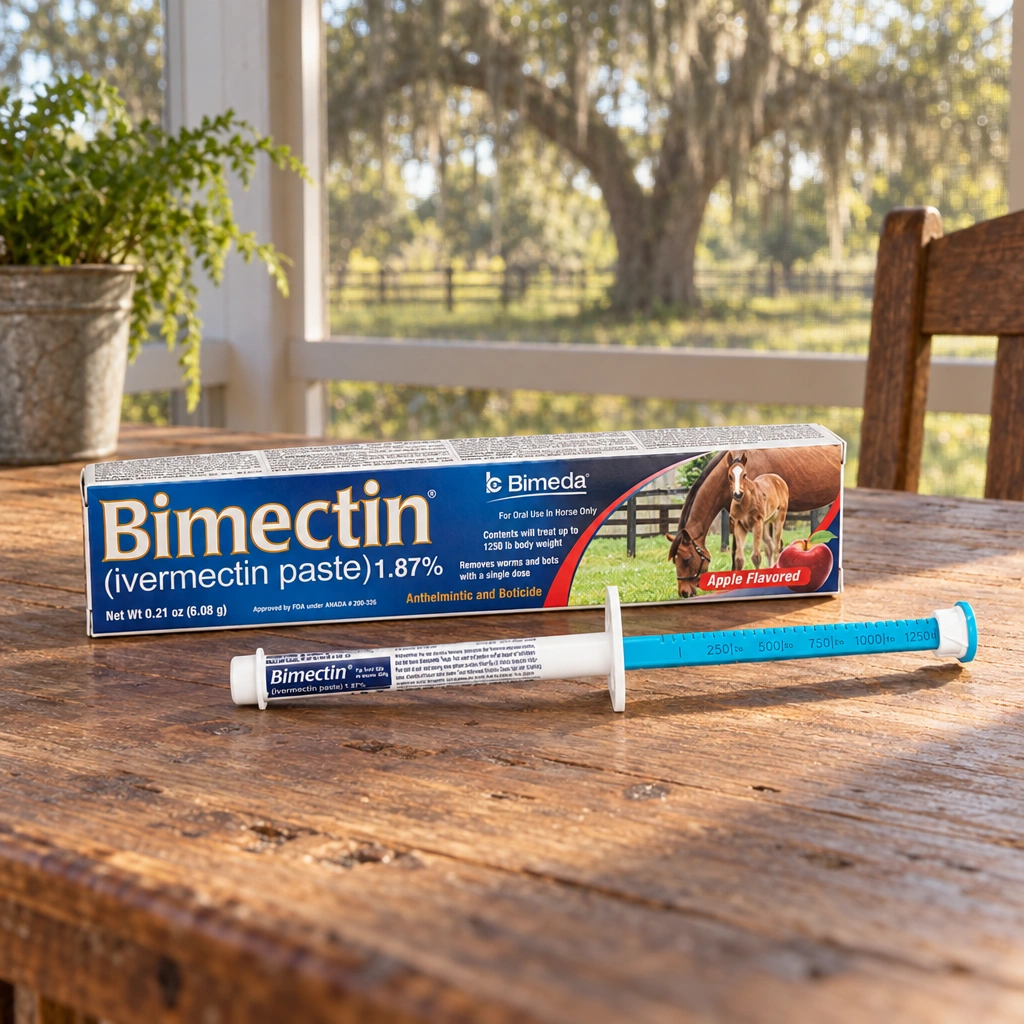
A calibrated 6.08 g ivermectin paste syringe for oral use in horses. Dose from current body weight and follow the complete package label.
One calibrated dose for a horse
Bimectin Paste contains 1.87% ivermectin and comes in a single 6.08 g plastic syringe. It is labeled for oral use in horses only. The syringe markings help a keeper set a dose by body weight, with one syringe containing enough paste to treat a horse up to 1,250 lb at the recommended dose. The current label gives 91 micrograms of ivermectin per pound (200 micrograms per kilogram) and says each weight marking covers 250 lb. Use an up-to-date weight, place the paste on the back of the horse's tongue, and make sure the complete dose is swallowed. This is an individual syringe rather than a multi-dose bottle. The apple flavor and paste form can make administration more manageable, but accurate weight-based dosing still matters. The label includes adult large and small strongyles, certain larval stages, pinworms, ascarids, hairworms, large-mouth stomach worms, bots, lungworms, intestinal threadworms, summer sores, and dermatitis associated with neck-threadworm microfilariae. That broad list helps explain where ivermectin paste may fit in a horse parasite plan. It is not a claim that one dewormer covers every parasite or that all horses need the same schedule. A veterinarian can help select products based on the horse's age, health, fecal testing, prior treatments, and local parasite resistance. Underdosing can leave parasites untreated and encourage resistance. Do not use this horse product in dogs or other species. It should not be used in horses intended for human consumption. Consult a veterinarian if a horse is sick, has a heavy parasite burden, or has previously reacted to a deworming product. Bimectin's label describes the product as an anthelmintic and boticide, and notes that swelling or itching may occur in horses carrying heavy neck-threadworm microfilariae. A veterinarian should be consulted if such a reaction occurs. Healing summer sores with extensive tissue changes may require other therapy. Store the syringe in its original package and keep it away from children. Do not use it in people. After treatment, record the date, horse, estimated or measured weight, product, and dose so future decisions can be guided by the horse's actual history. The label recommends discussing parasite diagnosis and control with a veterinarian rather than relying on a fixed rotation. Check the package before use to confirm the correct species and directions. The 6.08 g size refers to the paste in one syringe; distributors may ship cases or displays containing multiple syringes, which are different package quantities.
Product label details
Active ingredient: ivermectin 1.87% (18.7 mg/g). Route: oral. Species: horses only. Package: one 6.08 g syringe (NDC 61133-6012-1). OTC animal drug; approved under ANADA 200-326. Labeled as an anthelmintic and boticide.
Directions for use
One syringe treats a 1,250 lb horse at the recommended dose of 91 mcg ivermectin per lb (200 mcg/kg) body weight. Each weight marking delivers enough paste to treat 250 lb. Do not underdose. Ensure each horse receives a complete dose based on current body weight. Administer orally on the back of the tongue.
Cautions
WARNING: Do not use in horses intended for human consumption. Not for use in humans. Keep this and all drugs out of reach of children. Refrain from smoking and eating when handling. Wash hands after use. Avoid contact with eyes. The Safety Data Sheet (SDS) contains more detailed occupational safety information. To report suspected adverse drug events, for technical assistance, or to obtain a copy of the SDS contact Bimeda, Inc. at 1-888-524-6332. For additional information about adverse drug experience reporting for animal drugs, contact FDA at 1-888-FDA-VETS or www.fda.gov/reportanimalae. PRECAUTIONS: Bimectin (ivermectin paste) has been formulated specifically for use in horses only . This product should not be used in other animal species as severe adverse reactions, including fatalities in dogs, may result. OTHER WARNINGS: Parasite resistance may develop to any dewormer, and has been reported for most classes of dewormers. Treatment with a dewormer used in conjunction with parasite management practices appropriate to the geographic area and the animal(s) to be treated may slow the development of parasite resistance. Fecal examinations or other diagnostic tests and parasite management history should be used to determine if the product is appropriate for the herd prior to the use of any dewormer. Following the use of any dewormer, effectiveness of treatment should be monitored (for example, with the use of a fecal egg count reduction test or another appropriate method). A decrease in a drug's effectiveness over time as calculated by fecal egg count reduction tests may indicate the development of resistance to the dewormer administered. Your parasite management plan should be adjusted accordingly based on regular monitoring. Environmental Safety : Ivermectin and excreted ivermectin residues may adversely affect aquatic organisms. Do not contaminate ground or surface water. Dispose of the syringe in an approved landfill or by incineration. INFORMATION FOR HORSE OWNERS : Swelling and itching reactions after treatment with Bimectin (ivermectin paste) have occurred in horses carrying heavy infections of neck threadworm ( Onchocerca sp.) microfilariae. These reactions were most likely the result of microfilariae dying in large numbers. Symptomatic treatment may be advisable. Consult your veterinarian should any such reactions occur. Healing of summer sores involving extensive tissue changes may require other appropriate therapy in conjunction with treatment with Bimectin. Reinfection, and measures for its prevention, should also be considered. Consult your veterinarian if the condition does not improve.

 Ask Daisy