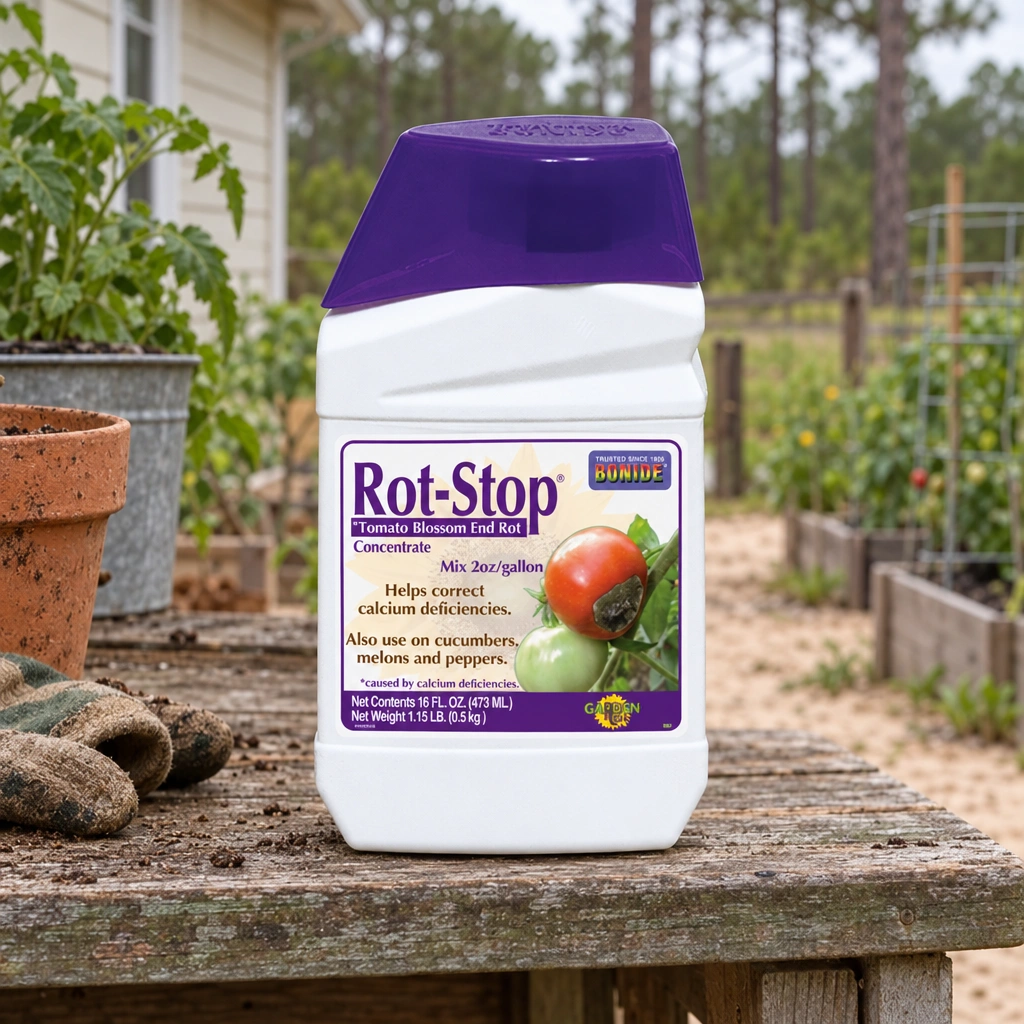
A calcium chloride concentrate for labeled vegetables, intended to help prevent blossom end rot as developing fruit grows.
A nutrient spray for blossom end rot
Rot-Stop is a plant nutrient concentrate that supplies calcium. Its guaranteed analysis lists 9.20% calcium, derived from calcium chloride. The label describes blossom end rot as a calcium-deficiency disorder and notes that excess nitrogen fertilizer can aggravate the problem in tomato plants. The disorder appears as a dark, sunken area at the blossom end of fruit. This product is intended to help correct calcium deficiency on labeled crops, not to treat fungal disease or insect damage.
Prevention during fruit growth
Blossom end rot develops in the fruit while it is growing, so the useful decision comes before the damage is visible across a harvest. Rot-Stop fits a prevention plan for tomatoes and other labeled vegetables during fruit development. It is not a repair treatment for fruit that already has sunken lesions. Gardeners can remove damaged fruit while protecting later developing fruit, but the application must follow the package’s crop and timing directions.
Concentrate for a sprayer
This pint-size product is a liquid concentrate. The label describes mixing it with water and applying it as a foliar spray, which makes it suitable for a gardener who can prepare and apply a measured batch to labeled plants. It is different from a granular soil amendment and from a ready-to-use bottle. Use the label’s method and rate for the crop, rather than applying calcium concentrate as though it were ordinary irrigation water.
Water management still matters
The product label points to factors that can worsen blossom end rot, including too much nitrogen fertilizer. Stable soil moisture is another important part of prevention because uneven water supply can interfere with calcium movement into developing fruit. Regular watering and mulch can help reduce sharp swings in soil moisture. Rot-Stop supplies calcium as a foliar nutrient. Foliar calcium sprays are not effective at reducing blossom end rot: little calcium is taken up by the fruit, and calcium absorbed by leaves does not move into the fruit. Proper fertilization and steady water management remain the more useful prevention measures.
Calcium supply and fruit condition
A dark lesion on the blossom end is damaged fruit tissue, so adding calcium cannot turn that tissue back into sound fruit. The useful aim is preventing the disorder in fruit that is still developing. Calcium deficiency in the fruit is also different from proving that an entire garden soil lacks calcium. Moisture stress and rapid growth can affect delivery within the plant. This is why the nutrient spray and the growing conditions belong in the same decision, rather than treating every dark fruit spot with a fungicide.
Directions for use
DIRECTIONS FOR USE: Apply Only As Directed. Apply Bonide Rot-Stop at the rate of 2 fl. oz. (4 Tbs.) per gallon of water. Apply to the point of run-off onto the foliage and fruit during periods of rapid growth or following excessive rain fall. Apply in early morning or evening when temperatures are lower to avoid foliage burn. Make applications 5 to 7 days apart when conditions are favorable for appearance of the disorder. Regular spray programs are not recommended as prolonged spraying and rates in excess of those specified can cause foliage burn. Foliar fertilization is intended as a supplement to a regular fertilization program and may not, by itself, provide all the nutrients normally required by crops or other intended plants.
Cautions
STORAGE: Store & transport in an upright position. Store in the original container in an area out of reach of children & pets.


 Ask Daisy