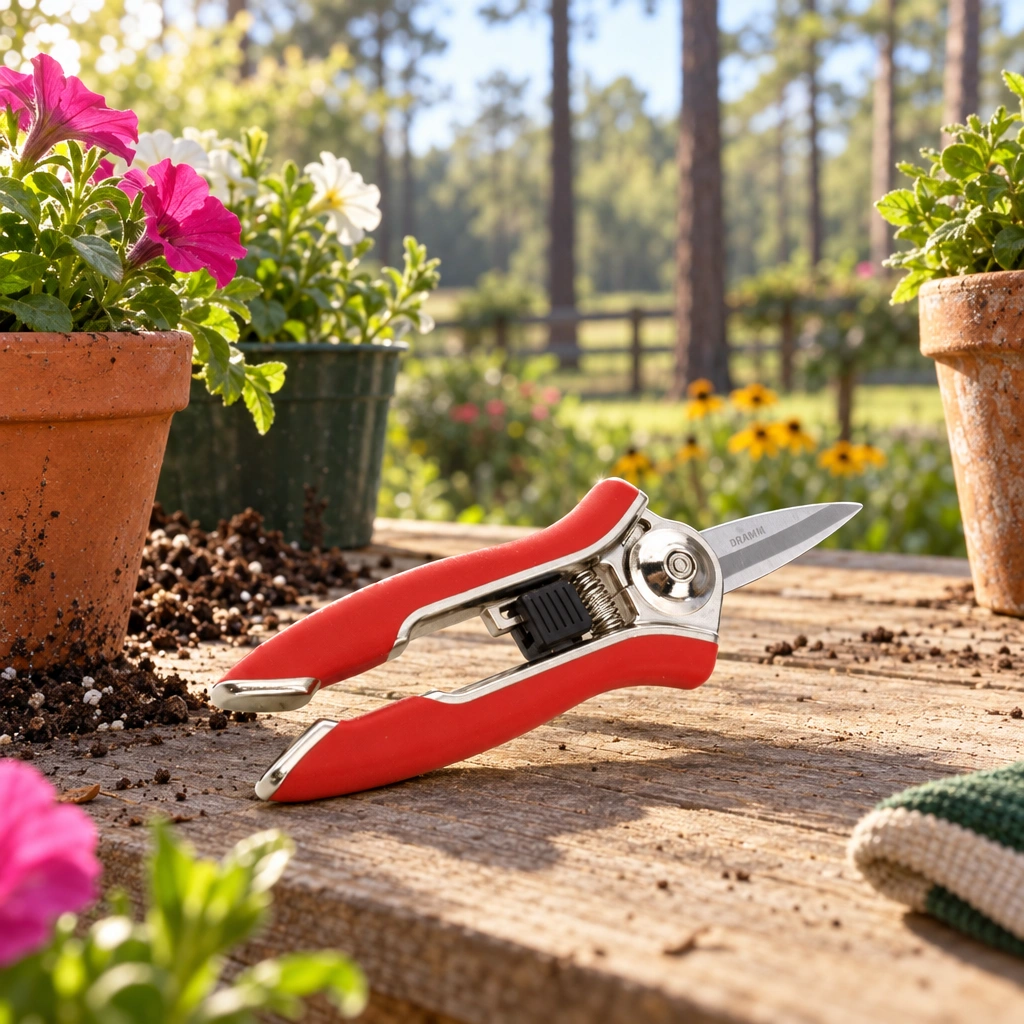
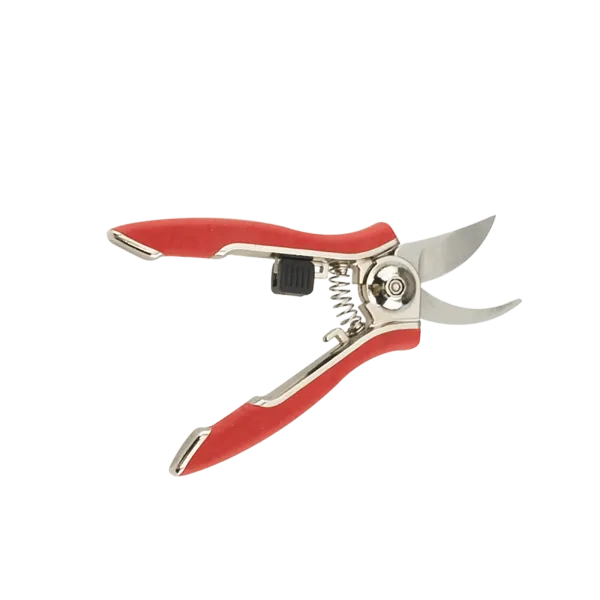
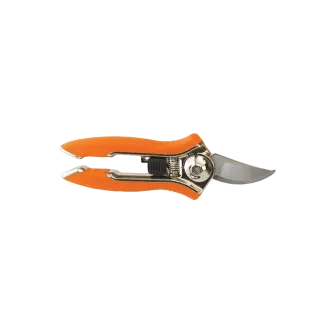
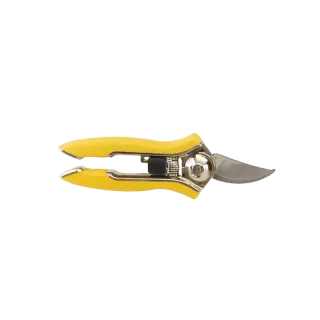
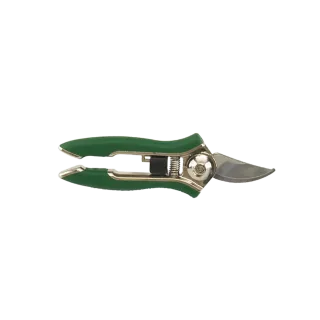
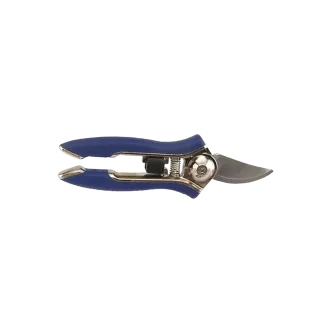
A compact pointed shear trims flowers and plants with stainless steel blades for detailed cuts.
Start with the job this tool does
A compact shear is handy for deadheading flowers, trimming back small stems and making close cuts where a larger pruner feels clumsy. The narrow point helps reach into a crowded planting or make a precise cut among flowers. It suits flower cutting, plant trimming and detailed work such as bonsai care. Its small size makes it convenient to keep near a potting bench or carry for short garden maintenance sessions. It is a hand cutting tool for small jobs, not a substitute for a saw or heavy branch pruner.
Use the product's controls with care
Corrosion-resistant stainless steel blades pair with a shaped handle and non-slip grips. Hold the plant steady and make clean cuts with the blade positioned away from fingers and other stems. Use the fine point to reach the intended stem rather than forcing the shear through material that is too thick. Remove spent flowers cleanly so nearby stems remain intact. Wipe soil and plant residue from the blades after use, then store the shear closed or in a safe place where the points cannot catch skin.
Fit the tool to the area
Compact cutting tools can serve for flowers, light shaping and household trimming tasks, but the intended material matters. If the blades bind or require excessive force, stop and choose a tool rated for a heavier cut. Keep the cutting edges clean and dry between sessions, especially after working with damp plant material. Check the sliding lock before carrying or storing it, and keep the tool away from children. Avoid forcing the points through thick wood; use a pruner sized for that cut. The pointed blades help reach between stems, but they are meant for small cuts. If a stem resists, do not twist the shear; choose a larger cutting tool to avoid damaging the plant or bending the blade. A smaller shear is useful for close work where a long blade would be awkward, such as shaping herbs or removing spent flower stems. It is a hand pruner for small cuts, not a substitute for loppers on thick woody branches. Match the cut to the tool rather than twisting the blades through resistant stems.

 Ask Daisy