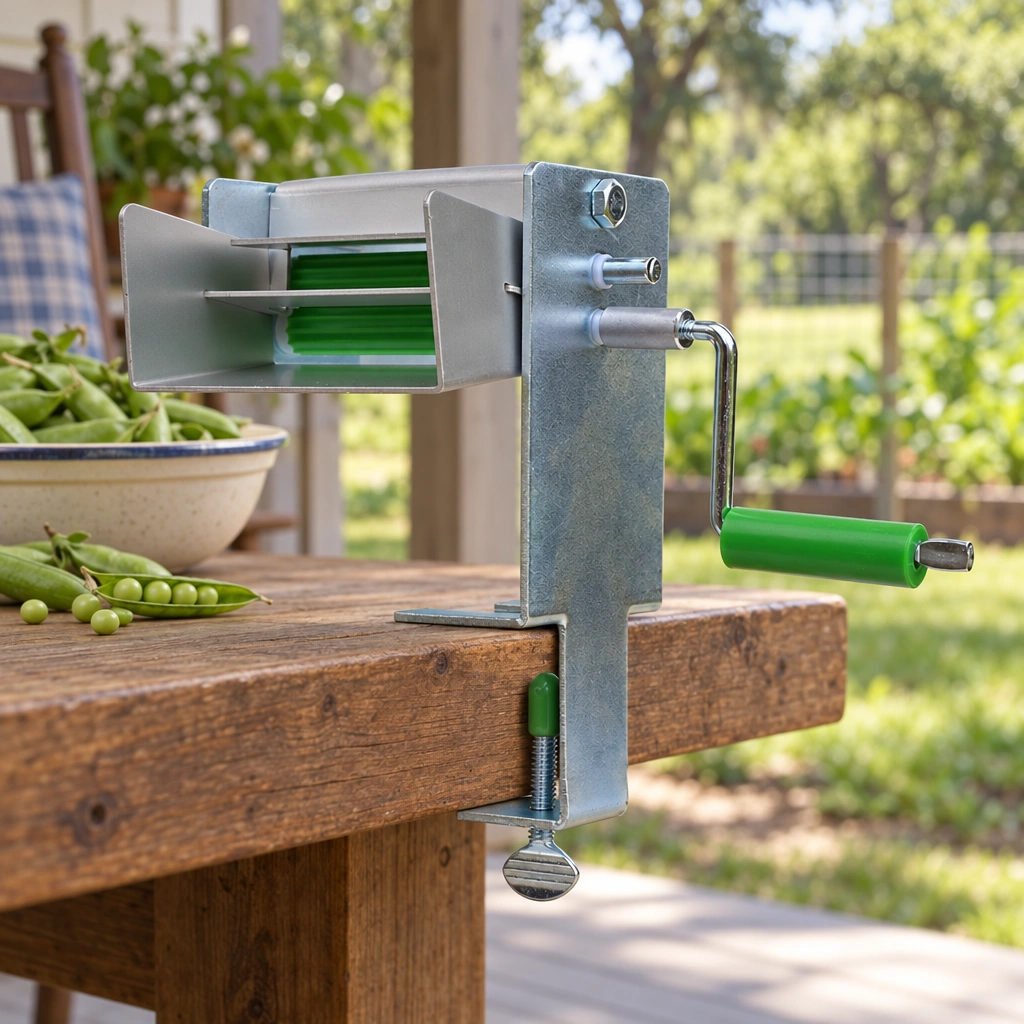
A hand-cranked pea and bean sheller with steel and aluminum construction, nylon gears and an option for powered operation.
Put the harvest through a sheller
The Pea Sheller Jr. separates ripe peas and beans from their pods using a pair of rollers. Feed a pod into the upper slot as you turn the crank. The empty hull passes through the rollers while the peas or beans roll down the trough into a pan underneath. It is a practical way to work through a garden harvest at a table instead of opening every pod by hand.
Start with peas ready for hand shelling
Use fully developed peas or beans that are ripe enough to shell with your fingers. About a quarter inch or larger gives the best results. Pods that are very green, dry and hard, or unusually tough can be difficult to process. Rinse away dirt and other debris before shelling and leave the pods slightly wet. Keep vines and foreign objects out of the rollers. A freshly picked harvest may benefit from curing at room temperature before shelling.
Set up a firm working place
Mount the sheller on a sturdy table edge, workbench or board. Protect the mounting surface where needed. Set a pan below the trough and leave room on the far side for the hulls to come through. Attach the hand crank to the threaded bottom roller shaft using its nut. The sheller uses steel and aluminum parts with nylon gears. Replacement rollers are available when the original rollers need attention.
Cranking and powered operation
Turn the crank while feeding pods into the rollers. The upper shaft should rotate clockwise when viewed from the side opposite the handle. Feed lima or butter bean pods at an angle with the thicker vine end first. A lightweight electric drill or hand mixer can power the sheller, but always remove the hand crank before using a drill. Support and position the drill properly rather than leaving its weight to pull on the shaft.
Keep the grooves clear
Wipe the roller grooves with a wet cloth whenever pod material starts to build up. Accumulated debris interferes with shelling. After use, clean the rollers and loading tray; a stiff-bristled brush works well between the roller splines. Store the sheller in its original packaging. Cleaning during the job matters too, especially when one batch of pods leaves enough residue to affect how the next batch feeds.

 Ask Daisy