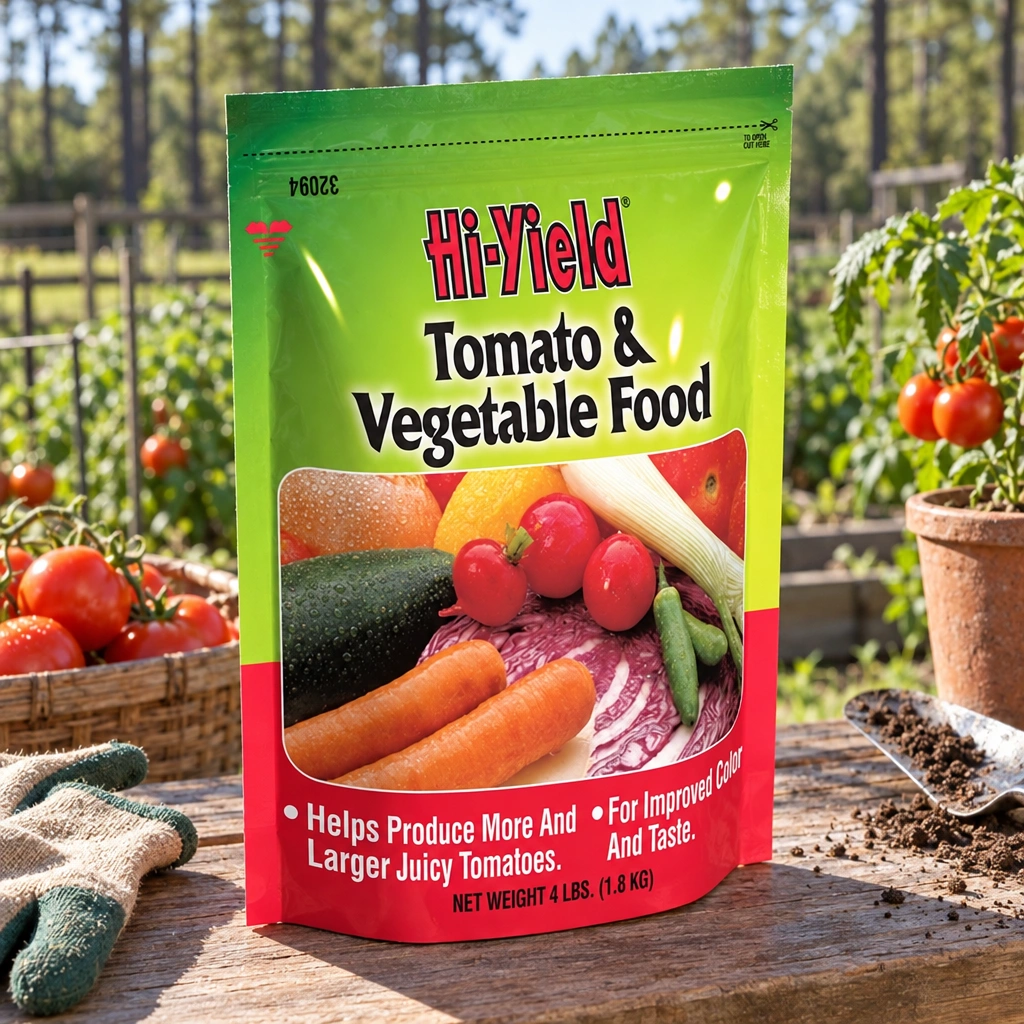
Granular fertilizer for in-ground vegetable plantings, with separate label directions for transplants and established beds or rows.
A granular choice for garden beds
Granular fertilizer suits an in-ground vegetable plot where the grower can spread material over the planting area and work it into soil. This product is intended for tomatoes and vegetables in beds or rows. It is not recommended for container-grown plants, where a different fertilizer product is a better fit. Pots have a smaller volume of growing mix and a different watering pattern than a garden bed, so use a product labeled for container culture.
Let the soil test guide phosphorus
The fertilizer grade is only one part of choosing a garden amendment. Existing soil nutrients matter. Many Florida soils already contain adequate phosphorus, and a soil test can show whether a vegetable bed needs more. Applying nutrients without checking the soil can add material the crop does not need. Use the test results and the product label together when deciding whether this fertilizer belongs in a particular bed.
Keep fertilizer near the active roots
Vegetable roots draw nutrients from the soil around them. Apply fertilizer to the intended root area, whether the planting is organized as a bed or a row, and keep it away from direct contact with stems. A broad bed and a narrow row have different layouts, which is why the package treats them as separate situations. Incorporating granules into soil places them where roots can reach them as plants grow. Avoid treating bare paths or areas outside the crop’s growing zone.
Moisture and plant stage matter
Roots take up dissolved nutrients from moist soil. The product directions call for watering after use. Moisture helps fertilizer nutrients move into soil and become available to plants. New transplants and established crops are different stages of a planting, so the package gives each its own method. Plan around the crop layout before spreading and follow the direction for that stage. This keeps fertilizer tied to the plants that need it, while the soil test helps determine whether added nutrients are appropriate at all.
Directions for Use
| Planting situation | Application rate | Directions |
|---|
| New tomato plants | 2 tablespoons per plant | Mix thoroughly with soil in each hole. Water each setting thoroughly after application. |
| Established plants in beds | 2 pounds per 50 square feet of row | Work lightly into soil and water in thoroughly. |
| Established plants in row | 1¼ pounds per 20 feet of row | Work lightly into soil and water in thoroughly. |
Buyer assumes all risk of use,storage or handling of this material not in strict accordance with directions given herewith.
This product is not intended for nor recommended for container grown plants.
KEEP OUT OF REACH OF CHILDREN.
Guaranteed Analysis
| Component | Amount |
|---|
| Total Nitrogen (N) | 4% |
| Ammoniacal Nitrogen | 4.0% |
| Available Phosphate (P2O5) | 10% |
| Soluble Potash (K2O) | 6% |
Derived From: Ammonium Phosphate, Ammonium Sulfate, Muriate Of Potash.

 Ask Daisy