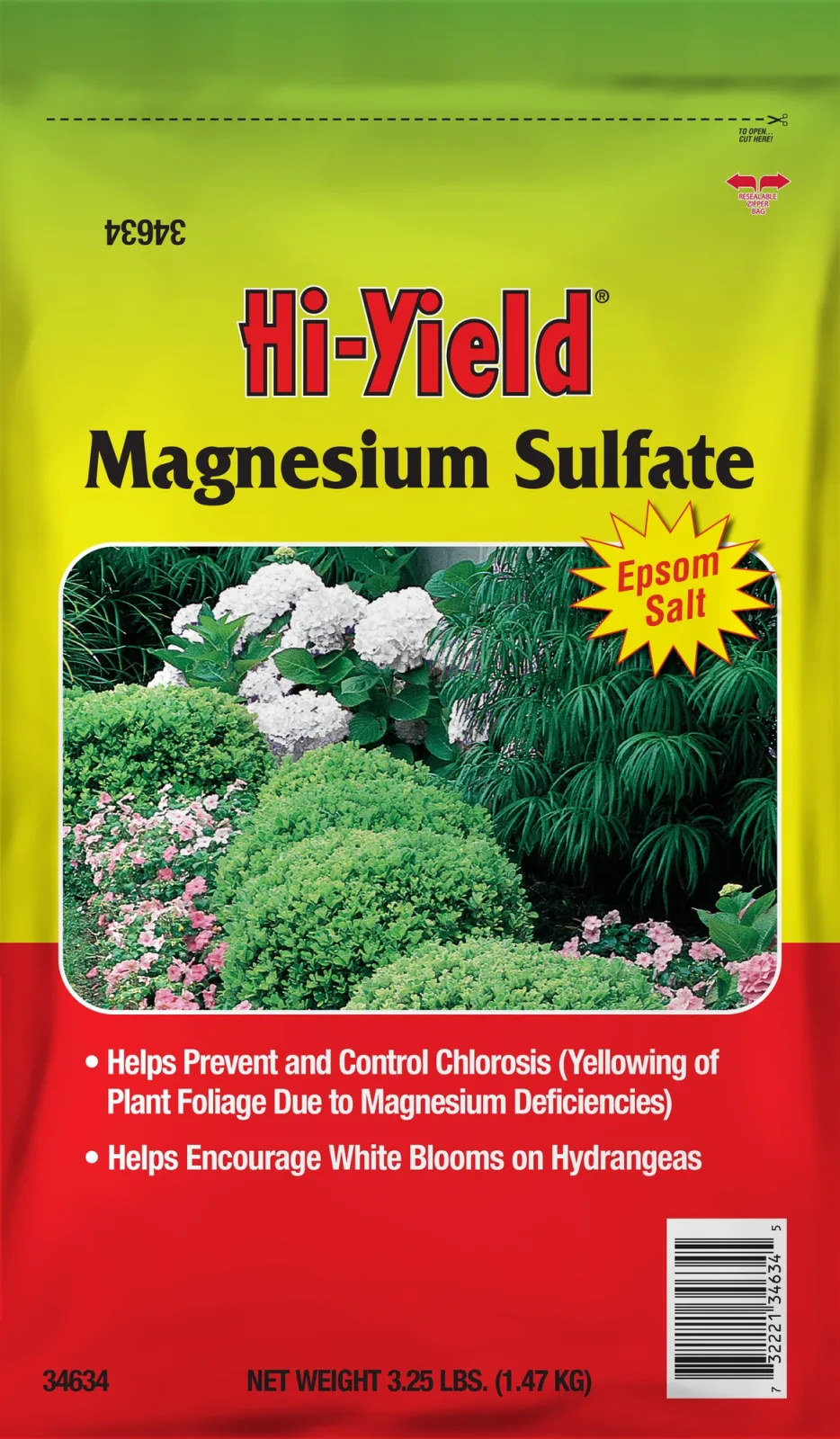
Yellowing leaves with green veins are a common sign that a plant is short on magnesium. Magnesium sulfate gives those plants a soluble source of magnesium they can take up, and it works two ways: a foliage spray for leaves that need a quick lift, and a soil application for a longer supply.
Keep it on the shelf for palms, hydrangeas and any garden plant that turns pale between the veins. It is easy to mix and easy to apply, and it goes a long way when you follow the rates.
Highlights
- Helps correct chlorosis
- Encourages white hydrangea blooms
- Soluble magnesium source
- Foliage spray or soil application
- Excellent for use on palms
Why magnesium matters for green leaves
Magnesium sits at the center of chlorophyll, the green pigment plants use to make food. When a plant runs low, the leaves often yellow between the veins while the veins stay green. That pattern is chlorosis. Magnesium is one of the nutrients behind it, especially when the older leaves show it first.
Sandy soil often runs short because water carries magnesium down past the roots. A bed can lose it even after regular feeding. A soluble form like this one puts magnesium where the plant can reach it quickly, which is the whole point of a foliage spray.
Who it suits: palm owners, hydrangea lovers who want white blooms, and anyone whose shrubs are turning pale between the veins.
At a glance
| Form | Granular |
|---|
| Application | Trees, shrubs, gardens and plants |
|---|
| Magnesium (Mg) | 9.5% (water soluble) |
|---|
| Sulfur (S) | 12.5% combined sulfur |
|---|
| Source | Agricultural grade Epsom salts (magnesium sulfate) |
|---|
How to use it
Use the rate that matches your job, and water thoroughly after each application.
- Foliage spray: mix 2 tablespoons per gallon of water. Soak the leaves thoroughly with a sprayer or sprinkling can.
- Soil application: apply 1 lb per 100 square feet and water thoroughly.
- Hydrangea blooms: apply 1 lb per 100 square feet and water thoroughly to encourage white blooms.
- Apply once a month as needed.
Good to know
- Get a soil test from your county extension office before adding more magnesium, so you know whether the soil needs it.
- Sandy beds benefit from organic matter. Working in compost or composted manure helps hold water and nutrients where roots can use them.
- Water after a soil application so the magnesium moves into the root zone.
- Keep a supply on the shelf so you are ready when the hydrangeas start setting buds.
About Hi-Yield
Hi-Yield is made by Voluntary Purchasing Groups, Inc. of Bonham, Texas, whose garden brands have served independent merchants for over 50 years. Hi-Yield is sold through independent dealers, not big box stores, so you can find it at a shop like this one.
Keep a supply on the shelf for the next round of garden care.
Cautions
The product is not intended for nor recommended for container grown plants.
KEEP OUT OF REACH OF CHILDREN

 Ask Daisy