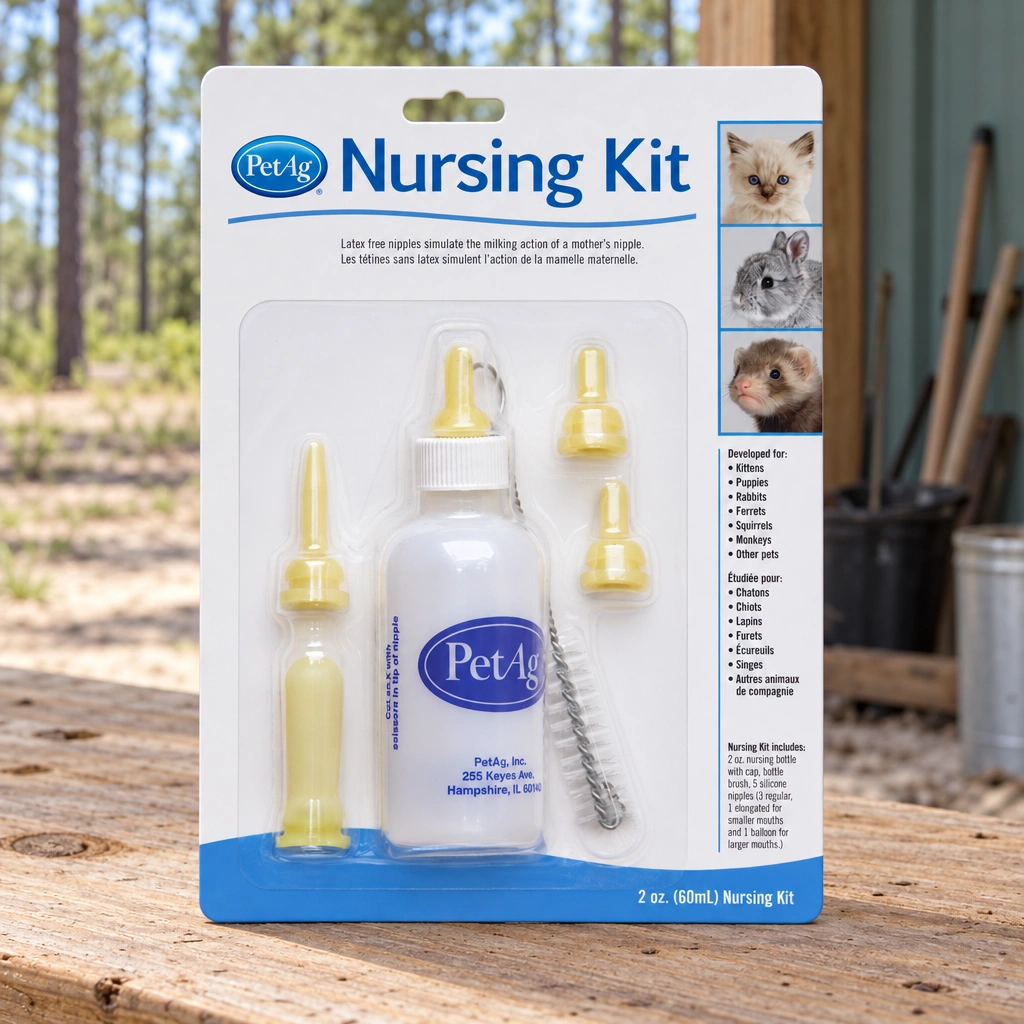
A small-animal nursing kit with a graduated 2 oz bottle, cap, cleaning brush and five silicone nipples.
A small bottle for young animals
The PetAg Nursing Kit has a graduated 2 oz bottle for young small animals. The marks help a caretaker note how much liquid an animal takes during a feeding, which is useful when tracking intake across a litter or discussing progress with a veterinarian. It is feeding equipment, not milk replacer; choose a formula appropriate for the animal separately.
Five nipple shapes to choose from
The kit contains three regular nipples, one elongated nipple and one balloon nipple. The flexible silicone is latex-free. The elongated shape can suit a smaller mouth, while the balloon shape is intended for a larger mouth or longer palate. Keeping several shapes available lets a caretaker compare the fit without substituting an improvised opening.
Keep feedings measurable
A bottle feeding can be recorded by time and amount, giving a caretaker a consistent way to compare intake from one session to the next. Use the bottle with Esbilac, KMR or another suitable liquid, and prepare that liquid according to its own feeding directions. The graduated marks help keep those observations concrete when more than one young animal is being cared for.
The brush fits the bottle
The bottle brush reaches inside the narrow bottle where residue can remain after a feeding. Wash the bottle and nipple with warm water and mild soap after use, then rinse thoroughly. Cleaning the bottle, cap and nipple as one routine helps prevent dried formula from building up between sessions.
Check the nipple before feeding
The nipples arrive without a pre-cut opening. Before the first feeding, make an opening with a small scissors crosscut or a needle puncture from the inside, then check the flow with water. Aim for a steady drip or thin stream under slight pressure, not a free-flowing stream. Inspect nipples after use and replace any that develop punctures or slits as young animals begin teething. If an animal is too small or weak to nurse, consult a veterinarian before relying on bottle feeding.
Product details
PetAg Nursing Kit, 2 oz
| Maker item | 99800 |
|---|
| Retail unit | One kit; UPC 020279998006 |
|---|
| Includes | 2 oz bottle with cap, bottle brush, five silicone nipples: three regular, one elongated, one balloon |
|---|
| Material | Flexible, latex-free silicone nipples |
|---|
| Intended use | Bottle-feeding young small animals |
|---|
Directions for use
The PetAg Nursing Kit and nursers are designed for bottle-feeding animals up to 6 weeks old who are orphaned or whose mothers are unable to nurse. Please follow these steps:
- Wash your bottles and nipples with warm water and mild soap prior to using. Use the bristle brush to clean the inside of the bottle. Rinse thoroughly.
- Make sure you cut the nipple prior to feeding. Our nipples do NOT come pre-cut. This allows you to customize the size of the opening to the animal you are feeding. You can make a simple crosscut with small scissors or use a needle to puncture the nipple from the inside, creating a hole. Check the flow with water. A steady drip or thin stream should be achieved when a slight pressure is applied to the nipple. If one or more of the animals is ill use a different bottle or feed ill animal last.
- Do NOT microwave the bottle to warm up the formula. Instead, microwave water in a microwave-safe dish and place the bottle with formula in the warm water. The water should not be boiling as that could damage the bottle.
- Inspect the nipples after each feeding. Only bottle-feed animals up to 6 weeks of age. As animals grow, their teeth start developing and it is important to make sure the nipple is not being chewed on during feeding, creating punctures and slits. If the nipple has any punctures, discard it and use a new nipple.
- Wash the bottles and nipples with warm water and mild soap after each use. The nursing kit includes a brush to easily clean the bottle. Rinse thoroughly.
Cautions
If one or more of the animals is ill use a different bottle or feed ill animal last. If the animal is too small or weak to nurse, consult your veterinarian. Do NOT microwave the bottle to warm up the formula. The water should not be boiling as that could damage the bottle.

 Ask Daisy