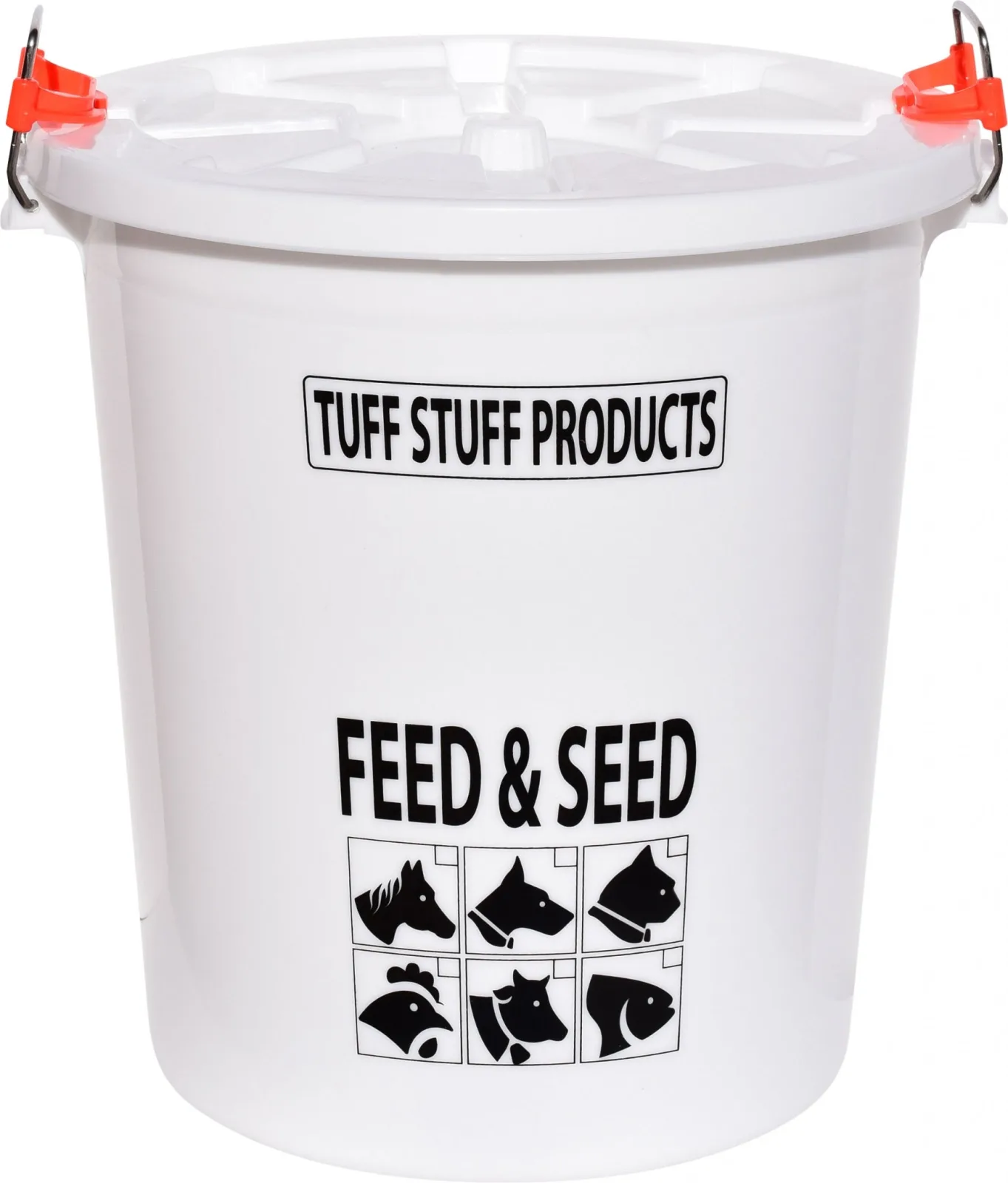
Every feed room needs one container that holds the bulk of the grain and keeps the mess in one place. This heavy-duty drum does that job. Feed and seed stay gathered in one sturdy container instead of spread across a stack of open sacks, so the room stays easier to keep clean and you always know where the next scoop is coming from.
The twist-and-lock lid keeps the top secured once it's closed, and the stainless locking handles give you a firm grip when you lift the drum to the truck or the feed room. It's built for the daily wear of a working barn, so it's a set-it-and-use-it piece you won't have to think about.
Highlights
- Heavy-duty construction for everyday barn storage
- Twist-and-lock lid keeps the top secured
- Stainless locking handle for a firm grip
- Gathers feed and seed in one container
Why a lidded drum beats open sacks
Feed left in open sacks on a barn floor picks up dust, moisture and the attention of mice and rats. A drum with a lid puts a barrier between the grain and all of that. Rodents chew through paper and thin plastic, so a solid container with a closed top is the simplest way to keep them out of what you paid for.
A drum also makes the feed room easier to work. Scoop from the same spot every time instead of tearing into a new sack each week or hunting for the one you opened last. In a horse barn, a chicken coop or a goat pen, one clean container by the door means less spilled feed on the floor and less time sweeping it up.
It handles more than one kind of feed. Pellets, sweet feed, cracked corn and garden seed all keep better in a closed, dry container than on the floor. Set the drum on a pallet or a raised spot, since damp concrete can hold moisture that feed soaks up.
At a glance
| Construction | Heavy-duty |
|---|
| Handle | Stainless locking handle |
|---|
| Lid | Twist and lock |
|---|
How to use it
Set it up once and keep it working:
- Set the drum on a dry, level spot away from walls where rain runs off, with a few inches of room to get the lid off and back on.
- Pour feed or seed in through the open top, then close the lid and twist it to lock.
- Lift the drum by its stainless handles and carry it close. Don't drag it across the floor.
- Wipe any dust or crumbs off the rim before you close the lid, so nothing gets under it.
- Sweep up spilled feed around the base and keep the area dry.
Good to know
- Write the feed and the date you filled it on a strip of tape on the lid, so everyone scoops the right feed.
- Keep a scoop on a hook beside the drum so nobody reaches for the feed sack and leaves it open.
- Use the oldest feed first. Top up the drum once it's nearly empty, so the feed doesn't sit for months.
- Keep the drum away from fertilizer, fuel and chemicals, and keep the lid closed so dust doesn't settle on the feed.
- Damp feed molds quickly. If feed gets wet, take it out and dry the drum before you refill it.
Pair the drum with a sturdy feed scoop and a clean broom in the same corner, so the whole chore is in one spot.
Get the drum in place before the next feed delivery.

 Ask Daisy