How Much Hay to Buy for a Horse in Winter
For a Baker-area horse with little or no usable pasture, start by budgeting hay from roughly November through March, then adjust to what the horse can actually graze. As a planning example, one 1,000-pound horse getting all forage from hay could require about 3,922 pounds to buy for 150 days, or 79 bales weighing 50 pounds each. That estimate assumes forage equal to 2% of body weight as dry matter, hay that is 85% dry matter, and 10% combined feeding and storage loss. It is a purchasing example, not a feeding prescription or a guarantee of local hay waste. Your horse, hay, pasture, and feeding setup change the total.
Start with the North Florida season
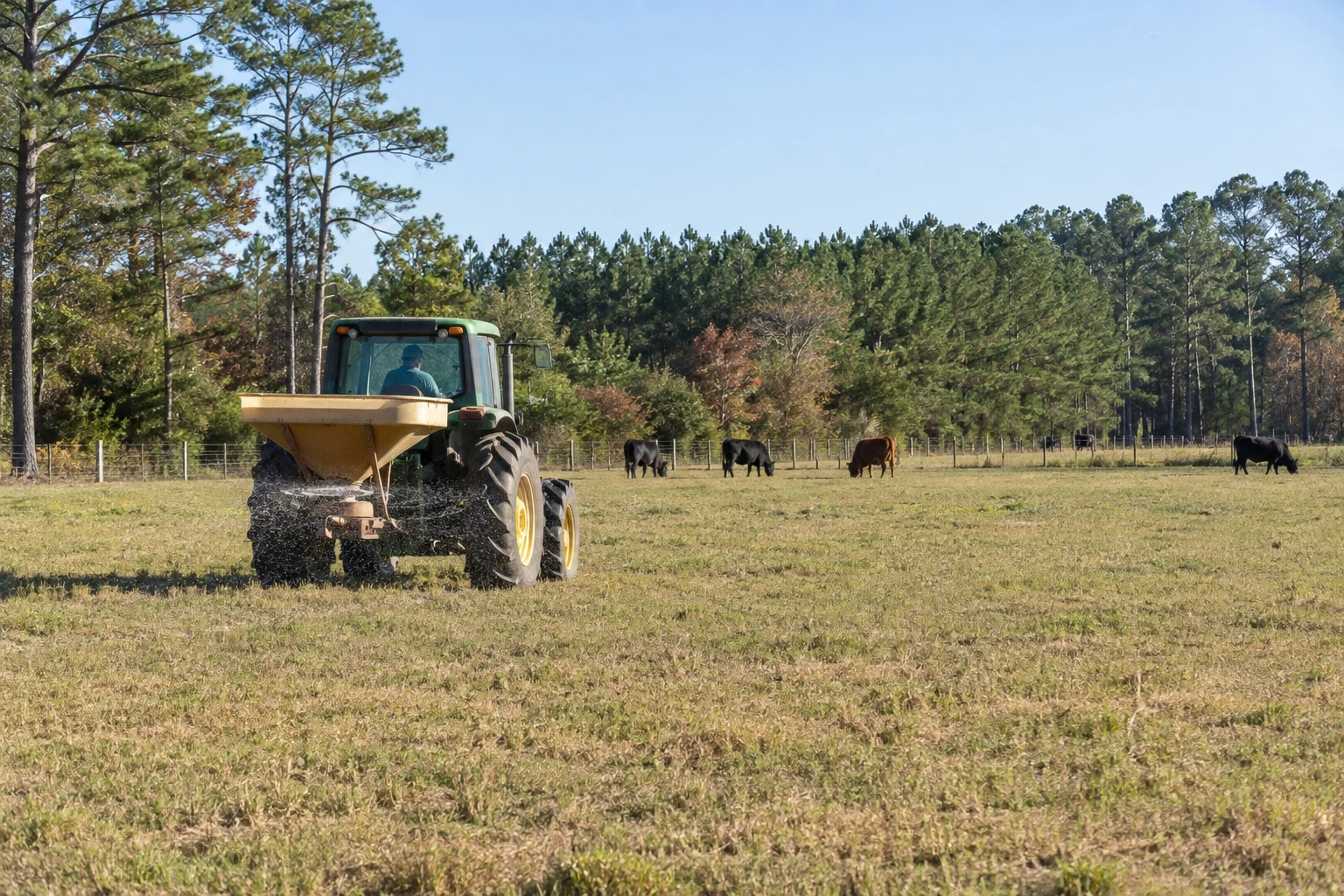
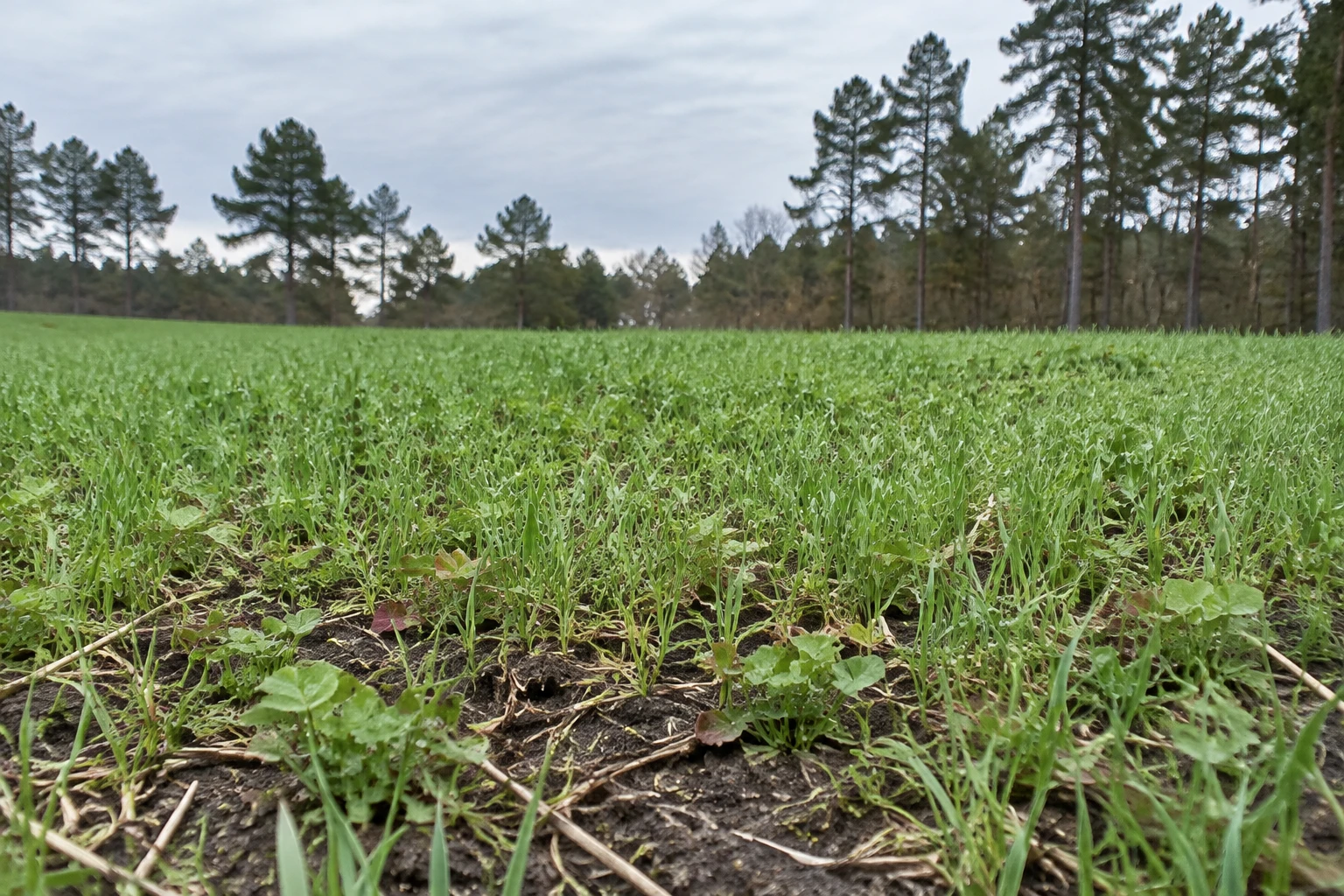
UF/IFAS describes November through March as a period when North Florida warm-season perennial pastures provide limited grazing. That makes five months a useful first budget window around Baker, but not a fixed hay season. A sound pasture, established winter annual forage, or a mild stretch may reduce the hay you use. Conversely, poor pasture, wet ground, or limited access may mean you feed hay sooner or longer. Don’t count grass just because it is visible; count forage the horse can reach and graze in a meaningful amount. UF/IFAS guidance on forage for horses
This regional calendar differs from places where winter means months of snow cover. In the Florida Panhandle, cold rain, wind, and a horse’s coat and body condition matter, but a northern winter feeding schedule does not automatically fit a Florida horse. Check weight and condition by touch under the winter coat, and adjust based on the individual horse rather than adding the same amount for every horse.
Calculate pounds before you count bales
The familiar “2% of body weight” guideline refers to dry matter, not the hay’s full scale weight. Dry matter is what remains after the water is excluded. UF/IFAS gives a general forage-consumption range of about 1.5% to 2.5% of body weight daily on a dry-matter basis for horses not receiving supplemental feed. The appropriate amount depends on the horse and its overall ration; ask your veterinarian or an equine nutrition professional for individual guidance. UF/IFAS guidance on feeding horses
Dry hay commonly contains 13% to 15% moisture, or about 85% to 87% dry matter. So a horse eating 20 pounds of dry matter needs more than 20 pounds of hay as weighed. At 85% dry matter, 20 pounds of dry matter is about 23.5 pounds of hay before losses.
Use this worksheet for a rough purchase estimate:
- Daily dry matter target = horse’s weight × selected daily forage percentage.
- Subtract dry matter supplied by other forage, if you can estimate it reliably.
- Divide the remaining dry matter by the hay’s dry-matter fraction. For hay at 85% dry matter, use 0.85.
- Multiply by the number of feeding days.
- Divide by 1 minus your estimated combined feeding and storage loss.
- Add the horses together, subtract usable hay already on hand, then divide by the verified average bale weight and round up.
For the example in the opening: 1,000 pounds × 0.02 = 20 pounds of dry matter per day. Divide by 0.85 and the horse consumes about 23.5 pounds of hay daily. Over 150 days, that is about 3,529 pounds eaten. Dividing by 0.90 to allow an illustrative 10% combined loss gives about 3,922 pounds to purchase. That rounds to 79 50-pound bales. The 10% is a budgeting assumption, not a measured loss rate for your farm.
A quick bale-count comparison
Using the same 1,000-pound horse, 2% dry-matter target, 85%-dry-matter hay, and illustrative 10% loss, the length of the feeding period changes the order substantially:
- 120 days: about 3,137 pounds, or 63 bales at 50 pounds each.
- 150 days: about 3,922 pounds, or 79 bales at 50 pounds each.
- 180 days: about 4,706 pounds, or 95 bales at 50 pounds each.
These figures assume the horse gets no meaningful forage from pasture or another source. If pasture supplies some of the daily forage, the hay amount can fall, but it is difficult to convert pasture into a precise hay credit without knowing how much the horse is eating. Reassess as conditions change instead of subtracting a guessed number of bales at the start.
Weigh hay and account for waste
Bales that look the same size can weigh very differently. Ask for verified average bale weight, or weigh representative small squares with a suitable scale. A “bale” is not a unit of feed until you know its weight. Compare delivered cost by weight: divide the delivered price per bale by the bale’s pounds, then multiply by 2,000 to get a cost per US ton.
Loss depends on how hay is stored and fed. In outdoor studies summarized by Minnesota Extension, small-square-bale waste was about 13% without a feeder and 1% to 5% with feeders. Round-bale waste reached 57% without a feeder and 5% to 33% with feeders. Those study results show why one universal waste allowance is unreliable; your setup may be different. A low price per bale can still cost more per pound the horse eats if much of it gets trampled, soiled, or spoiled. Minnesota Extension’s hay waste guidance
Small squares are often easier to handle by hand. Round bales usually need machinery and a suitable feeder. Choose a format that fits your equipment, storage space, and number of horses, not just the advertised price.
Choose and store hay for a Florida winter
Ask about an equine forage analysis rather than choosing by color, cutting number, or grass name alone. Useful measures include moisture, protein, minerals, sugar, and energy. Maturity matters: UF/IFAS notes that well-fertilized bahiagrass cut while immature can make decent hay, while quality declines as it matures, particularly after seedheads appear. Coastal, Jiggs, Tifton-44, Florakirk, and Tifton-85 are improved bermudagrasses found in the region; suitability still depends on the actual hay and the horse’s needs. UF/IFAS information on hay production in Florida
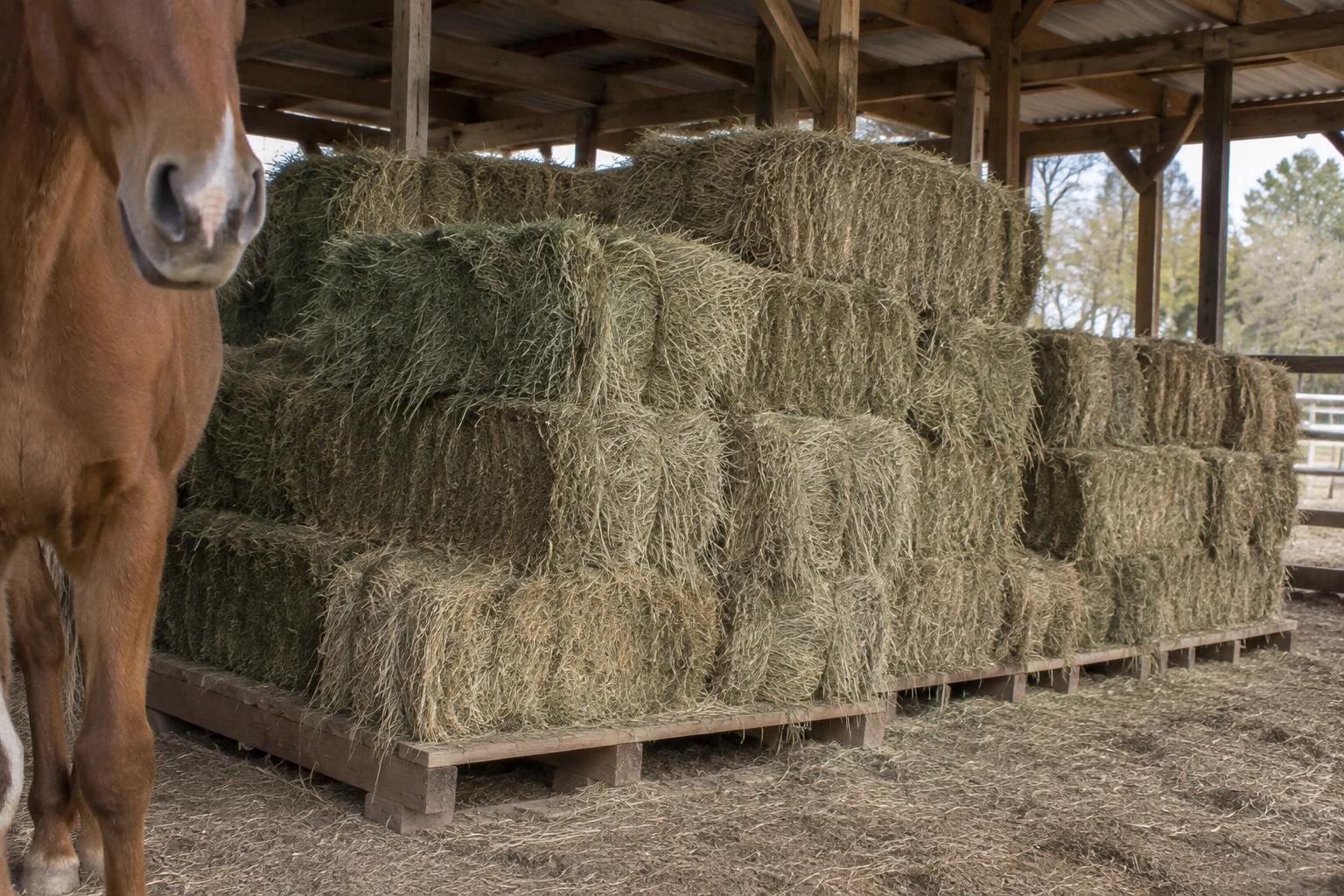
Florida humidity makes storage part of the hay budget. Keep hay under a sound, dry roof, elevated on pallets or another suitable surface, and away from ground moisture. For outdoor round bales, use a well-drained location and cover them; avoid low, damp spots. Use older hay first and inspect stored hay for moisture damage. If you cannot protect the entire winter supply, consider arranging staged deliveries rather than letting a large order sit exposed. University of Minnesota Extension’s guide to selecting and storing horse hay
What to buy and what to check
Before placing an order, write down each horse’s weight, the likely feeding period, usable pasture, hay already stored, and the average bale weight. Then check:
- Hay suitable for horses, with a forage analysis when available.
- Verified average bale weight, not just bale count or appearance.
- A feeding method that limits trampling and contamination.
- Covered, elevated storage protected from rain and ground moisture.
- A way to weigh portions if you need to monitor intake closely.
Baker Feed & Country Store’s Horse department is a place to ask about available horse-feed and forage options; confirm current hay availability and arrangements before making a trip. If you are unsure how pasture, hay analysis, or a horse’s condition changes the ration, UF/IFAS Extension Okaloosa County is a local resource for forage and pasture questions. For an illness, injury, or a horse losing weight, call your veterinarian.
How many 50-pound bales does a 1,000-pound horse need for a Florida winter?
As a worked example, budget about 79 bales for 150 days if the horse gets all forage from hay, the hay is 85% dry matter, the target is 2% of body weight as dry matter, and combined losses are estimated at 10%. Actual needs vary with pasture, hay, horse, and feeding setup.
Does 2% of body weight mean pounds of hay or dry matter?
It is commonly used as a dry-matter target. Since hay contains moisture, the scale weight of hay needed is higher. For example, 20 pounds of dry matter requires about 23.5 pounds of hay that is 85% dry matter, before waste.
How much hay can I subtract if my horse has pasture?
Subtract only forage the horse is actually consuming, not simply grass that is standing in the field. Pasture contribution varies with growth, access, weather, and grazing pressure. Recheck the budget as pasture conditions change.
How much extra hay should I buy for waste?
There is no single reliable percentage for every farm. Feeding method, feeder design, storage, and weather affect losses. The 10% used in this article is only an example; exposed round-bale feeding can waste substantially more.
Is round-bale hay always cheaper than small squares?
Not necessarily. Compare delivered cost per ton and consider machinery, storage, feeder needs, and the amount the horse can eat cleanly. A lower cost per bale may not mean a lower cost per edible pound.
 Ask Daisy