
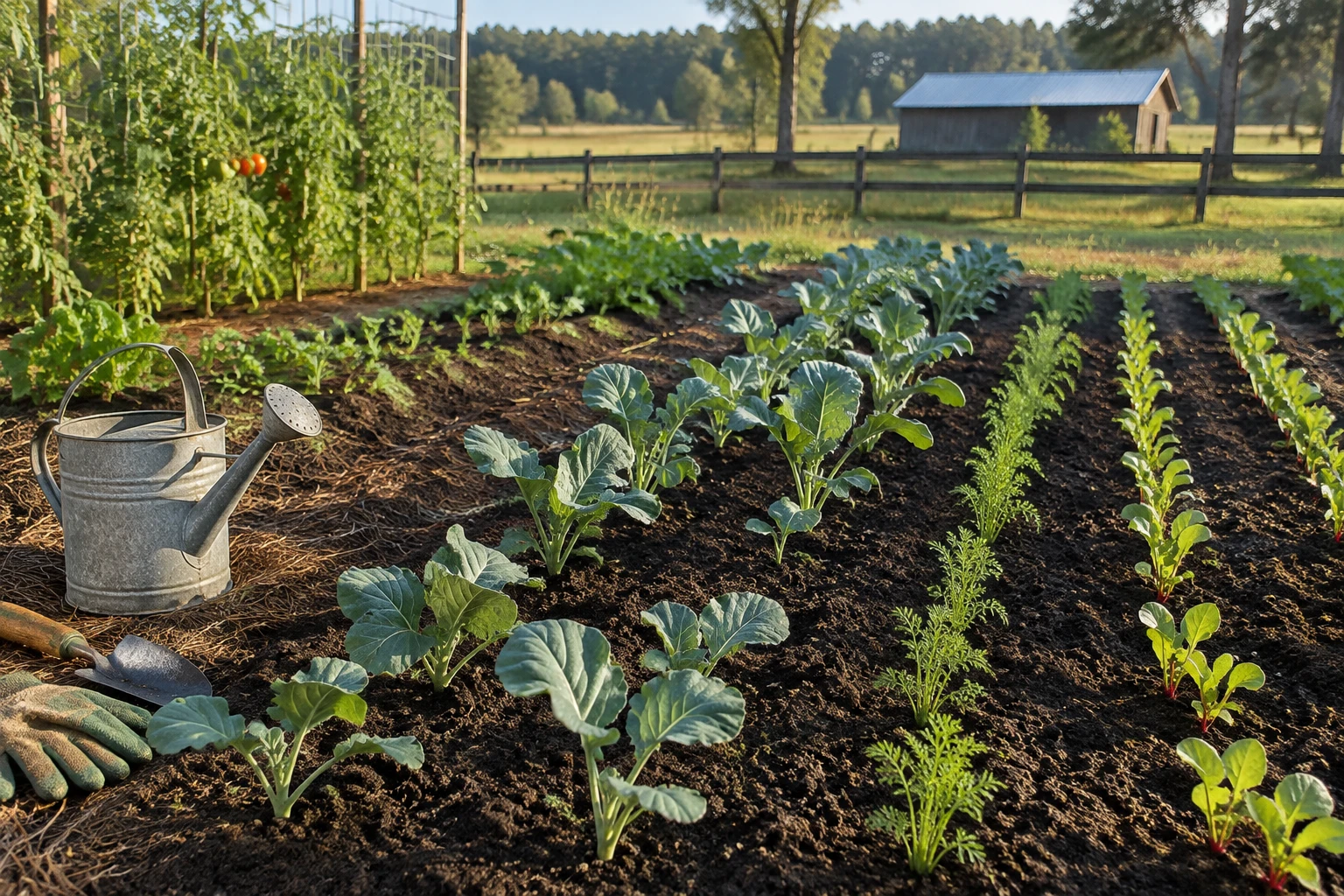
October Vegetables to Plant in the Florida Panhandle
October is a good time to plant cool-season vegetables in the Florida Panhandle. Near Baker, you can sow carrots, beets, radishes, turnips, spinach, mustard, kohlrabi, Swiss chard and onions, and set out broccoli, cabbage, cauliflower, collards or kale. UF/IFAS Extension Okaloosa County’s Panhandle planting chart includes October in the recommended window for these crops. Use North Florida timing rather than a calendar written for Central or South Florida.
Best October vegetables for a Baker-area garden
The local chart gives these planting windows, with October included in each one:
- Broccoli, cabbage and kale: September through February.
- Collards: September through November.
- Mustard: September through April.
- Spinach: October through November.
- Cauliflower: September through October.
- Turnips: September through October.
- Carrots, beets, radishes, kohlrabi and Swiss chard: September through March.
- Bulbing onions: September through December. Bunching onions: September through March.
These are planting windows, not guarantees of a particular harvest date. Weather, soil, variety and planting method all affect how a crop performs. The UF/IFAS Florida Vegetable Gardening Guide is a useful companion for spacing and approximate days to harvest; check the seed packet or plant label for the variety you choose.
Sow seeds or set out transplants?
Direct-sow root crops and quick growers where they will mature. Carrots, beets, radishes, turnips and bunching onions are practical choices for seed rows. Broccoli, cabbage, cauliflower, collards, kale, kohlrabi and Swiss chard are generally easier to get started as transplants in October, according to UF/IFAS North Florida guidance. Mustard and spinach can be transplanted, but sowing them in place is often simpler.
For broccoli, UF/IFAS lists transplanting in North Florida from mid-September through mid-February. Set plants about 10 to 15 inches apart. Collards need more room, about 12 to 24 inches apart, while kale can be spaced about 8 to 12 inches apart. Use the variety’s label if it gives different spacing, and leave enough room to reach between plants for weeding and picking.
Sowing tips for carrots, radishes and turnips
Carrots reward a little patience. Prepare a fine, loose seedbed without clods or stones, then sow seeds about 1/4 inch deep. UF/IFAS suggests rows about 10 inches apart. When seedlings are roughly an inch tall, thin them to 1 to 3 inches apart, depending on the variety. Crowded carrots compete for space and are more likely to grow poorly shaped roots. Imperator, Nantes, Danvers and Chantenay are among the Florida-suitable types named in the UF/IFAS carrot guide.
Carrot seed can take time to sprout, so keep the soil surface moist while you wait. In warm, dry weather that may mean light watering every day or two. Once seedlings are established, water as needed to keep the root zone from drying out. Harvest timing varies widely by variety; UF/IFAS gives a broad range of about 70 to 120 days. Sow a short second row a few weeks after the first if you want to spread out the harvest.
Radishes are one of the quicker payoffs: the Florida Vegetable Gardening Guide gives about 20 to 30 days from seed as a general benchmark. Sow around 1/4 inch deep and thin to about 1 inch apart. Turnips take longer, roughly 40 to 60 days from seed; sow them 1/4 to 1/2 inch deep and thin to 2 to 6 inches apart. Mustard greens are another relatively quick crop, with an approximate 40- to 50-day benchmark. Actual timing depends on variety and conditions.
Onions, lettuce and other choices
For bulbing onions, choose short-day varieties suited to the South and the local chart’s September-to-December window. Bunching onions have a longer planting window. Read the variety description carefully: short-day onions are the relevant type for bulb production here, while bunching onions are grown for their green tops.
Lettuce needs a little more judgment in the Panhandle. UF/IFAS’s October North Florida guidance includes lettuce, and leaf types such as Simpson, Salad Bowl and Red Sails are listed as Florida garden options. But published UF/IFAS calendars do not agree: the Okaloosa Panhandle chart and statewide vegetable guide show different North Florida timing than the October guidance. Check with Okaloosa County Extension before relying on fall lettuce timing. If you try it, don’t treat a hot October afternoon as lettuce weather. Lettuce prefers about 50 to 75°F; heat above 85°F can bring bolting and bitter flavor. Afternoon shade or shade cloth can help during warm spells, and the soil should stay moist, not soggy.
Prepare the bed and keep plants growing
Choose a well-drained spot with at least six hours of direct sun each day. Clear old crop debris and weeds, then loosen the soil so roots can grow. Finished compost can improve soil structure, but it does not necessarily replace fertilizer, and every bed does not need the same amendments. Use a soil test to guide fertilizer choices, follow the product label, and do not add phosphorus automatically.
Water newly planted seeds gently and often enough to keep the seed zone damp without washing seeds out of their rows. Young transplants also need steady moisture while roots establish. Sandy Panhandle soils tend to dry faster than soils amended with organic matter, so check the bed instead of watering by a fixed calendar. A light mulch can help conserve moisture once seedlings are up, but keep it from burying small plants.
A light frost is not a reason to skip cool-season crops, but tender young plants may need protection during a hard cold snap. UF/IFAS notes that young broccoli plants benefit from protection at 32°F or below. Keep row cover or other suitable protection ready if a freeze is forecast, and remove or ventilate it when temperatures rise.
What not to plant in October
Do not follow a generic Southern fall-garden list without checking its region. Tomatoes, peppers, cucumbers and squash are not good October starts for Baker under the local Panhandle chart; their fall planting windows end earlier. Peas and Irish potatoes are also not October recommendations on the Okaloosa chart, which lists them for January through March. A crop can be cool-season in a broad sense and still have a different local planting window.
The shopping list is straightforward: seed for crops you’ll direct-sow, healthy vegetable transplants for brassicas, and only the soil amendments your bed needs. Seed tape can make carrot spacing easier, but ordinary seed works too if you thin the row. Baker Feed & Country Store carries farm and garden supplies; check with the store to confirm current vegetable seed and transplant availability before making a trip.
Local references
The main local reference is UF/IFAS Extension Okaloosa County’s Vegetable Garden Planting Dates for Florida Panhandle. For growing details, use the UF/IFAS Florida Vegetable Gardening Guide and its crop pages on carrots, broccoli and lettuce. Planting calendars are periodically updated, so check with your county Extension office when a crop’s timing is unclear.
Is October too late to plant a vegetable garden in the Florida Panhandle?
No. October is a planting window for many cool-season vegetables near Baker, including broccoli, cabbage, collards, kale, carrots, beets, radishes, turnips and spinach.
What can I direct-sow in October near Baker?
Carrots, beets, radishes, turnips, spinach, mustard, kohlrabi, Swiss chard and onions are local-chart options. Follow seed-packet depth and spacing, and keep the seed zone moist while seeds germinate.
Should I buy broccoli and cabbage transplants or start them from seed?
Transplants are a straightforward October option for broccoli, cabbage, cauliflower, collards and kale. Broccoli can also be started from seed, but transplants give you a head start within its local planting window. Follow the cultivar label for spacing and maturity.
Can I plant lettuce while October afternoons are still hot?
Fall lettuce is included in some UF/IFAS North Florida guidance, but published calendars conflict for the Panhandle. Check with Okaloosa County Extension first. If you plant it, choose a leaf type, keep the soil evenly moist and consider afternoon shade during hot weather.
Which vegetables will be ready to harvest fastest?
Radishes are among the quickest, with an approximate 20- to 30-day benchmark from seed. Mustard greens may take about 40 to 50 days and turnips about 40 to 60 days. Variety, weather and growing conditions change the schedule.
 Ask Daisy