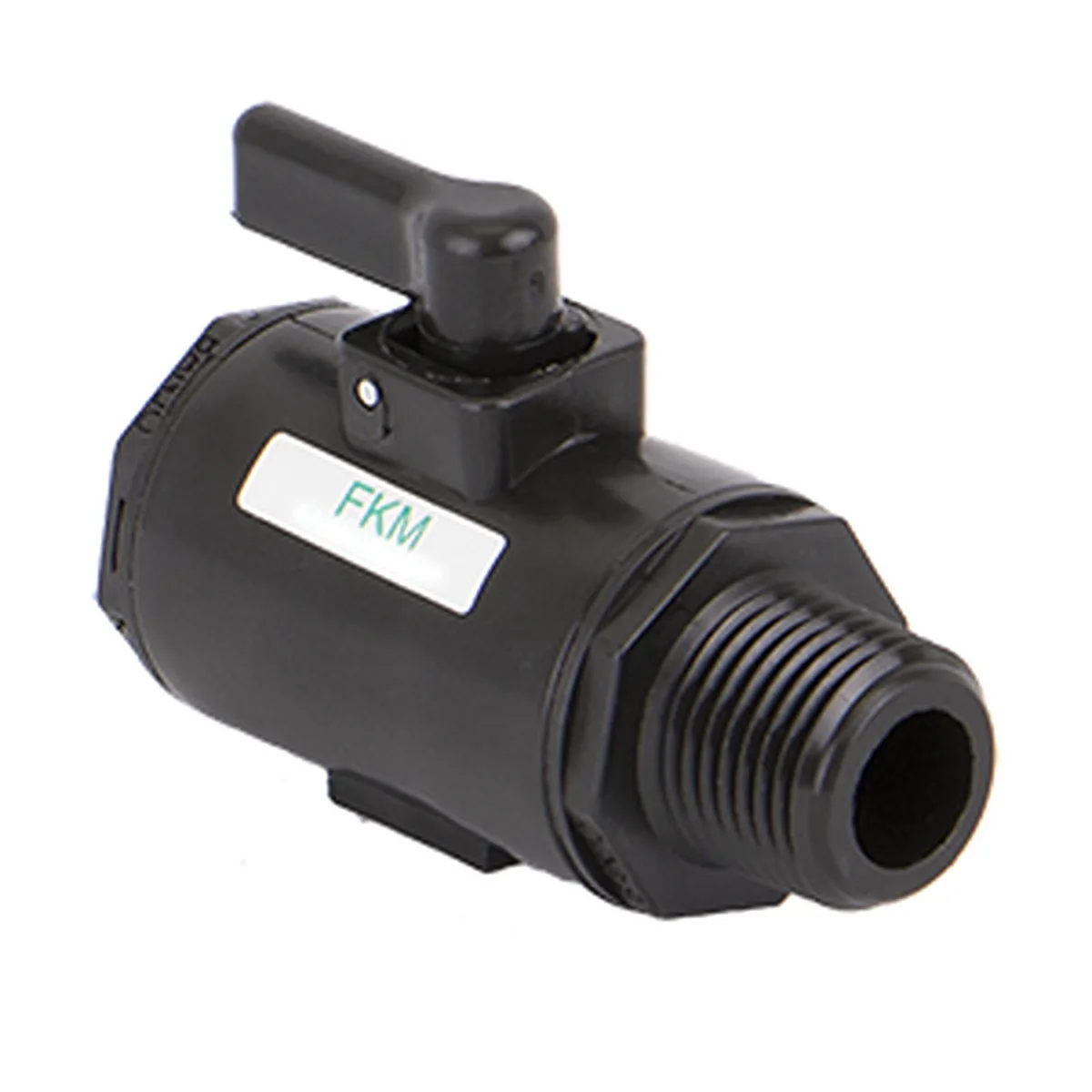
Sprayers and water lines have a lot of valves packed into a small space. A handle that swings 90 degrees is easier to reach in a crowded manifold than one that needs room to turn. This Banjo micro valve has a 1/2 inch female by male national pipe thread connection, built for the small plumbing jobs on a rig.
The body is polypropylene reinforced with fiberglass for added strength. The seats and O-rings are FKM, a fluoroelastomer chosen for its chemical resistance, and the maximum operating pressure is 300 psi. At 0.094 pounds it adds very little weight to a line.
Highlights
- 90-degree rotating handle reaches tight manifolds
- 300 psi maximum operating pressure
- Fiberglass-reinforced polypropylene body
- Standard FKM seats and O-rings
- 1/2 inch female by male NPT connection
- Micro valve design for compact plumbing
What it's for
A micro valve is the shutoff for a single line: a branch to a nozzle, a wash-down hose or a tank drain. Smaller valves fit where a full-size ball valve won't, and the rotating handle is the reason to pick this one for a tight spot.
It suits the sprayer owner building a custom manifold, the farm mechanic fixing a leaky branch, and the water-line user who needs a shutoff in a cramped box.
At a glance
| Part number | LV050MTV |
|---|
| Material | Glass-reinforced polypropylene |
|---|
| Seat and O-ring material | FKM |
|---|
| Maximum operating pressure | 300 psi |
|---|
| Handle | 90-degree rotating |
|---|
| Connection | 1/2 in female x male NPT |
|---|
| Weight | 0.094 lb |
|---|
How to use it
- Check that the line pressure stays at or below 300 psi before you install the valve.
- Wrap the male threads with thread tape or a sealant that suits the fluid in your line, then turn the valve in by hand before you use a wrench.
- Position the handle where it can swing a full 90 degrees before you snug the fittings.
- Flush the line before you install the valve, so grit doesn't settle into the seats.
- Test with clean water and check both threads for leaks before the line goes back into service.
Good to know
- Leave room for the handle to swing before you lock the fittings in place.
- Tighten by hand and snug with a wrench, not a cheater bar, so the polypropylene body doesn't crack.
- Keep a spare on the shelf so a leak doesn't stop the spray schedule.
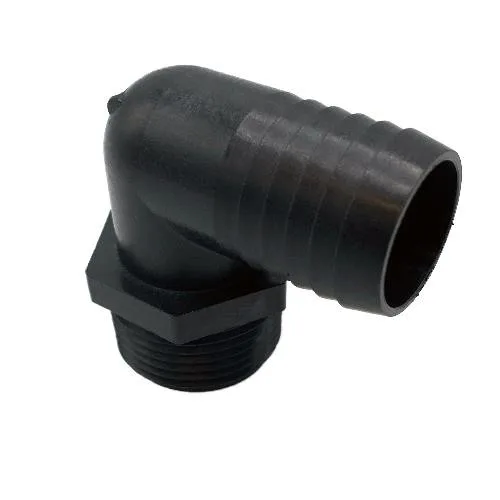
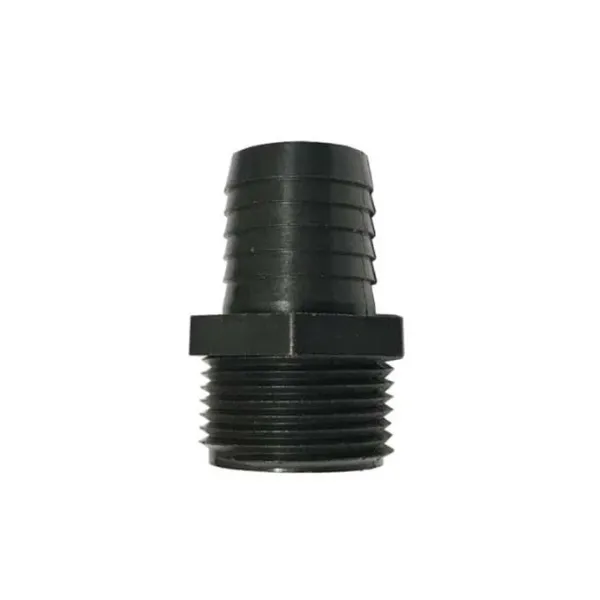
- Pair the valve with hose barbs and elbows for the rest of the repair, plus a roll of thread tape.
- Replace the valve if the handle sticks or the seat leaks.
About Banjo
Banjo began in 1959, in a Crawfordsville, Indiana garage, where founder Jack Canine started a supply company for farmers. Today Banjo makes valves, fittings and self-priming centrifugal pumps for agriculture and industry.
Have one on hand before the next sprayer rebuild.


 Ask Daisy