A dead lantern battery turns a barn chore into a guessing game. This 6V, 5Ah replacement puts light back where you need it and gets your 6V equipment running again. It's a sealed lead-acid battery with AGM construction, so it's ready to install without the mess of a wet cell.
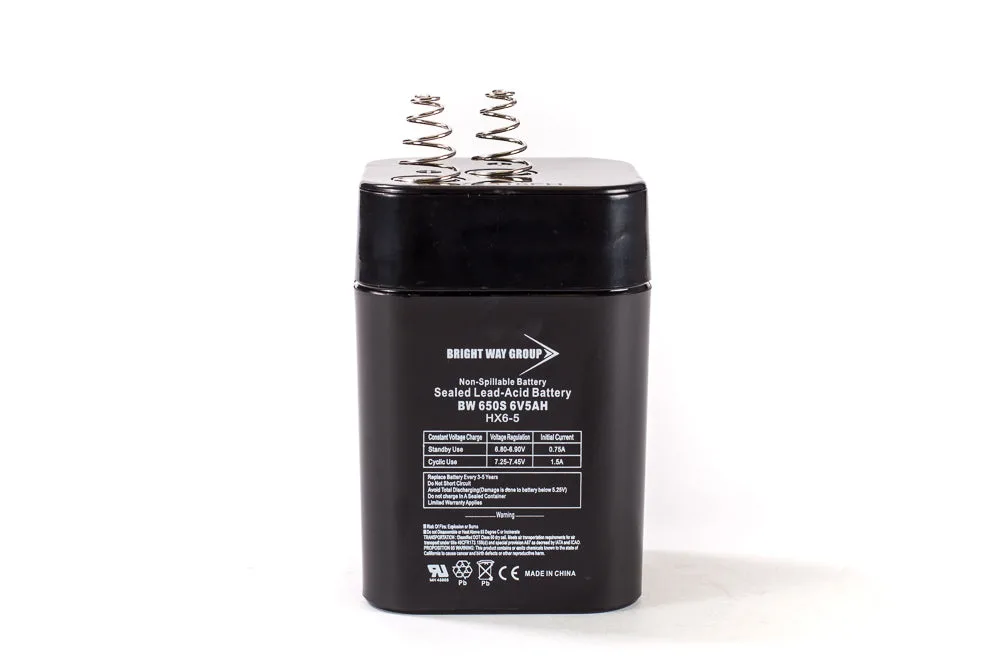
The spring terminals are the type you match against your current battery before you install. Because the battery is sealed, it is maintenance-free and leakproof, and it can sit in any orientation, which helps when it has to fit a tight case or a cramped storage spot. Charge it for 24 hours before the first use, and it's ready to work.
Highlights
- 6V, 5Ah replacement power
- AGM sealed lead-acid construction
- Spring terminals
- Maintenance-free and leakproof
- Works in any orientation
- Charge for 24 hours before first use
What a 6V battery is for
Six-volt batteries run more gear than most people think: lanterns for night checks in the barn, emergency lights, alarm and backup systems and small power jobs around the place. When one fails, the job stops. A spare on the shelf keeps the lantern on its hook, ready to go, instead of a trip to town in the dark.
Sealed lead-acid batteries like this one are built for steady, low-maintenance service. They don't need topping off with water, and the sealed construction keeps the electrolyte inside, so the battery can live in a tack room, a truck or a cabinet without the mess of a spill. That's the reason a sealed battery makes more sense than an open one for a lantern that lives in the barn.
It suits anyone who keeps a 6V lantern or piece of equipment in service. A barn owner with a lantern for night checks, a camp with a light for the weekend or a homeowner with an emergency light all share the same need: a battery that's ready when the power goes out. Check the voltage and terminal type first, so the battery you buy is the one your equipment needs.
At a glance
| Voltage | 6 V |
|---|
| Capacity | 5 Ah |
|---|
| Chemistry | Sealed lead-acid |
|---|
| Construction | AGM |
|---|
| Terminal | Spring |
|---|
| Weight | 1.76 lb |
|---|
| Battery dimensions | 2.64 x 2.64 x 4.29 in |
|---|
How to use it
Check your equipment and the battery you're replacing before you install:
- Check that your current battery is 6V, and that its terminals match the spring type on this one.
- Install the battery in the lantern or equipment, mounting it so the terminals connect firmly.
- Charge it for 24 hours before first use. A full charge up front gives you the best run time from the start.
- If your equipment needs more voltage, batteries can be wired in series, but check your equipment manual first.
Keep it charged between uses, since sitting discharged is hard on any lead-acid battery. Store it somewhere cool and dry, and top it off through the off season.
Good to know
- A 5Ah battery runs a light for a shorter time than a larger capacity would. If you need more run time, a higher amp-hour battery of the same voltage is the move.
- Keep the spring terminals clean and making firm contact. Loose terminals cause flicker and heat, which is a quick way to lose a lantern on a dark night.
- Pair it with a 6V charger made for sealed lead-acid batteries, so you can top it off between uses.
- Replace the battery once it stops holding a charge. One that drains in a few hours is telling you it's done.
Stock a spare now, so the next storm or long night finds your lantern lit.


 Ask Daisy