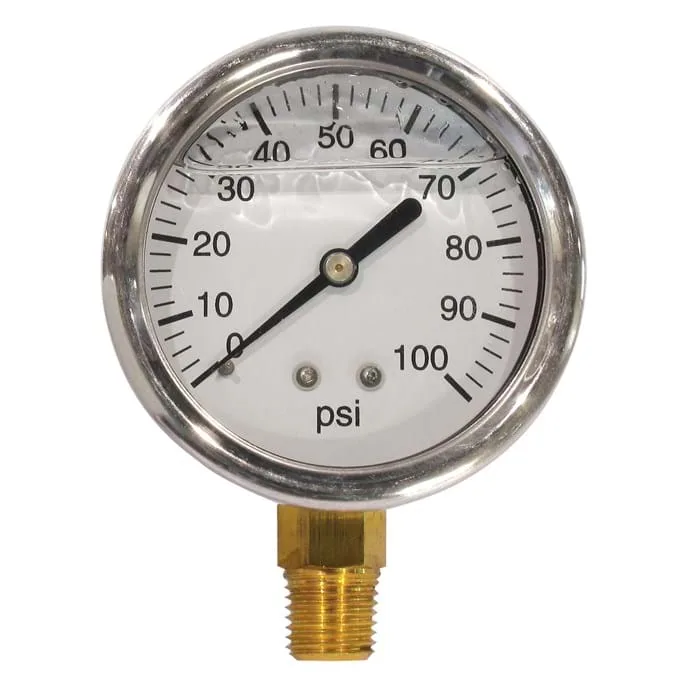
Pressure is the number that tells you whether the sprayer is doing its job. Too low, and the nozzles put out a thin, uneven pattern. Too high, and pumps, hoses and fittings wear faster than they should. This gauge reads from 0 to 100 PSI, so you can read the pressure at a glance, set the rig and hold it where you planned.
The liquid fill is the feature that matters. The fluid steadies the needle, so you get a readable number instead of a jumping pointer. The 2 1/2 inch face is easy to read from the seat, the stainless steel case suits a wet work area, and the 1/4 inch bottom-mount stem makes it a straightforward swap on a FIMCO Pro Series sprayer.
Highlights
- 0 to 100 PSI range
- 2 1/2 inch face is easy to read from the seat
- Liquid fill for steadier needle readings
- Stainless steel case
- 1/4 inch bottom-mount stem for FIMCO Pro Series sprayers
Why a liquid-filled gauge
A plain gauge jumps on a working sprayer, and a jumping needle is hard to read while you're adjusting the regulator with one hand. A liquid-filled gauge settles down, so it's simpler to dial in the pressure and hold it there through the whole tank. For anyone spraying by the tank, that steady number is worth the upgrade.
It suits a trailer sprayer or handgun rig where pressure needs checking at the start of every job, a tractor sprayer that gets hard use, or a rig where the old gauge has stopped reading true. Replace it before a big spray day, not during one.
At a glance
| Pressure range | 0 to 100 PSI |
|---|
| Gauge face | 2 1/2 in |
|---|
| Fill | Liquid |
|---|
| Case | Stainless steel |
|---|
| Stem | 1/4 in bottom mount |
|---|
How to use it
Install the gauge with the sprayer depressurized, then check the reading.
- Wrap the stem threads with PTFE thread seal tape, thread the gauge into the sprayer's gauge port by hand, and snug it.
- Start the pump and let the needle settle before you read it.
- Adjust the regulator and read the pressure at working speed, not while the pump sits idle.
- Stay inside the gauge range, and don't run the sprayer past the pressure the nozzles and hoses are rated for.
Good to know
- Check the reading against your nozzle chart before each job, so the pressure matches the spray you're putting down.
- A shut-off valve between the gauge and the line protects the gauge during flushing and storage.
- If the reading swings, check the pump, the strainer and the nozzles before you blame the gauge.
- Keep caps on the ports between jobs so grit stays out of the works.
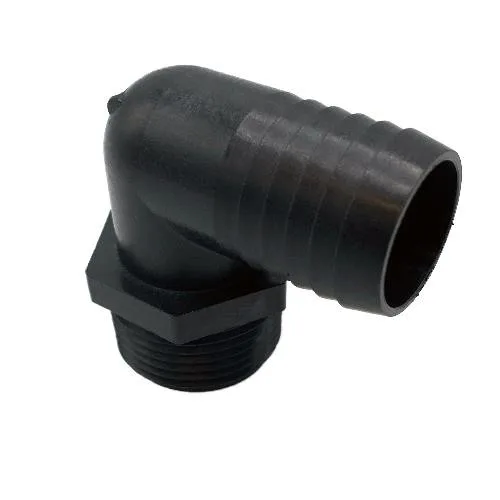
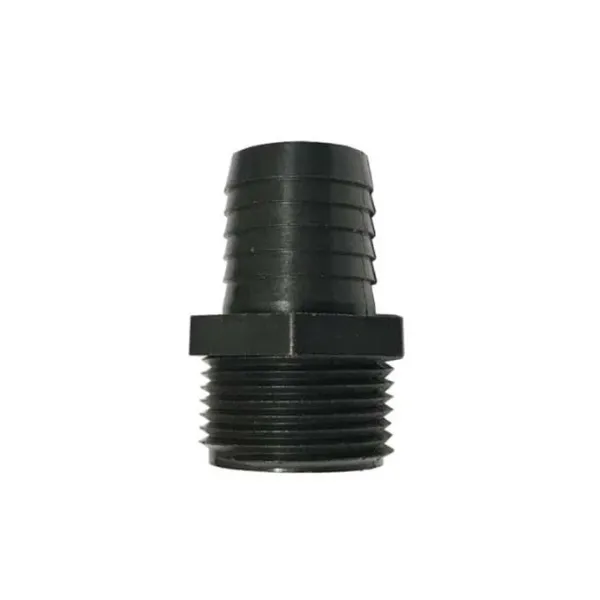
- Pair it with thread seal tape and a few spare hose fittings so a leak doesn't stop the job.
Have the replacement ready before your next spraying job.

 Ask Daisy