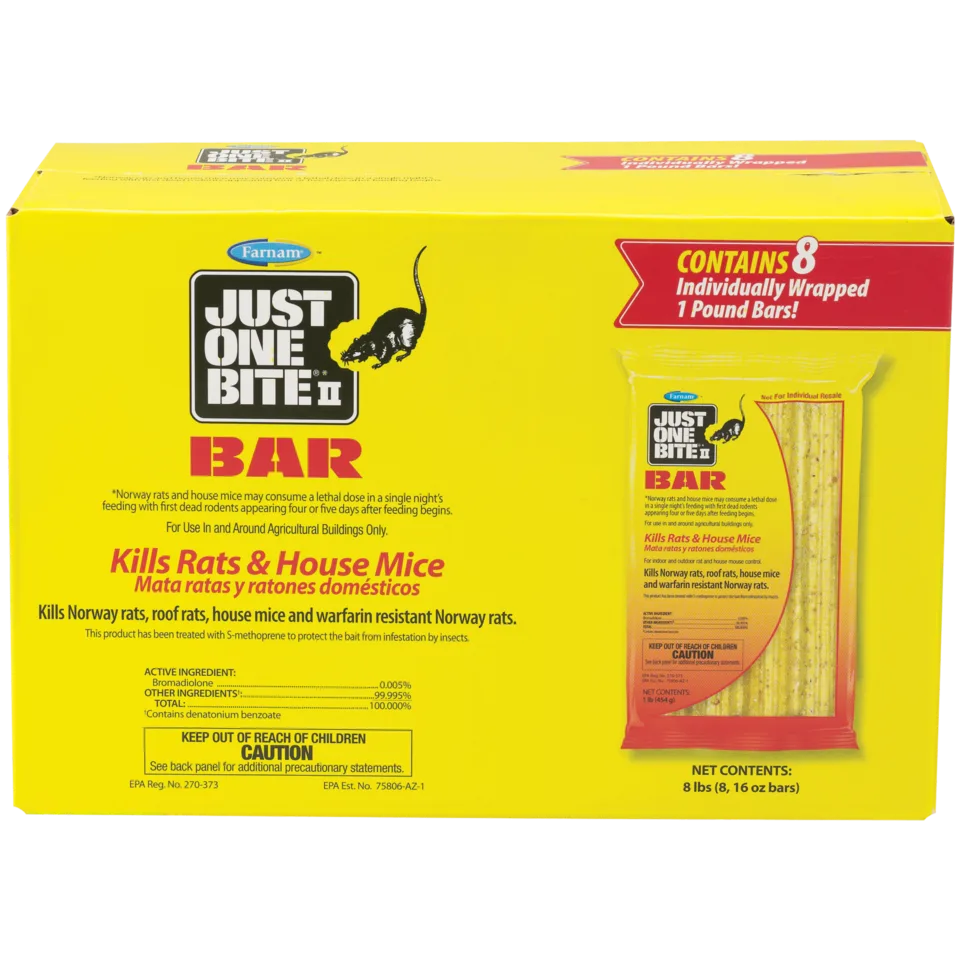
Norway rats, roof rats, house mice and warfarin-resistant Norway rats all get the same treatment here: a palatable grain-and-seed bait bar that goes down easy. The active ingredient is bromadiolone, a second-generation anticoagulant that causes internal bleeding. Norway rats and house mice may consume a lethal dose in a single night's feeding, with first dead rodents appearing four or five days after feeding begins.
Each bar is a pound and individually wrapped, so the bait stays fresh until you need it. Nibble ridges give rats and mice a place to start chewing, and the bar breaks down into smaller pieces so you can spread bait across several placements instead of setting one big block in one spot.
Highlights
- Targets Norway rats, roof rats, house mice and warfarin-resistant Norway rats
- Bromadiolone, a second-generation anticoagulant
- Palatable grain and seed formula
- Nibble ridges get rats and mice chewing
- Individually wrapped to keep bait fresh
- Breaks into smaller pieces for more placement points
What it's for
Rodents follow walls. They run the same edges of a feed room, a barn aisle or a shop every night, and they find their way into corners that stay dark and quiet. A bait bar placed in one of those runways is where they will meet it.
This suits a horse barn, a chicken coop, an equipment shed or a feed room where mice and rats have shown up. It is for use in and around agricultural buildings only. The breakable bar lets you put out a little bait in several spots without opening more than the job needs.
Bait does its job when the building is working against rodents too. Seal the gaps they come through and keep feed in tight containers, and the bait has far less competition.
At a glance
| Active ingredient | Bromadiolone |
|---|
| Type | Second-generation anticoagulant bait |
|---|
| Form | 1 lb bars, breakable into smaller pieces |
|---|
| Packaging | Individually wrapped |
|---|
| Count | 8 bars per box |
|---|
| Targets | Norway rats, roof rats, house mice, warfarin-resistant Norway rats |
|---|
| EPA Reg. No. | 270-373 |
|---|
How to use it
- Wear gloves, a long-sleeved shirt, long pants, shoes and socks when you handle bait, and wash your hands afterward.
- Break a bar into 2-ounce pieces. For rats, set two to eight pieces per placement, 15 to 30 feet apart. For house mice, set one piece per placement, 8 to 12 feet apart. Leave the wrapper on the rest until the next job.
- Place bait in protected spots along walls, in corners and in the runways where you have seen droppings or gnawing.
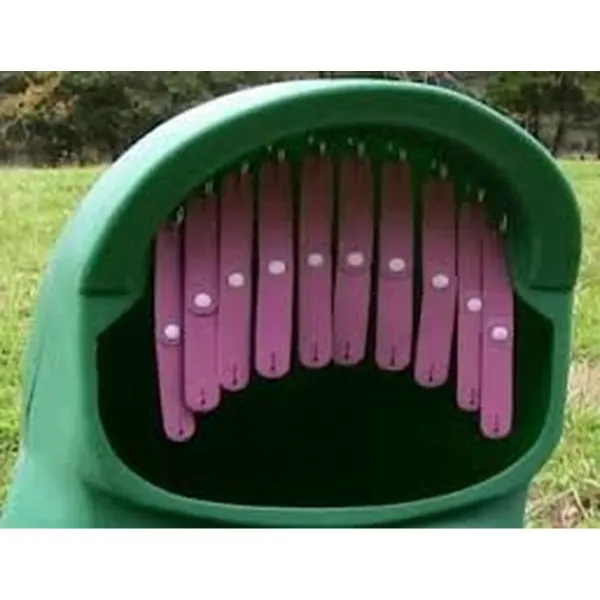
- Bait stations are required for outdoor, above-ground placements. Use tamper-resistant bait stations wherever children, pets, livestock, poultry or other non-target animals could reach the bait.
- Check the bait often, replace what has been eaten, and follow label directions for how much to set out and how long to keep it in place.
Good to know
- Pair it with traps. Snap traps along the same walls catch the rodents you see, and the bait reaches the ones you don't.
- Keep the bait sealed. Store unused bars in the original packaging, closed, cool and dry, out of reach of children and animals.
- Remove what draws them. Clear clutter, store feed in metal or sealed containers, and sweep up spilled grain.
Dispose of any dead rodent with gloves, sealed in a bag, as your local rules require.
About Just One Bite
The Just One Bite name has been around for more than 30 years, and it began as an alternative to warfarin-based rat and mouse baits. Today the line carries bromadiolone in Just One Bite II bars, pellets and chunks, which is the formula in this bar.
Cautions
KEEP OUT OF REACH OF CHILDREN. CAUTION: Harmful if swallowed. Keep away from children, domestic animals and pets. Causes moderate eye irritation. Do not get in eyes, or on clothing.
This product is extremely toxic to mammals and birds. Dogs, cats and other predatory and scavenging mammals and birds might be poisoned if they feed upon animals that have eaten this bait. This pesticide is toxic to fish.
Put a box on the shelf now, before rodents start looking for warm places to spend the cold months.

 Ask Daisy