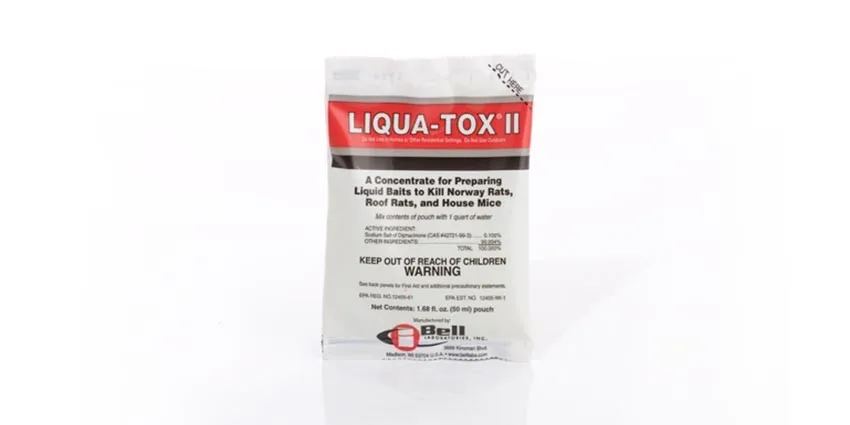
Rats and mice need water every day, and when there is plenty of other food nearby, solid bait can sit untouched. Liqua-Tox II gives you another way to present bait. It is a concentrate you mix with water, then pour into dispensers that rats and mice visit to drink.
Each 1.68 fluid ounce pouch mixes with one quart of water. The active ingredient is sodium diphacinone, an anti-coagulant, at 0.106 percent of the concentrate. It is made for indoor use only, in industrial, commercial, agricultural and public buildings, and it is not for homes or outdoor use.
Highlights
- Concentrate that mixes with water into liquid bait
- Controls Norway rats, roof rats and house mice
- Works in bait stations and chick founts
- One pouch mixes with one quart
- Indoor use in industrial, commercial, agricultural and public buildings
- Sodium diphacinone anti-coagulant
Why choose a liquid bait
Liquid bait gives rodents something they drink, which makes a dispenser a regular stop on their route. Rats need water daily, so a dispenser on the run is a place they come back to. Mice drink whenever liquids are available, which is why a dispenser set in their path is worth the space.
It is the right pick when solid bait isn't getting taken, or when the building holds plenty of other food. Pour the diluted bait into a dispenser made for liquid rodenticide baits, space the dispensers through the infested area, and refill them as needed.
At a glance
| Form | Water-soluble liquid bait concentrate in 1.68 fl oz pouches |
|---|
| Active ingredient | Sodium salt of diphacinone, 0.106% |
|---|
| Targets | Norway rats, roof rats and house mice |
|---|
| Use | Indoor use only, in industrial, commercial, agricultural and public buildings |
|---|
| Mixing | One pouch in one quart of water |
|---|
| EPA Reg. No. | 12455-61 |
|---|
How to use it
- Wearing coveralls over a short-sleeved shirt and short pants, chemical-resistant footwear, socks and waterproof gloves, mix the contents of one 1.68 fl oz pouch thoroughly in one quart (32 fl oz) of water.
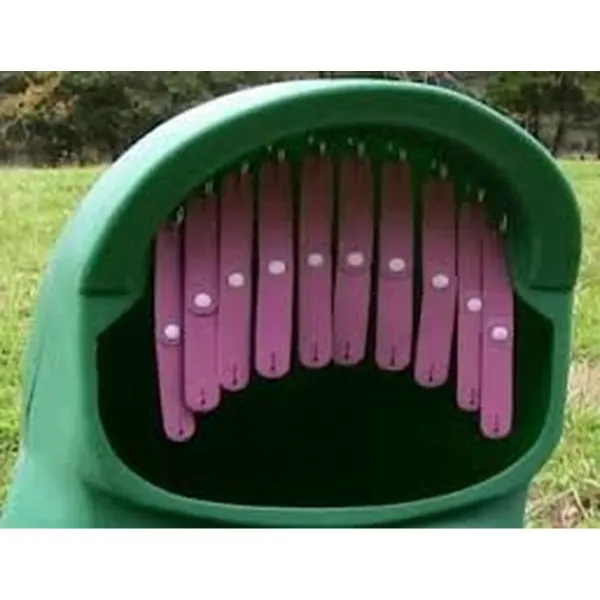
- Pour the finished bait only into containers designed for liquid rodenticide baits, such as a suitably equipped bait station or a chick fount.
- For rats, provide at least one pint of diluted bait in each dispenser. In a large area, or where the rat population looks high, use dispensers in several locations, and refill them as needed.
- For mice, provide 8 fluid ounces in each placement, spaced 8 to 12 feet apart through every infested area.
- Place dispensers where rats and mice will most likely find them: along walls, by gnawed openings, in corners and between floors and walls. Use tamper-resistant bait stations wherever children or pets could reach.
- Check dispensers often. Replace spoiled bait right away, and collect dead animals and leftover bait while wearing waterproof gloves.
Good to know
- Keep the concentrate in its original container, in a cool, dry place out of reach of children and pets. Keep containers closed and away from other chemicals.
- Don't place bait near or inside ventilation duct openings, and never use it in sewers.
- Limit the food, water and hiding places rodents can reach where you can. If rodents come back, repeat the treatment, and for a continuing problem set up permanent bait stations.
- Use stronger bait stations in areas open to hoofed livestock, raccoons or other animals that could destroy a station.
- Keep it away from water supplies, food, feed, and any food, feed, milk or meat handling equipment or surface that touches food.
About Bell Laboratories
Bell Laboratories makes rodent control products for the pest control and agricultural industries, and sells them on six continents.
Cautions
Do Not Use in Homes or Other Residential Settings. Do Not Use Outdoors.
KEEP OUT OF REACH OF CHILDREN.
WARNING: May be fatal if absorbed through the skin. Harmful if swallowed. Avoid breathing vapors. Keep away from children, domestic animals and pets. Do not get in eyes, on skin, or on clothing. Avoid exposure to this product during pregnancy.
This product is extremely toxic to mammals and birds. Dogs and other predatory and scavenging mammals and birds might be poisoned if they feed upon animals that have eaten this bait. Only use indoors.
Stock up before cold weather sends mice looking for warm shelter in your farm buildings.

 Ask Daisy