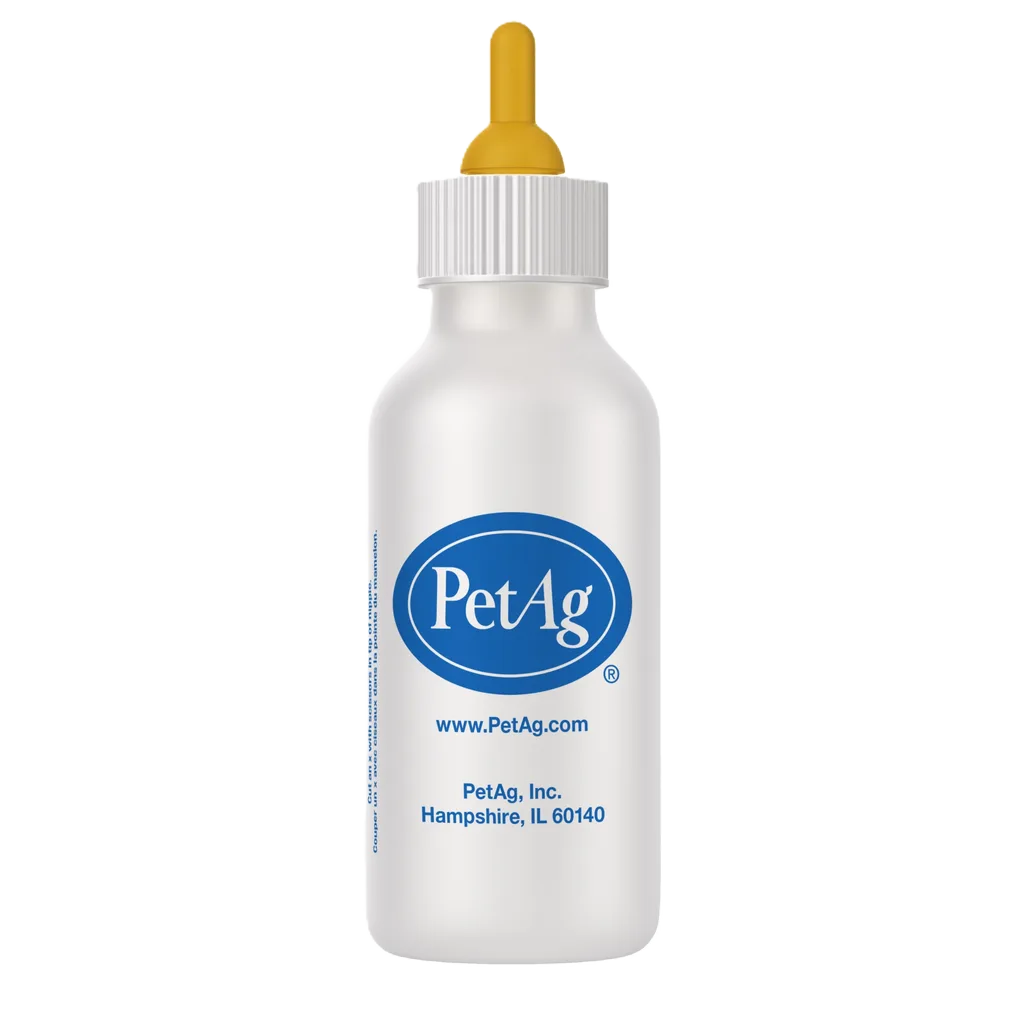
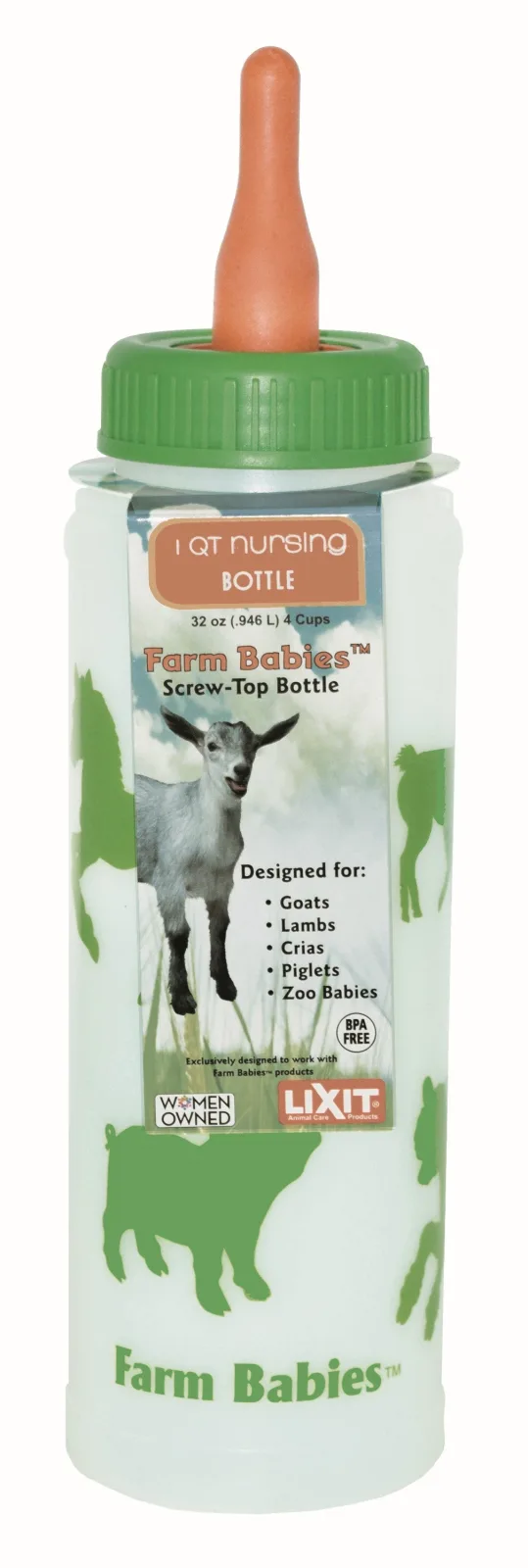
When a litter comes early or a mother won't let a baby nurse, you need a bottle that works with the animal. This nurser lets a baby stop when it's full. Bottle feeding allows the animal to refuse formula once it has had enough, instead of pushing formula in. That natural pace is what the bottle is built around.
The bottle is durable enough for repeated feedings and marked with graduations, so you can see how much went in and notice when a baby takes less than usual. The nipple is flexible, latex-free silicone that babies readily accept. The nursing action develops facial muscles and stimulates the normal flow of saliva.
Highlights
- Lets a full baby stop feeding on its own
- Graduations make intake easy to track
- Flexible, latex-free silicone nipple
- Durable bottle for repeated feedings
- Nursing action develops facial muscles and stimulates saliva flow
- Built for small animals
Why a nurser bottle works for young animals
Pushing formula in with a syringe is a different job from letting a baby nurse. A bottle with a soft nipple lets the baby suck at its own rhythm, take what it needs and stop when it's full. That's the difference between a feeding the animal accepts and one it fights.
Clear graduations make the feeding easier to watch. You can see how much went in and catch a baby that's taking less than it did the day before. On a busy farm, that early look makes a real difference.
It suits an orphaned kitten or puppy, a litter that needs a supplemental feeding, or another small baby animal that needs help at feeding time. Keep one with your feeding supplies so it's ready the moment you need it.
At a glance
| Use | Bottle feeding liquids to small animals |
|---|
| Nipple | Flexible, latex-free silicone |
|---|
| Bottle | Durable, with graduations |
|---|
| Feeding style | Lets the animal refuse formula when full |
|---|
| Care | Wash with hot soapy water after each feeding |
|---|
How to use it
Prepare the nipple before the first feeding. Open the tip so the feed can flow, then check the flow with water before it reaches the animal.
- Open the nipple. Cross cut the tip with a razor blade, or use a strong needle or cuticle scissors to enter and exit the tip and remove a small piece.
- Check the flow. Fill the bottle with water and apply slight pressure. A steady drip or thin stream is what you want.
- Keep a sick animal separate. If one or more animals is ill, use a different bottle or feed the ill animal last.
- Wash after each session. Wash the bottle, cap and nipple with hot soapy water, and rinse thoroughly.
Good to know
- Check the flow with water before every feeding, so a hungry baby doesn't get a stream that's too fast.
- Match the bottle to the animal. The bottles are sized for small and larger babies, so pick the one that suits the animal in front of you.
- Wash right after feeding, so formula doesn't dry in the nipple.
About PetAg
PetAg has delivered quality since 1930 from its base in Hampshire, Illinois. The company is 100% employee-owned, and its history includes Esbilac, the first commercially prepared puppy milk replacer.
Cautions
If animal is too small or weak to nurse, consult your veterinarian.
If one or more of the animals is ill use a different bottle or feed ill animal last.
Keep one on the shelf for the next orphan or slow feeder.

 Ask Daisy