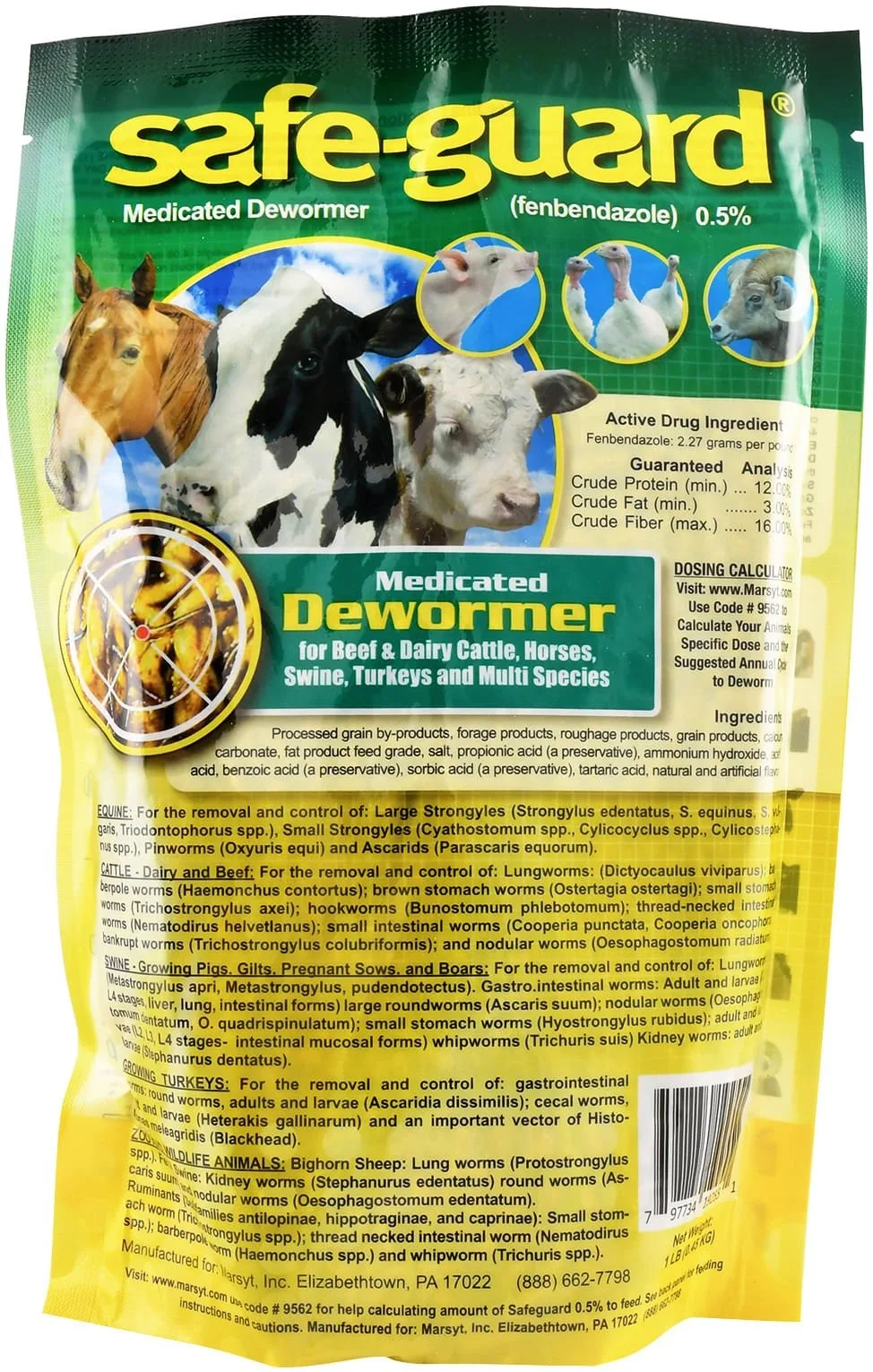
Deworming cattle shouldn't take a second trip through the chute. These pellets mix into the feed for a one-day treatment, so the herd gets fenbendazole while it eats. They are labeled for lungworms, stomach worms and intestinal worms in beef and dairy cattle.
Feeding is the easy part when every animal gets its turn at the bunk. The treatment runs one day, and one pound of pellets deworms 1,000 lb of cattle. That makes it simple to work out the amount for the group in front of you.
Highlights
- Deworms at the bunk in a single feeding
- Targets lungworms, stomach worms and intestinal worms
- Mixes into feed for a one-day treatment
- One-day treatment
- One pound deworms 1,000 lb of cattle
Why choose a feed-through dewormer
A feed-through dewormer rides in the feed the herd already eats. For a group that eats together at the bunk, that means one feeding instead of a day spent sorting and handling cattle one at a time.
It also suits a herd that needs a planned, even dose. When bunk space lets every animal eat at once, the whole group takes its share from the same daily ration.
It fits cow-calf operations, feedlots and dairies that feed together. A few head on a small place can use it too, as long as they all eat normally and clean up the mixed ration.
At a glance
| Form | Pellets |
|---|
| Active ingredient | Fenbendazole 0.5% |
|---|
| Type | Type B medicated feed, 2.27 grams fenbendazole per pound |
|---|
| Species | Beef and dairy cattle |
|---|
| Treatment length | One day |
|---|
| Dose | 5 mg fenbendazole per kg body weight |
|---|
How to feed it
The dose is 5 mg of fenbendazole per kg of body weight in a one-day treatment, which comes to 2.27 mg per pound of body weight.
- Work out the pounds of pellets for the group: 1 lb of pellets for each 1,000 lb of cattle.
- Mix each 1 lb of pellets with 4 lb of feed ingredients.
- Give the group enough bunk space that every animal can eat at the same time.
- Make sure all cattle are eating normally, so each animal takes in an adequate amount.
- Feed the mix as the sole ration for one day, at 0.5 lb per 100 lb of body weight. Do not underdose.
Good to know
- Run a fecal egg count or another diagnostic test before deworming, so you know this product fits the herd.
- Mark the withdrawal times on the calendar before any animal goes to slaughter, and track milk discard times on dairy cattle.
- Keep a record of each deworming, then check the herd afterward to see whether the treatment is still working.
- Ask your vet to help with diagnosis, treatment and control of parasitism, especially if resistance is a concern.
About Merck Animal Health
Merck Animal Health develops, manufactures and markets a broad range of veterinary medicines and services. It sells in more than 150 countries.
Its products are meant to help keep livestock healthy, which supports a safe, wholesome and affordable food supply.
Cautions
KEEP THIS AND ALL DRUGS OUT OF THE REACH OF CHILDREN. NOT FOR USE IN HUMANS.
Parasite resistance may develop to any dewormer and has been reported for most classes of dewormers. Treatment with a dewormer used in conjunction with parasite management practices appropriate to the geographic area and the animal(s) to be treated may slow the development of parasite resistance. Fecal examinations or other diagnostic tests and parasite management history should be used to determine if the product is appropriate for the herd, prior to the use of any dewormer. Following the use of any dewormer, effectiveness of treatment should be monitored (for example, with the use of a fecal egg count reduction test or another appropriate method). A decrease in a drug’s effectiveness over time as calculated by fecal egg count reduction tests may indicate the development of resistance to the dewormer administered. Your parasite management plan should be adjusted accordingly based on regular monitoring.
CONSULT YOUR VETERINARIAN FOR ASSISTANCE IN THE DIAGNOSIS, TREATMENT AND CONTROL OF PARASITISM.
Not for use in beef calves less than 2 months of age, dairy calves, and veal calves. A withdrawal period has not been established for this product in pre-ruminating calves.
Milk taken during treatment and for 60 hours after the last treatment must not be used for human consumption. Cattle must not be slaughtered for human consumption within 13 days following last treatment with this drug product.
Have it on hand before your next herd working, so the one-day treatment fits the schedule.


 Ask Daisy