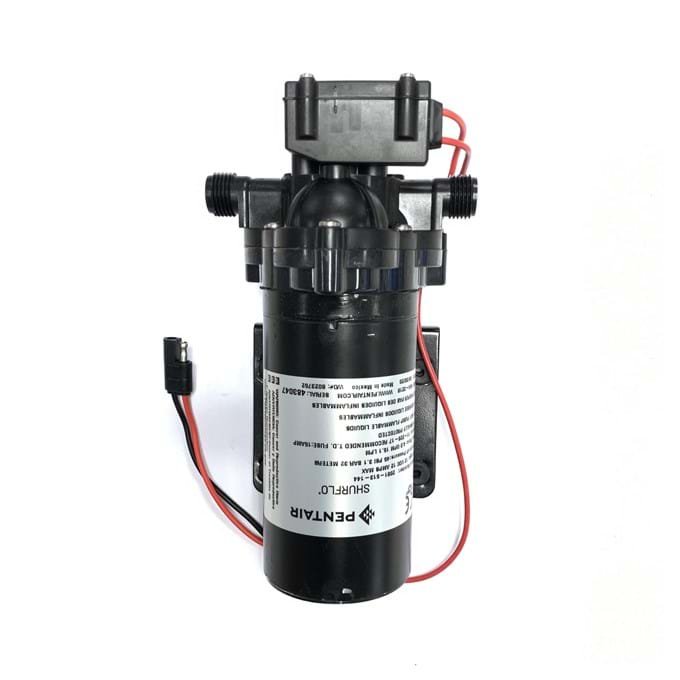
A 12-volt Shurflo diaphragm pump rated for 4.0 GPM and 45 PSI demand, with Viton construction and a two-pin electrical connector.
Match the pump to the sprayer
This Shurflo diaphragm pump is rated at 4.0 gallons per minute, with a 45 PSI demand switch and a 12-volt DC supply. The rating describes the pump, not the application rate at a spray tip. Nozzle choice, hose length, restrictions and pressure adjustment affect what reaches the crop or surface. Check the sprayer’s parts information before replacing a lower-flow unit. The 3.0 GPM Shurflo is a different model. This pump’s maker number is 2081-513-144, which helps distinguish it from similar-looking replacements.
Understand demand operation
The demand switch stops the motor when all outlets are closed. Pumping resumes when a handgun lever is squeezed, a boom valve opens or the pressure-adjust valve sends liquid back toward the tank. That makes the unit suitable for intermittent spraying through a handgun or boom. The built-in check valve helps limit reverse flow. Self-priming lift is rated up to 12 vertical feet, so keep the pump within that lift and avoid an unnecessarily long or restrictive inlet hose. A clean supply and clear strainer matter: debris or air entering the inlet can cause low flow, surging or loss of prime.
Check power and connections
The pump uses 12 VDC and has a two-pin connector. Confirm the sprayer harness and battery supply fit before installation. Connect the positive lead first, then the negative lead; disconnect in reverse order, negative first. The pump may be mounted in any position, but leave access to the connector, inlet screen and hose joints. Test the complete sprayer with plain water before adding chemicals. Open the boom line and purge air from the plumbing, then check for leaks and a suitable spray pattern. Set operating pressure with the sprayer’s pressure-adjust valve and use the nozzle and travel-speed charts for calibration.
Rinse after spraying
Clean and rinse the pump after each use with Fimco Tank Neutralizer. Use clean water for spray mixtures and do not leave mixture in the pump for an extended period. The pump must not be used for bleach, petroleum products such as diesel fuel, gasoline or kerosene, or chemicals containing petroleum distillates or surfactants. Dirty or unfiltered water is also unsuitable. If flow falls or the pump will not prime, check supply level, the strainer, inlet-side air leaks and discharge restrictions before replacing the pump. Disconnect power and relieve pressure before service.
Prepare the sprayer for storage
For winter or long-term storage, clean and drain the sprayer as completely as possible, then run pink RV antifreeze through the entire plumbing system, including the bypass. Operate the handgun until pink fluid comes from the nozzle and leave any remaining antifreeze in the tank. Before the next use, drain it, fill with fresh water and flush the system; dispose of antifreeze and flush water properly. Store the pump or sprayer indoors when not in use. For service, empty and flush the pump with water, wear protective gear, and test repaired equipment for leaks with plain water before returning it to use.
Pump specifications
Manufacturer model: 2081-513-144. Diaphragm pump. Rated flow: 4.0 GPM. Demand pressure: 45 PSI. Supply: 12 VDC. Viton construction. Two-pin connector. Self-priming lift: up to 12 vertical feet. Built-in check valve.
| Part number | Part | Quantity |
|---|
| 94-230-55 | Pressure switch assembly | 1 |
| 94-237-05 | Check valve assembly | 1 |
| 94-231-30 | Upper housing | 1 |
| 94-232-05 | Valve assembly | 1 |
| 94-238-03 | Drive assembly | 1 |
Base plate grommets: part 5075019, package of 4.
Directions for use
- Connect the lead wire to a fully charged 12-volt battery. Connect the positive (red) terminal first, then the negative (black) terminal. To disconnect, remove the pump-wire connection, then disconnect the negative connection and finally the positive connection.
- Before spraying, test with plain water. Open the boom-line valve and purge air through the tips. Check for leaks and suitable pressure. Adjust pressure with the pressure-adjust valve. Calibrate using the tip and speed charts, then follow the chemical label.
- Clean and rinse the pump after each use with Fimco Tank Neutralizer. Use clean water for spray mixture. Store inside a building when not in use.
- Before winter or long-term storage, clean and drain the sprayer as much as possible. Add enough pink RV antifreeze to the tank to pump it through the complete plumbing system, including the bypass. Operate the handgun until pink liquid sprays from the nozzle and leave remaining antifreeze in the tank. Before next use, drain the antifreeze, fill with fresh water and run it through the system. Dispose of antifreeze and flush water properly.
- Before servicing, review the troubleshooting chart, wear protective gear, disconnect pump power and relieve system pressure. Empty and flush the pump with water. Follow the troubleshooting directions for repairs and test for leaks with plain water before use.
Cautions
- Do not use to pump bleach.
- Do not use to pump petroleum products such as diesel fuel, gasoline or kerosene.
- Do not use to pump chemicals with petroleum distillates or surfactants.
- Do not leave pump sitting with spray mixture in it for extended periods.
- Do not use dirty or unfiltered water for spraying.
- DO NOT USE PUMP IN AN EXPLOSIVE ENVIRONMENT. DO NOT USE TO PUMP FLAMMABLE/COMBUSTIBLE FLUIDS, GASOLINE, KEROSENE, FUEL OIL, ETC.
- Pressure switch is pre-set at the factory. Improper adjustment of the pressure switch may cause severe overload or premature failure. If the pump is subjected to rapid cycling during normal operation, or infrequent periods, damage may occur.

 Ask Daisy