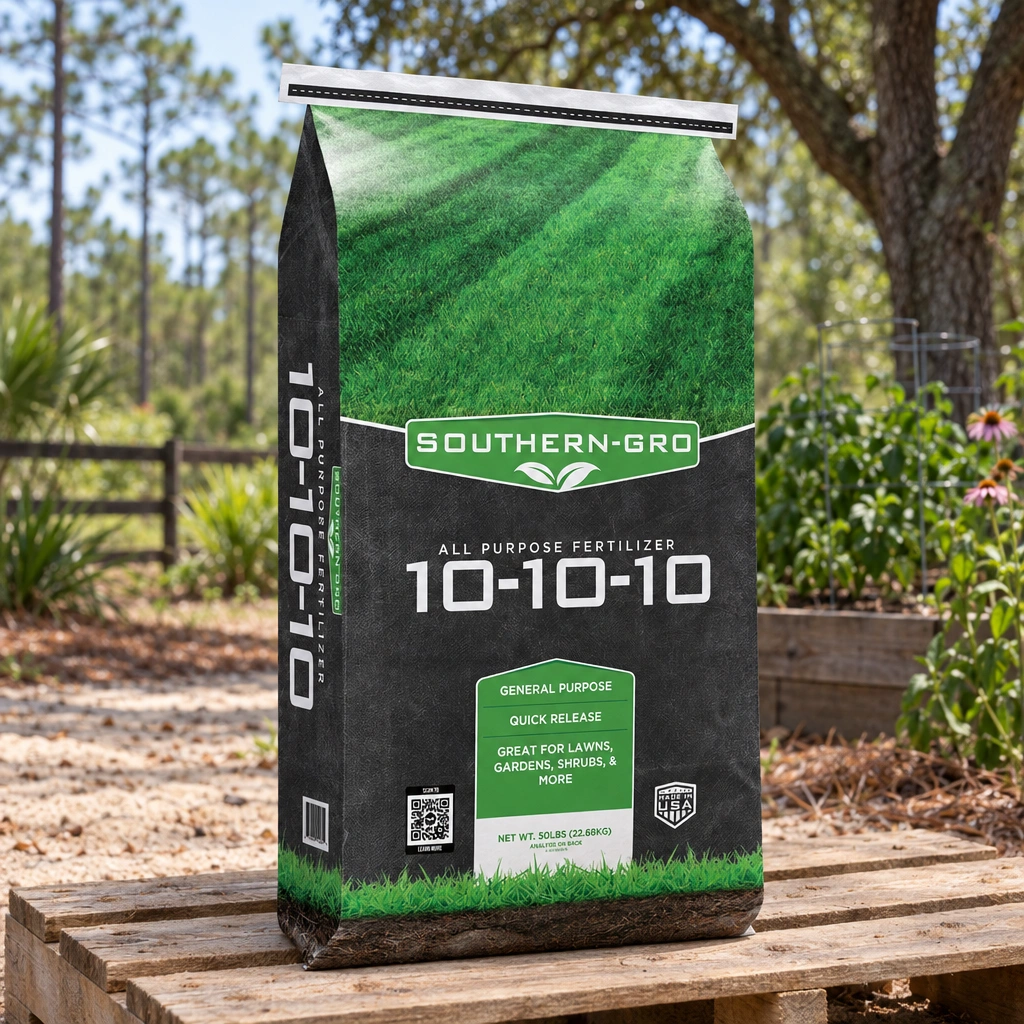
SouthernGRO 10-10-10 is an all-purpose quick-release grade when a balanced nitrogen, phosphate, and potash analysis fits the job.
A balanced grade to compare with your soil needs
When a soil recommendation calls for an equal share of each primary nutrient, this 10-10-10 gives you a balanced grade for common outdoor areas. This is an all-purpose, quick-release fertilizer. That makes it a practical choice when a current plan calls for a balanced blend in a garden bed or around established plantings. Check the soil before choosing. A lawn with adequate phosphorus may need a different formula, while a garden may have a different nutrient target. The point is to match the grade to the site, rather than defaulting to the same formula every time.
Understand the nitrogen split
Think of the three numbers as percentages by weight. A 50-pound quantity of 10-10-10 contains 5 pounds each of nitrogen, phosphate, and potash. The 13-13-13 grade has the same balance but carries 6.5 pounds of each in the same weight. That is 30 percent more per pound. The two formulas are not interchangeable pound for pound. If a recommendation was written for one grade, use its stated rate or recalculate with a qualified source before switching.
Use the rate specified for this grade
The fertilizer grade shows the nutrient balance you are buying. These primary plant nutrients support growth, but the amounts needed depend on the crop and ground. For Florida turf, a recent soil test helps determine whether phosphorus is needed. A garden bed has its own planting history and soil conditions. Keep the test results with the area notes so you can compare them when selecting a blend.
Keep the analysis easy to check
For a more even application, measure the treatment area and use a spreader suited to the granules. Check the setting against the rate specified for the intended use. Walk at a steady pace and avoid overlapping passes, which can double the amount in narrow strips. For lawns, start with a measured section and check coverage before continuing across the full area. Sweep granules off pavement back onto the target area. Store fertilizer in a dry, secure place and keep a simple record of what was used, where, and when. That record makes the next feeding decision easier and helps prevent accidental repeat applications.
Fertilizer analysis
| Published Analysis | |
|---|
| Total Nitrogen (N) | 10% |
| Urea Nitrogen | 6.1% |
| Ammoniacal Nitrogen | 3.9% |
| Phosphate (P) | 10% |
| Potash (K) | 10% |
| Chlorine (Cl) | no more than 10% |
At a glance
| Total Nitrogen (N) | 10% |
| Urea Nitrogen | 6.1% |
| Ammoniacal Nitrogen | 3.9% |
| Phosphate (P) | 10% |
| Potash (K) | 10% |
| Chlorine (Cl) | no more than 10% |
| Package weight | 50 lb |

 Ask Daisy