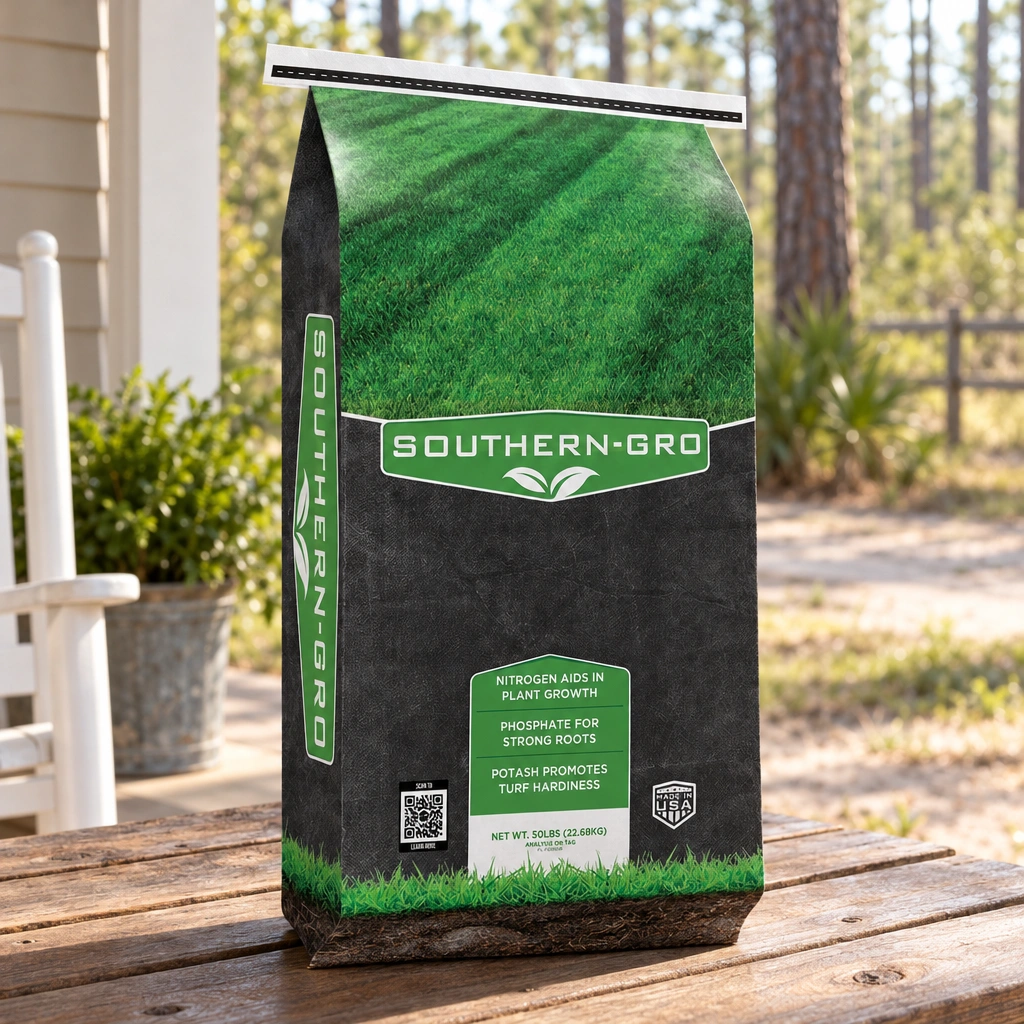
SouthernGRO 16-4-8 pairs a nitrogen-forward grade with 5% sulfur for use where that nutrient balance is recommended.
A nitrogen-forward grade with sulfur
Consider 16-4-8 when a recommendation calls for more nitrogen than phosphate, along with potash. The SouthernGRO formula also guarantees 5% sulfur. That makes the grade a distinct option for a turf or garden plan that specifically calls for this balance. For a turf area, compare this grade with a soil-based recommendation before applying; the same formula can also be evaluated for another planting where its analysis fits. Check the planting area and nutrient recommendation before choosing it. Similar-looking lawn problems can have causes that fertilizer will not solve.
Read the analysis before spreading
The numbers are percentages by weight, so 16-4-8 has a higher nitrogen share and lower phosphate share than 10-10-10. It is not a one-for-one substitute for a balanced grade. The extra 5% sulfur is part of the analysis, so it can be relevant when sulfur is included in the nutrient plan. Use the exact rate for this grade and purpose. Do not transfer a setting or rate from another blend without recalculating the nutrient amount.
Use the package rate
A soil test can help decide whether the mix fits. Fertilizer grades state nutrient percentages by weight, and soil tests help guide phosphorus and potassium decisions for turf. For Florida lawns, phosphorus is not always required. For gardens or food plots, use guidance for the crop and planting area rather than assuming the turf recommendation applies. If you are unsure which nutrients are needed, take a representative soil sample before buying fertilizer for a larger area.
A straightforward SouthernGRO option
Measure the area first, then check the spreader instructions for the rate you plan to apply. The sulfur guarantee makes this blend different from a basic 16-4-8 without sulfur, so account for it when comparing formulas. Keep a steady walking pace and use a consistent pattern so coverage does not pile up along edges. Sweep granules from sidewalks or paved areas back into the target area. Store fertilizer away from moisture and secure it from children and animals. Keep a record of the grade and date so future applications can be planned around the needs of that planting, not a habit of using the same blend each time.
Fertilizer analysis
| Published Analysis | |
|---|
| Nitrogen (N) | 16% |
| Urea Nitrogen | 10.9% from Urea Nitrogen |
| Ammonical Nitrogen | 5.1% |
| Phosphate (P) | 4% |
| Potash (K) | 8% |
| Sulfur (S) | 5% |
At a glance
| Nitrogen (N) | 16% |
| Urea Nitrogen | 10.9% from Urea Nitrogen |
| Ammonical Nitrogen | 5.1% |
| Phosphate (P) | 4% |
| Potash (K) | 8% |
| Sulfur (S) | 5% |
| Package weight | 50 lb |

 Ask Daisy