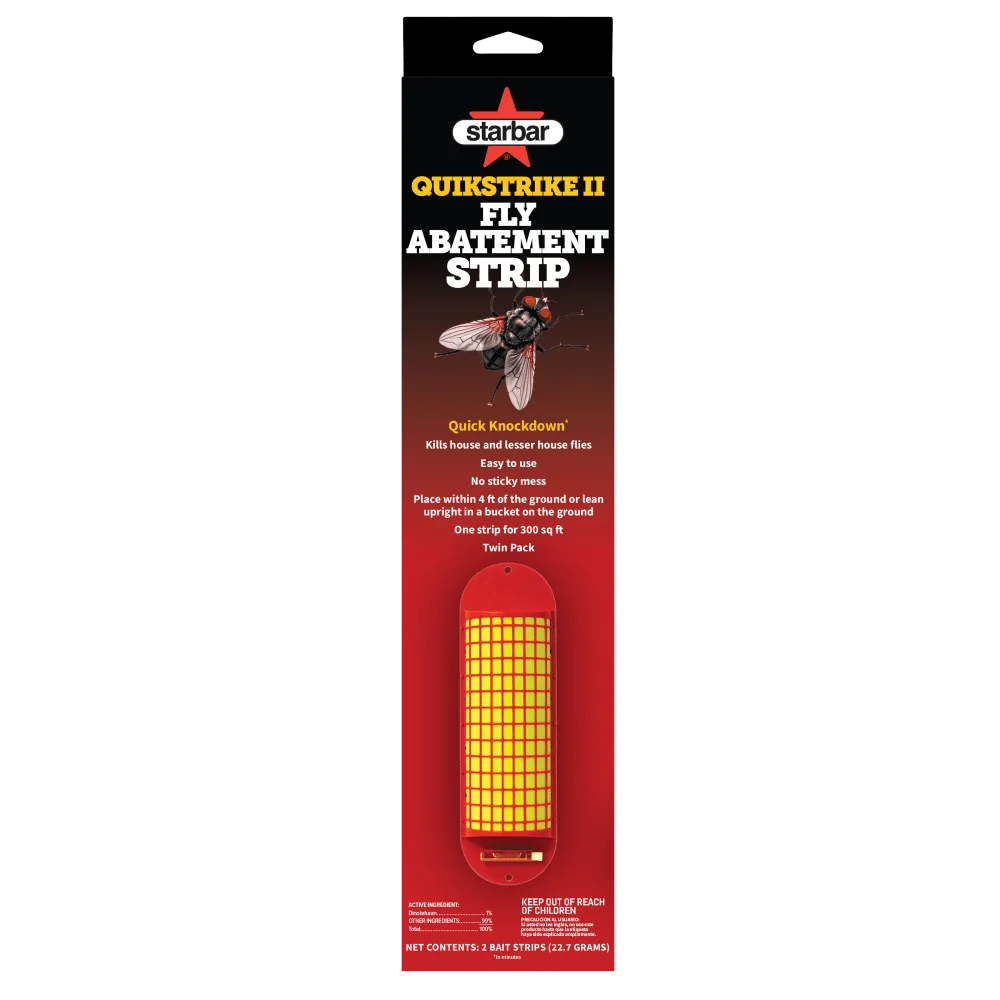
Flies drop minutes after they feed on this strip. A triple-action attractant pulls them in, and the active ingredient does the rest. Set it low in horse barns, pig barns, dairy barns or poultry houses, including milking parlors, in a spot animals, children and pets can't reach, and you get fly control right where flies feed.
There's nothing to mix and nothing to spray over feed and water. Fix the strip in place, leave it working, and keep an eye on it as you do your chores. It's a low-effort way to deal with flies between cleanouts.
Highlights
- Triple-action attractant draws flies in
- Kills flies minutes after they feed
- Fits horse, pig, dairy and poultry barns
- Works in milking parlors where flies are a problem
- Mounts 4 feet from the ground or lower, or leans upright in a bucket
Why a bait strip for the barn
A bait strip is the low-effort choice for barns that need steady fly control. It's a set-and-leave tool, so it fits a busy barn where spraying every day isn't practical. Nothing gets sprayed onto animals, feed or fixtures, and the work happens while you attend to the rest of the chores.
Put strips where flies rest and feed: near doors, around the feed room and in the corners where manure and spilled feed build up. A horse barn with stalls that flies keep finding, a dairy with a busy parlor, a pig barn or a warm, wet poultry house are all good places for one.
At a glance
| Form | Fly abatement strip |
|---|
| Target | House flies and lesser house flies |
|---|
| Active ingredient | Dinotefuran (1.0%) |
|---|
| Action | Triple-action attractant |
|---|
| Kill time | Minutes after feeding |
|---|
| Use sites | Horse, pig, dairy and poultry barns; milking parlors |
|---|
| Placement | 4 feet from the ground or lower, or in a bucket |
|---|
| EPA Reg. No. | 2724-839-89459 |
|---|
How to use it
Set the strip low, where the flies gather.
- Take the strip out of its pouch, holding it by the curved ends, and squeeze the attractant tube until it snaps. Never remove the tube or empty it.
- Place the strip 4 feet from the ground or lower, or set it in a bucket so it sits in the zone where flies are active.
- Fix the strip to a stationary object low to the ground, or lean it upright in a bucket or box weighted with sand or a brick. Don't hang it from one end where a breeze will swing it.
- Use 1 strip per 300 square feet in enclosed areas with low to moderate fly numbers, and 1 strip per 100 to 150 square feet in open areas or under heavy fly pressure. Keep strips out of rain, direct sun and spots where daily work will get them wet.
- Use it in horse barns, pig barns, dairy barns and poultry houses, plus milking parlors where flies are a problem.
- Put strips where children, pets and livestock can't get into them, and keep them away from feed and water.
- Wash your hands after handling strips.
Keep unused strips in their original container in a cool, dry place.
Good to know
- Rotate your fly control. Switching between different kinds of fly control, such as a bait strip, a trap and a fly bait, helps slow resistance.
- Flies breed in wet manure, spilled feed and decaying matter. Clean those up and keep bedding dry, because sanitation does more over the long run than any single product.
- Pair strips with traps near outside doors, so flies get caught before they come in.
- Replace a strip once its yellow color is gone, and put fresh ones up in the first warm week of the season.
About Starbar
Starbar fly control comes from Central Life Sciences, a company that traces its work to the discovery of the first insect growth regulator, (S)-methoprene. Starbar's line covers fly control for livestock and agriculture, from traps and baits to sprays, and the company is committed to environmentally compatible insect control.
Cautions
KEEP OUT OF REACH OF CHILDREN
Do not apply in areas accessible by animals, children and pets.
Restricted Use Pesticide (RUP) in the following States: VT, MD - Pollinator Protection Act - only purchased/used by certified applicators, farmers, veterinarians
Not for sale in Alaska
Get strips up before the first warm week sends flies into the barn.


 Ask Daisy