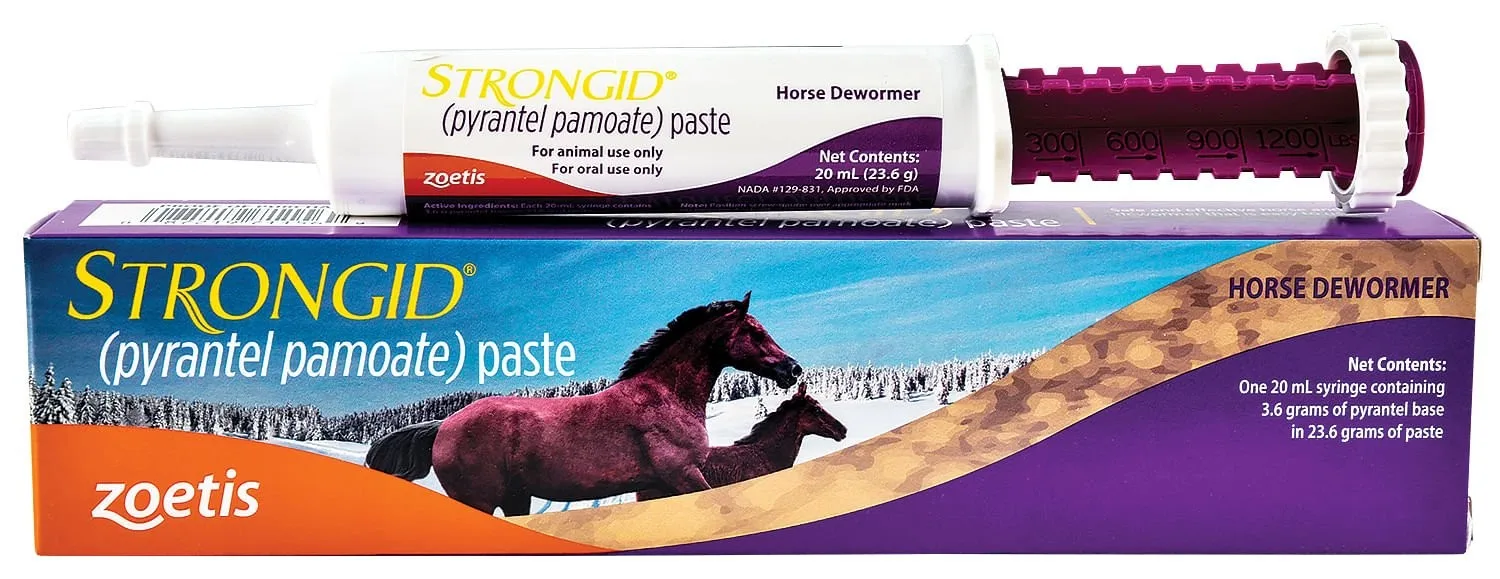
A parasite plan is one of the simplest things you can do for your horses, and Strongid Paste makes worming day easy. It removes and controls mature infections of large strongyles, pinworms and roundworms in horses and ponies. It also covers small strongyles, and foals from 2 to 8 months of age can be dosed every 4 weeks for maximum control.
The paste is ready to use straight from the syringe, so there is no mixing and no powder to spill in the feed room. Pyrantel pamoate is the active ingredient. A set worming schedule keeps the whole herd on track, and one syringe at a time suits a small barn, a riding string or a mare and foal pair.
Worming works best as a plan, not a guess. Your veterinarian can help you decide when each horse needs treatment and which product fits your pasture. Regular monitoring shows whether the treatment is still doing its job.
Highlights
- Removes and controls mature large strongyles
- Also controls small strongyles, pinworms and large roundworms
- Foals 2 to 8 months can be dosed every 4 weeks
- Paste for simple dosing by mouth
- Pyrantel pamoate active ingredient
Why choose a paste dewormer
A paste gives you a measured dose in a syringe, so you can see exactly what goes into each horse. Each horse gets its own dose, which is easier to track than a product mixed into a water bucket or a shared feed pan. Dewormers also work best when each animal gets the right dose for its size, which is why weighing or measuring a horse matters more than most owners expect.
Who it suits: first-time horse owners who want a simple routine, trail riders who move horses between pastures, and anyone raising a foal who needs a plan from the first months.
At a glance
| Form | Paste |
|---|
| Pack | 20-mL syringe |
|---|
| Active ingredient | Pyrantel pamoate |
|---|
| Approval | NADA # 129-831 |
|---|
How to use it
- Weigh or tape-measure the horse before dosing, so the dose matches the animal.
- Give a single oral dose of 3 mg pyrantel base per lb of body weight: up to 300 lb, 1/4 syringe (5 mL); 301 to 600 lb, 1/2 syringe (10 mL); 601 to 900 lb, 3/4 syringe (15 mL); 901 to 1,200 lb, 1 full syringe (20 mL). Do not underdose.
- Put the nozzle in at the corner of the mouth and deposit the paste on the back of the tongue. Raising the horse's head helps it swallow. Recap the syringe if you use only part of it.
- Dose foals 2 to 8 months old every 4 weeks. Treat the mare 1 month before her expected foaling date and again 10 days to 2 weeks after the foal is born. Dose horses and ponies over 8 months every 6 weeks.
- Keep the syringe capped and stored the way the cautions below explain.
Good to know
- A fecal egg count, a lab check of a manure sample, helps your vet see which horses carry the heaviest load and which product fits.
- Switch dewormer classes only on your vet's advice, not out of habit.
- Pick up manure from paddocks regularly. Fewer droppings on the ground means fewer chances for worms to come back.
- Keep a dated log of each horse's wormings, so the next dose is easy to plan and easy to explain to your vet.
About Zoetis
Zoetis traces its roots to 1952, when Pfizer established its animal agriculture division. Its equine line includes dewormers, vaccines and lameness solutions.
Cautions
Consult your veterinarian for assistance in the diagnosis, treatment and control of parasitism.
Do not use in horses intended for human consumption.
It is recommended that severely debilitated animals not be treated with this preparation.
Keep out of reach of children.
Store at a controlled room temperature of 15° C to 25° C (59° F to 77° F).
Parasite resistance may develop to any dewormer, and has been reported for most classes of dewormers. Treatment with a dewormer used in conjunction with parasite management practices appropriate to the geographic area and the animal(s) to be treated may slow the development of parasite resistance. Fecal examinations or other diagnostic tests and parasite management history should be used to determine if the product is appropriate for the herd prior to the use of any dewormer. Following the use of any dewormer, effectiveness of treatment should be monitored (for example, with the use of a fecal egg count reduction test or another appropriate method). A decrease in a drug’s effectiveness over time as calculated by fecal egg count reduction tests may indicate the development of resistance to the dewormer administered. Your parasite management plan should be adjusted accordingly based on regular monitoring.
Put a syringe in the tack room before the next worming day, so it is on hand when the day comes.


 Ask Daisy