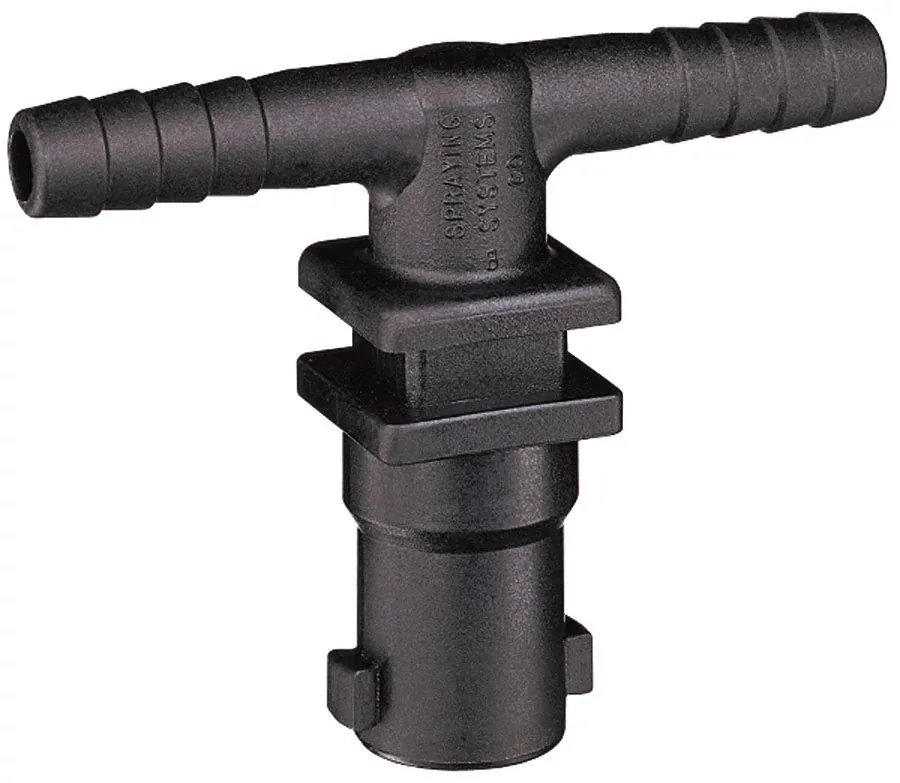
A nozzle body is the small part that decides whether a spraying day keeps moving. When one cracks or strips out in the field, the whole boom goes out of service. This nylon nozzle body is built to take a day's work and is rated to a 125 PSI maximum operating pressure.
Nylon doesn't rust the way steel does, so the body stays clean and trouble-free through seasons of wet work. The barbs on each side of the tee fit the inside diameter of the boom hose you already have, so you can replace the body without replumbing the line. Match the barb to your hose, and it seats, clamps down and goes back to work.
Highlights
- Nylon body that won't rust like steel
- Rated to 125 PSI maximum operating pressure
- Hose barb on each side of the tee
- Replaces a worn body without replumbing the line
- Small part that's easy to keep on hand
Why keep a spare nozzle body
A spare body in the toolbox turns a cracked part into a five-minute swap instead of a day waiting on a replacement. It's a small part to keep on hand, and it's the difference between a quick swap and a stalled crew.
This is the right part for a boom that has seen a few seasons, a rig that runs chemicals through the lines every week, or a crew that needs every boom running. If the body is cracked, stripped or leaking at the seat, replace it rather than trying to patch it.
At a glance
| Material | Nylon |
|---|
| Product type | Nozzle body |
|---|
| Maximum operating pressure | 125 PSI |
|---|
| Style | Tee, hose barb on each side |
|---|
How to use it
Swap the body with the boom depressurized.
- Relieve pressure and drain the boom before you remove the body.
- Match the barb to the inside diameter of your hose. A barb that's too small pulls air, and one that's too big won't seat.
- Slide a hose clamp onto the hose before you push the body into the line, so pressure can't walk the hose off.
- Pressure test with clean water, and keep the system at or under 125 PSI.
Good to know
- Rinse the body after harsh products and let it dry before it goes back on the boom.
- Tighten the fittings snug, not cranked down, so the nylon doesn't crack.
- Check the body for cracks each time you change a nozzle tip.
- Store spares in a dry bin so they stay clean until the day you need them.
- Pair it with nozzle tips, strainers and hose clamps for a complete boom repair.
About TeeJet
TeeJet Technologies traces back to 1937, when Spraying Systems Co. was founded in a 600 square foot garage in Chicago. The company's single focus has been application technology, and its tee-shaped tip origins gave the TeeJet name.
Grab a spare before the next spray day, not after the boom goes down.

 Ask Daisy