
Best Bird Seed for a Florida Panhandle Winter
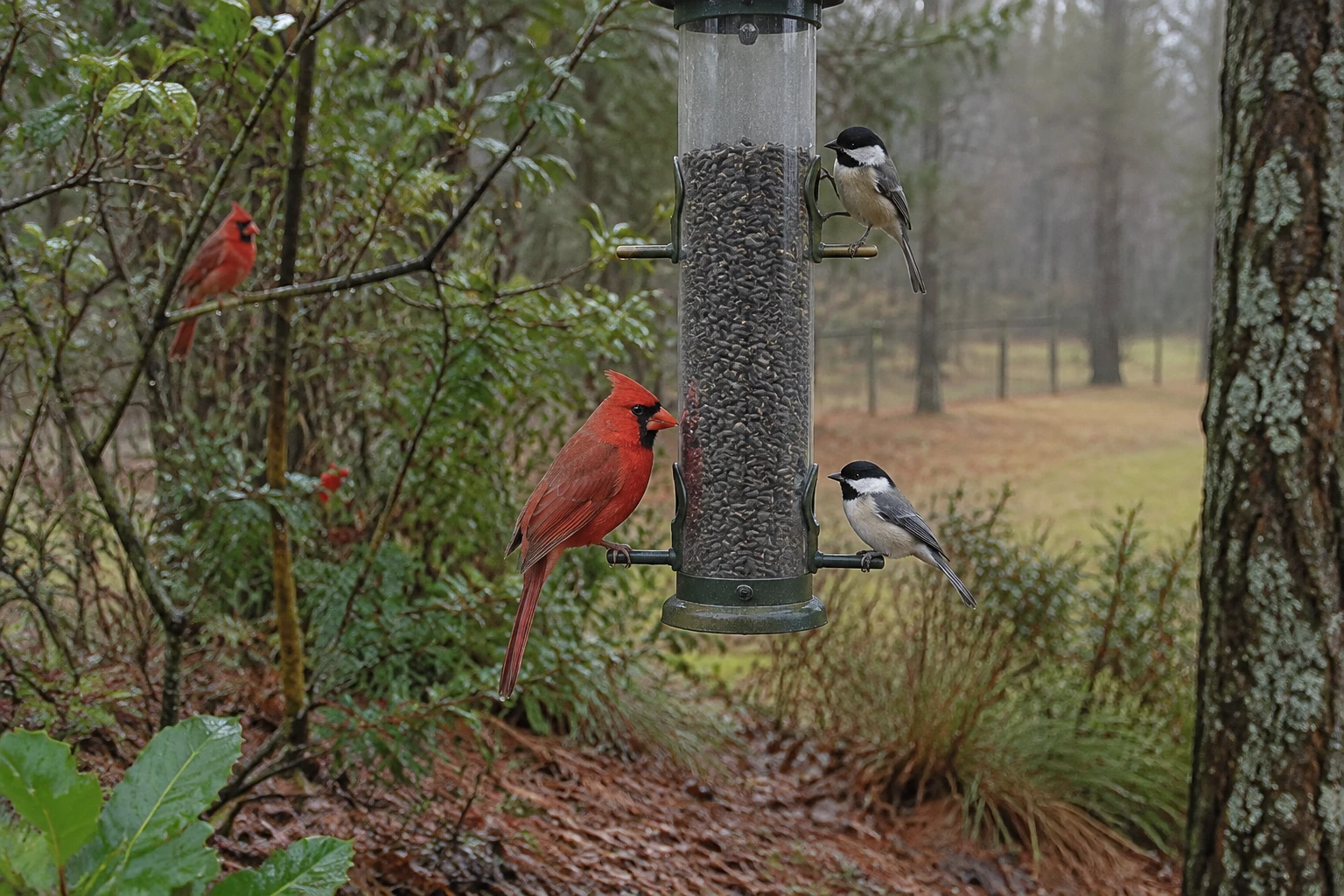
For a Florida Panhandle winter, black-oil sunflower is the best single seed to start with. UF/IFAS calls it the best all-around bird attractant; its thin shell is easier for many birds to open, and the kernel provides useful energy. Put it in a feeder that sheds rain, offer only what birds will eat before it gets damp or stale, and add other seeds to suit the birds visiting your yard.
Choose seed for the birds you see
Winter around Baker is not a northern snow season. Birds still need dependable food and water, but damp spells, rain and occasional warm weather affect what keeps well. Start with one seed and watch who eats it. A small, clean offering that gets used beats a large mix left to cake, spoil or attract unwanted visitors.
- Black-oil sunflower: the strongest all-around choice for many seed-eating birds. Cardinals, titmice, finches and chickadees may take sunflower. A tube feeder suits smaller birds; a hopper feeder can accommodate larger birds such as blue jays.
- Striped sunflower: a larger seed with a thicker shell than black-oil sunflower. It can suit larger-billed birds, but smaller birds may find it harder to open. If you want one seed for a broad mix of visitors, black-oil is usually the more useful starting point.
- White proso millet: a targeted option for ground-feeding sparrows, doves and juncos. Put a small amount in a low tray with good drainage. It can also draw cowbirds, blackbirds and house sparrows; if those birds take over, stop offering millet.
- Safflower: another seed cardinals and similar visitors may eat. Try it in a separate feeder to see whether local birds prefer it, rather than changing every feeder at once.
- Nyjer: use it for winter finches, with a feeder made for the small seed, such as one with small ports or a fine-mesh sock. UF/IFAS gives October through March as the Florida window for putting out Nyjer feeders. That timing is for winter finches, not a rule that all bird feeding should stop outside those months.
- Suet: a supplement rather than a seed. Offer it in a wire cage, where woodpeckers and wrens may visit. Check it during warm spells; cakes can soften or melt even in winter here.
Read the mix before you buy
A low-priced bag is not necessarily a good value if birds pick out a few seeds and leave the rest under the feeder. Check the ingredient list for the seed you actually want to serve. UF/IFAS cautions that blends containing substantial amounts of milo, wheat, oats or red proso millet can create waste when birds reject them. White proso millet is useful for some ground-feeding birds; do not assume all millet is the same.
Cracked corn is not a good default for damp conditions. It absorbs water readily and can rot; UF/IFAS warns that spoiled corn can develop dangerous aflatoxin contamination. Never use treated planting seed as bird food. Planting seed is not sold as feed, and some treatments can be harmful if eaten.
Sunflower hearts and chips leave less shell litter, but exposed seed spoils faster than whole sunflower. Buy or fill only a one- to two-day supply, and use a feeder that does not trap rain or condensation. If you cannot keep up with that turnover, whole black-oil sunflower is the safer practical choice.
Set up for wet weather and easy cleaning
Choose a feeder with drainage and a roof or cover to help keep seed dry. Place it where you can reach it for cleaning and where birds have nearby cover, but not so close to a window that it creates a collision hazard. UF/IFAS recommends setting feeder poles 10 to 15 feet from tree trunks and overhanging limbs; a squirrel baffle can help discourage squirrels, but it is not bear protection.
- Begin with a modest amount. There is no universal daily ration: bird numbers and feeder use vary. Refill based on what is eaten, and do not top fresh seed over old, wet seed.
- Check the feeder after rain. Remove seed that is clumped, musty, moldy or otherwise spoiled, and clear damp debris beneath the feeding area.
- Clean seed feeders about every two weeks, and sooner after wet weather or heavy use. Empty and take the feeder apart. U.S. Fish and Wildlife Service guidance describes soaking it for 10 minutes in a solution of one part bleach to nine parts water, then rinsing and drying it completely before refilling. Follow the feeder maker's cleaning instructions if they differ.
- Wash your hands after handling feeders, seed or droppings. Keep the ground below the feeder clear so old food and waste do not build up.
- Store extra seed in a securely closed metal container, not a chewable plastic bin outdoors.
Do not overlook bears, water and native cover
Florida bears may remain active during winter, so do not assume a feeder is harmless simply because the weather is cool. If bears are present in your area, follow Florida Fish and Wildlife Conservation Commission guidance: remove wildlife feeders or use a genuinely bear-resistant setup, and secure birdseed and other attractants. A squirrel baffle or screened enclosure should not be treated as bear-resistant.
Seed is only one part of a bird-friendly yard. UF/IFAS points to quality food, drinking and bathing water, and safe cover as key elements. Keep fresh water available in a shallow, clean basin and consider native plants that offer shelter and natural food. Those steps help create a more useful habitat than simply adding more seed.
A practical winter shopping list
For most Baker-area yards, begin with black-oil sunflower and an easy-to-clean tube or hopper feeder chosen for the birds you hope to see. Add a draining tray and a small amount of white proso millet if ground-feeding birds are regular visitors. Choose Nyjer only if you are setting up the matching feeder for winter finches. A suet cage is optional, and it needs regular checks during warm spells. Keep seed dry and buy a quantity you can use while it is fresh.
Baker Feed & Country Store has a Bird department, but the seed types, brands and feeder models discussed here are general recommendations, not a promise of current stock. Call (850) 537-1000 to ask what is available before making a trip.
What is the best single bird seed for winter in the Florida Panhandle?
Black-oil sunflower is the best all-around starting point. It appeals to many seed-eating birds, and its thin shell is easier to open than the thicker shell on striped sunflower.
When should I put out Nyjer for winter finches?
UF/IFAS recommends October through March for Nyjer feeders in Florida. Use a feeder with small ports or fine mesh designed to hold the seed.
Is white millet good bird food or just filler?
White proso millet can be useful for sparrows, doves and juncos, especially in a draining ground-level tray. Red millet is not the same choice; check the blend label rather than treating all millet alike.
How often should I clean a feeder in rainy weather?
Clean it about every two weeks, and sooner after heavy use or wet weather. Remove old seed, clean the feeder, rinse and dry it fully, and clear spoiled food and debris from underneath.
Can I leave bird feeders out if bears visit my property?
Do not rely on a squirrel baffle or screened enclosure to keep bears out. Follow FWC guidance to remove wildlife feeders or use a bear-resistant setup, and secure seed and other attractants.
 Ask Daisy