
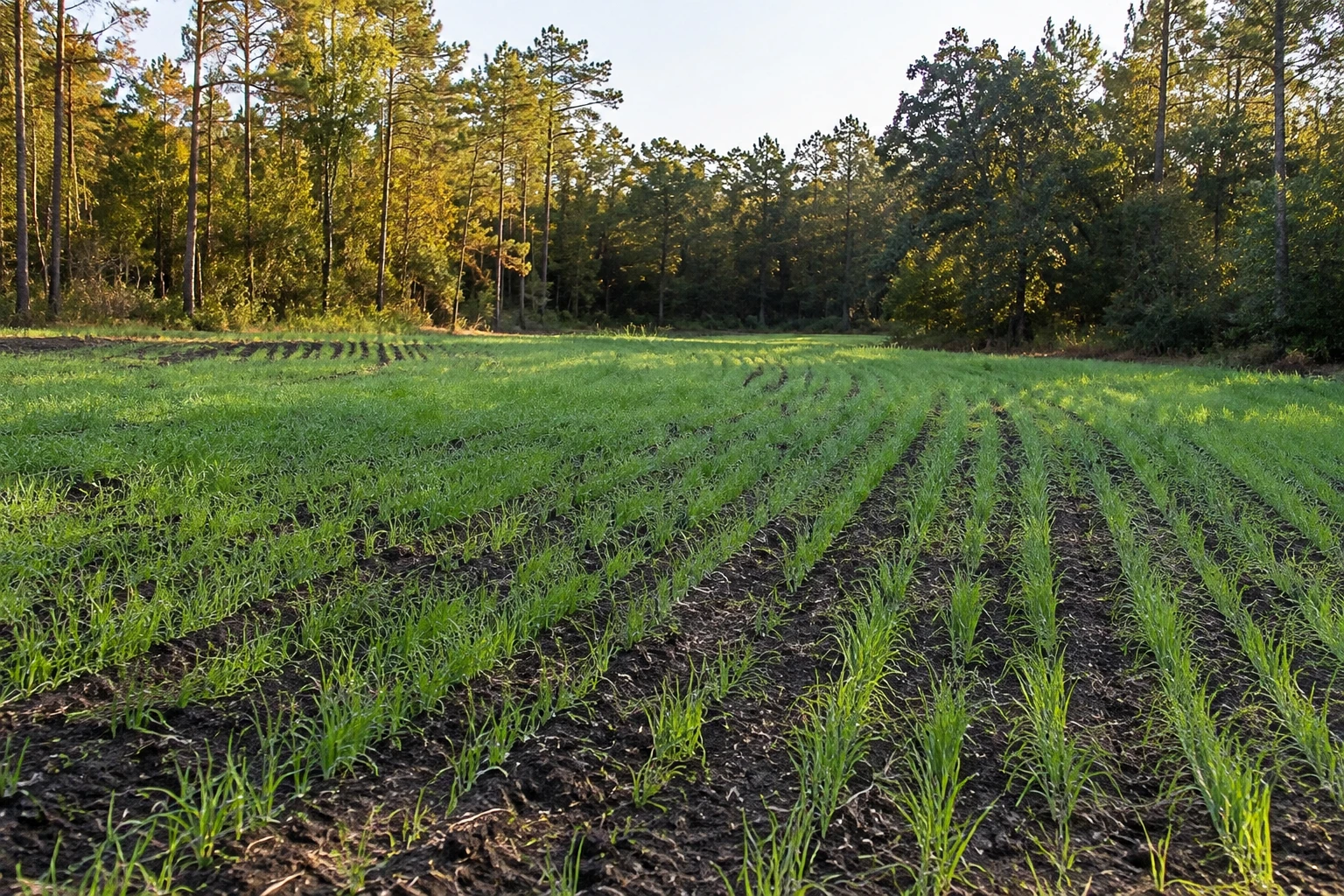
Can You Plant Feed Oats for a Deer Plot?
Yes, whole feed oats can grow in a deer food plot if the seed is viable, but they are less dependable than labeled, Florida-adapted seed oats. UF/IFAS warns that feed oats may have no germination guarantee and may be poorly adapted to Florida’s rust and virus disease pressure. Near Baker, plant in fall when soil moisture is adequate, use a firm seedbed, and cover the seed rather than leaving it on the surface. A cheaper bag is not a bargain if too little of it sprouts.
Feed oats and seed oats are not the same purchase
“Feed oats” describes what grain is sold for, not whether the lot is fit to plant. Feed grain may be viable, but the label may not tell you its germination, purity, or variety. Even a good result from a home germination test only tells you that seeds sprout under test conditions. It does not show whether the variety is suited to Florida’s disease pressure or whether the lot is clean.
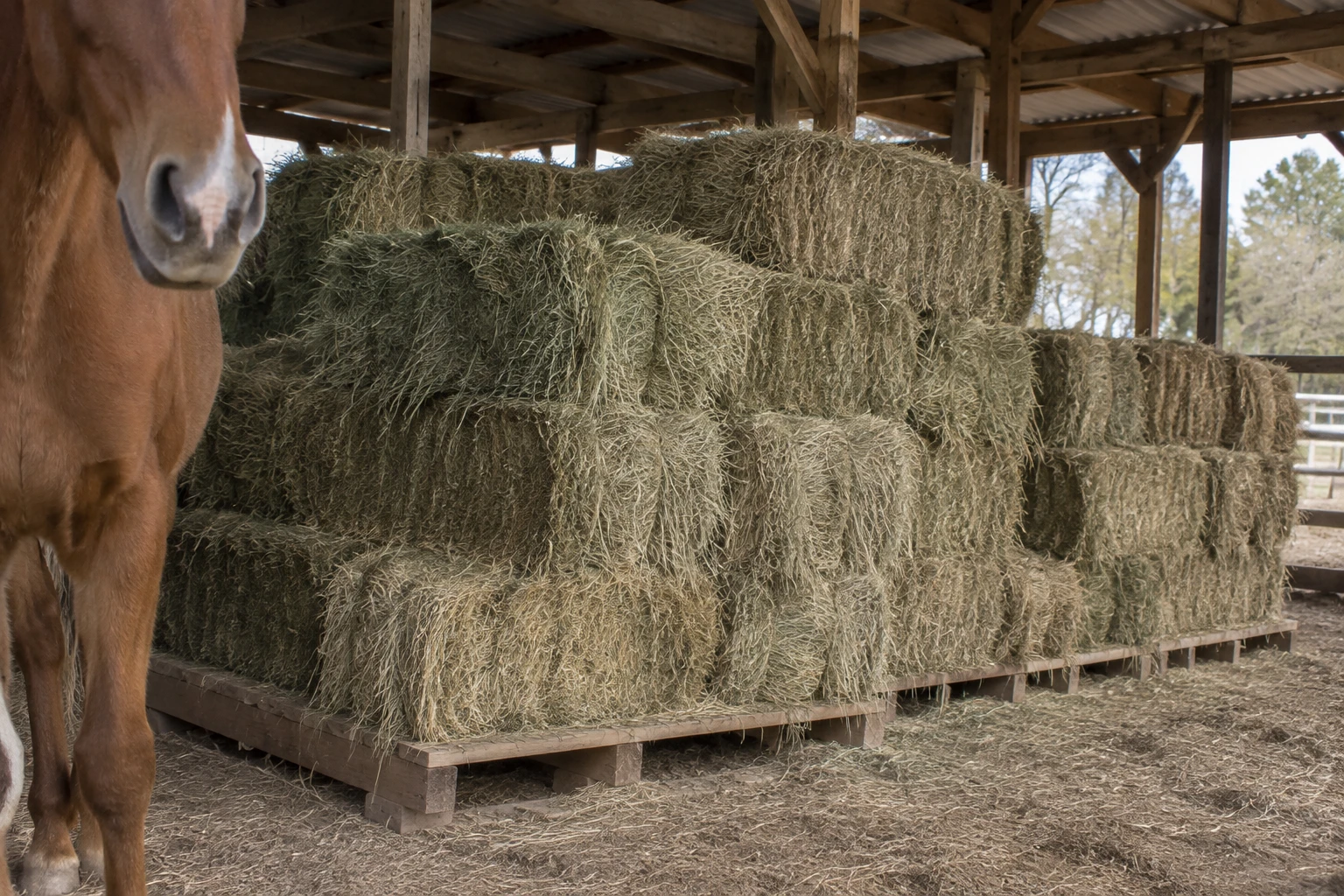
Start by checking the product itself. You want whole, viable oats, not processed feed. Rolled, crimped, steam-processed, or pelleted oats are not a substitute for planting seed. Feed grain can also carry weed seed or foreign material, another reason not to plant an unknown lot just because the bag price looks good.
What to check before buying
- Look for a seed tag or written lot information showing germination and purity. If neither is available, ask the seller what they can verify; do not assume a feed label is a seed tag.
- Ask for the variety and whether it is recommended for Florida or the Florida Panhandle. A successful germination test does not establish regional adaptation.
- Confirm the oats are whole and untreated in a way that would make them unsuitable for planting. Do not use rolled or otherwise processed feed oats as seed.
- Compare cost per usable seed pound, not just the bag price. Germination and purity determine how much of the purchased weight is actually seed likely to establish.
- Check for weed seeds, chaff, and other foreign material. If the lot is visibly dirty or its history is unknown, labeled planting seed is the safer choice.
When to plant oats near Baker
For North Florida, UF/IFAS’s wildlife food-plot guide gives a September 15 through November 15 planting window for oats. In practice, do not treat the first date as a signal to plant into hot, dry ground. Adequate moisture and a cooler fall pattern matter; hot conditions increase disease risk. October often falls within the window, but wait for suitable moisture if the seedbed is dry.
Oats do poorly on wet soils and can be injured by hard freezes. Check drainage before choosing them. If a plot is prone to standing water, or you need more cold tolerance, ask your county Extension office about other small grains such as cereal rye. Cereal rye is different from annual ryegrass; UF/IFAS cautions against ryegrass in wildlife plots because it can dominate and deer generally prefer it less.
How much seed to plant
UF/IFAS’s North Florida wildlife guide lists 100 to 120 pounds of oats per acre and at least 80% germination. A newer UF/IFAS general forage recommendation gives 70 to 100 pounds of pure live seed (PLS) per acre for broadcast planting. Those figures use different guidance and seed-quality bases, so do not treat them as interchangeable. For a wildlife plot, use the wildlife guide’s rate as your starting reference and read the seed tag carefully.
PLS means the share of a bag that is both pure seed and expected to germinate. To calculate it, multiply purity by germination as decimals. For example, a lot that is 96% pure and 85% germinating has a PLS fraction of 0.816. To deliver a 100-pound PLS target, you would need about 123 pounds of that bagged seed. That is an example of the calculation, not a recommendation to use that rate for every plot.
For a rough acreage check using the wildlife guide’s listed range: a quarter-acre takes 25 to 30 pounds of oats; a half-acre takes 50 to 60 pounds. Adjust if the product’s germination is below the guide’s 80% benchmark or if the seed tag’s purity and germination require a PLS conversion. If the bag provides no reliable figures, you cannot calculate the usable rate with confidence.
Prepare the plot and plant for good contact
- Control existing weeds and competing vegetation before planting. Oats cannot establish well if they are scattered into a thick, living mat.
- Prepare a level, firm seedbed. A loose, fluffy surface can leave seed too deep in some places and exposed in others.
- Calibrate your drill or spreader and measure the plot. Guessing the rate can leave a plot thin or waste seed.
- Plant oats about 1 to 2 inches deep, following the wildlife guide. Small grains establish more reliably when drilled or incorporated than when left on top of the ground.
- If broadcasting, work the seed into the soil and firm the surface enough to improve seed-to-soil contact. A broadcast spread alone is not the whole planting job.
- Plant when there is enough soil moisture for establishment. Do not count on a light shower to rescue seed sitting exposed on dry ground.
Soil test, lime, and fertilizer
Take a soil sample early and use the results to guide lime and fertilizer. UF/IFAS recommends a pH near 6.0 for cool-season annual grasses. Lime works slowly, so it is best applied well ahead of planting—preferably about six months before—and incorporated where possible. Adding lime on planting day is not an immediate correction. Use dolomitic limestone when the soil test indicates medium or low magnesium.
Fertilizer needs depend on the test, soil, and how the plot will be used. UF/IFAS’s prepared-seedbed guidance for annual grasses starts with 30 pounds of actual nitrogen per acre, all recommended phosphorus, and half the recommended potassium, followed by 50 pounds of nitrogen and the remaining potassium after initial grazing. That is general forage guidance, not a blanket prescription for every deer plot. Follow the soil-test recommendation and ask your county Extension office when the plot conditions or intended use differ.
Oats alone or in a mix?
Oats can be planted alone or in a cool-season mixture. UF/IFAS’s North Florida wildlife guide lists a per-acre “Best Value” blend of 50 pounds oats, 50 pounds triticale, 6 pounds red clover, and 15 pounds crimson clover. If adding clover, use an appropriate inoculant. Clover seed is much smaller than oat seed, so do not bury it at the same depth. Separate planting passes can put oats deeper and clover shallow; some clovers need only firm contact rather than disking.
Current Florida forage recommendations list options including Juggernaut, Horizon 306, Horizon 578, Horizon 720, Legend 567, RAM FLLA11019, and TriCal Cadillac. Recommendations and disease response can change; none should be treated as rust-proof. Check the current UF/IFAS forage-variety table and the variety information on the seed lot before choosing. Availability at Baker Feed & Country Store is not confirmed, so call ahead rather than assuming a particular variety is on hand.
If the plot looks thin
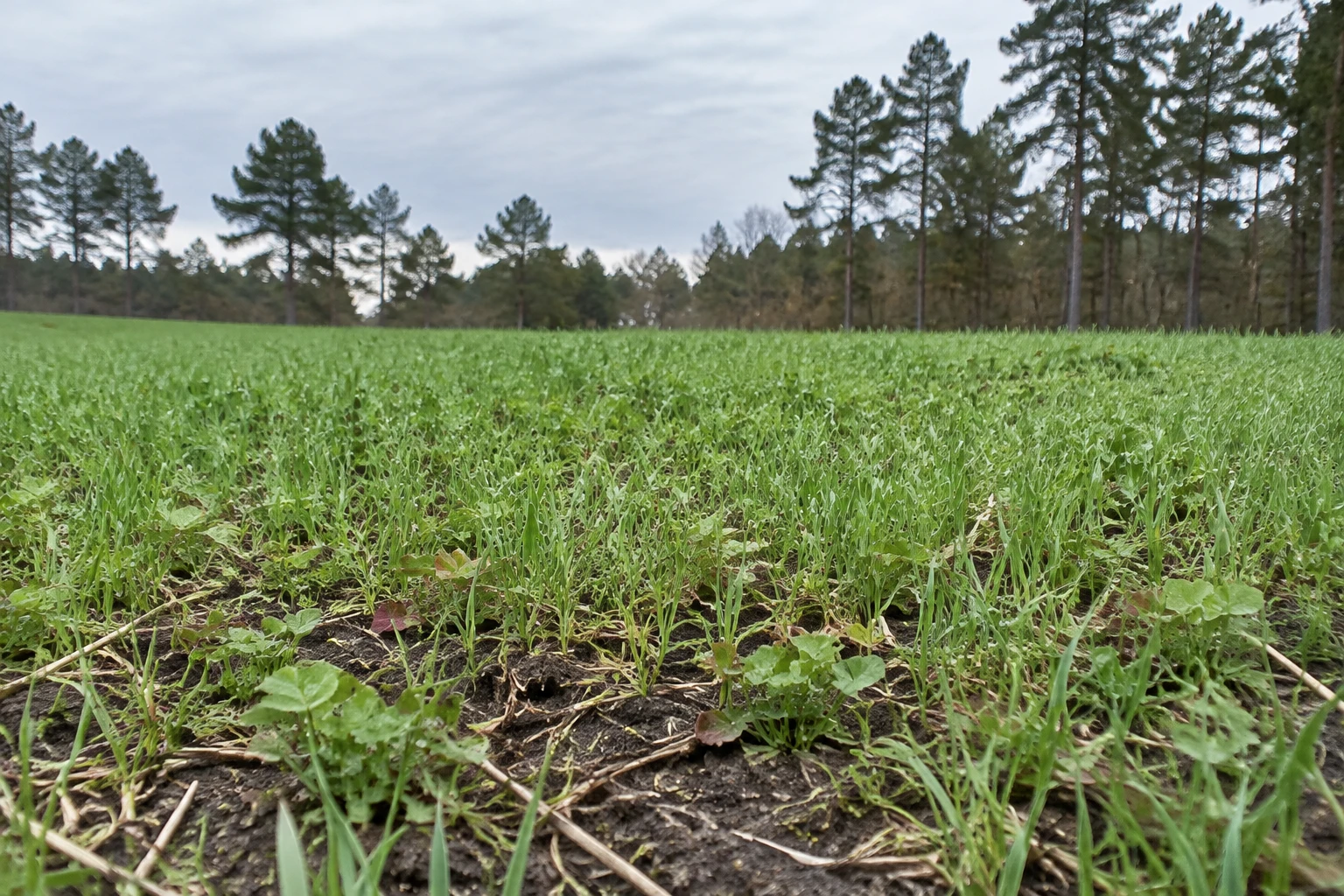
A thin plot can come from poor germination, dry soil, seed left uncovered, weeds, poor drainage, or heavy browsing. A small exclusion cage made from wire mesh can help distinguish browsing from a stand that failed to establish: compare growth inside the cage with the surrounding plot. If oats are yellowing or growth stops, check soil moisture, drainage, and the soil-test results rather than adding fertilizer by guesswork.
Before planting, gather a soil-test kit or instructions, the test-prescribed lime and fertilizer, calibrated planting equipment, and seed with clear germination and purity information. If you are choosing feed oats, test a sample first and accept that viability is only part of the decision. For a North Florida plot where time and seedbed preparation matter, labeled, adapted seed is usually the more dependable buy.
Will whole horse-feed oats sprout?
They may, if they are whole and viable. Feed oats may lack a germination guarantee and Florida-adaptation information, so test a sample and understand that sprouting does not prove the variety is well suited to North Florida.
Can I plant rolled or crimped oats?
No. Rolled, crimped, steam-processed, or pelleted feed is not a substitute for whole planting oats. Ask for whole seed intended for planting.
How can I test feed-oat germination at home?
Randomly count 100 seeds, place them between damp paper towels, and keep the towels moist but not dripping. For oats, the Extension germination test uses about 70°F for 10 days; fresh or dormant seed may need a five-day prechill at 42°F. Count strong seedlings. A home test estimates viability but does not tell you whether the oats are adapted to Florida.
Can I broadcast oats without a tractor?
Yes, a hand or small spreader can broadcast seed on a prepared plot. Calibrate it, then cover or incorporate the oats to about 1 to 2 inches and firm the soil for seed-to-soil contact. Scattering seed over weeds or leaving it on the surface often gives a poor stand.
 Ask Daisy