
Cereal Rye vs. Ryegrass for Deer Food Plots
Cereal rye and ryegrass are not interchangeable in a deer food plot. Cereal rye is a small grain that grows as a cool-season plant, and it is the one most often recommended for wildlife plots. Ryegrass, especially the annual ryegrass sold in the seed aisle, is a grass bred for pasture that livestock graze. UF/IFAS extension material draws that same line. It distinguishes cereal rye from ryegrass and does not recommend ryegrass for wildlife plots. If you are buying seed to draw deer, look for cereal rye on the tag. If you are building grazing for cattle, goats or horses, ryegrass may be the right seed. Either way, read the tag before you pay.
Why the names cause trouble
Farm stores shelve grass seed by the name on the bag, and the names overlap more than they should. Rye, winter rye, cereal rye and grain rye can all describe the same small grain. Ryegrass, annual ryegrass and Gulf ryegrass describe a bunch grass with fine leaves. A customer who grabs the bag that says rye may think they have the wildlife seed, when the bag holds a grass built for a different job. The word on the front of the bag is a starting point. The species name in the guaranteed information is what you should trust.
Seed companies also sell mixes. A mix can contain several species, and the proportions decide how the plot will behave. If the bag lists more than one species, check each one and ask what the mix was designed for. A blend made for a cattle pasture may not be the blend you want for a hunting plot.
What cereal rye does in a plot
Cereal rye is usually chosen for these reasons in a wildlife plot:
- It is a grain, so its growth is tall and upright rather than low and dense.
- It is planted in the cooler part of the year and keeps growing through the colder months.
- Deer browse the green leaves and graze on it as it establishes.
- It is commonly used as a cover crop, so it fits into a plot that is also meant to protect bare ground.
- It can be mixed with other wildlife forages, and extension guidance treats it as a plot crop rather than a pasture grass.
Cereal rye is not magic, and it does not replace good soil. Like any plot seed, it does best when the ground has been prepared, the seedbed is firm, and the seed goes in at the depth the tag and extension recommendations give. Ask your county extension office or read UF/IFAS material for the rates and timing suited to your county, since those depend on where you are.
What ryegrass is built for
Ryegrass is a pasture grass first. It grows low and dense, puts out a lot of leafy growth, and holds up under livestock grazing. That is exactly why it belongs in a cattle field, a goat paddock or a horse pasture. A dense carpet of grass is good for a grazing animal that eats it all day. It does not give you the same kind of plot that a deer will walk into, browse and return to.
Ryegrass can still be useful in a property that has both livestock and deer. You might plant ryegrass in the pasture and cereal rye in the plot a short walk away. Keep the two separate in your planning. Mixing them up on the seed truck is how a plot ends up with the wrong seed and a disappointing season.
How to read the seed tag
Every bag of seed carries a tag that tells you what is in it. You do not need to be a seed analyst to use it. Look for these parts:
Go through the tag in this order:
- Species name. This tells you whether the bag holds cereal rye, ryegrass or something else. Trust this line over the marketing on the front.
- Variety name. Some species come in named varieties, and the variety can change how the plant grows or how well it suits your site.
- Pure live seed. This is the share of the bag that is both the named seed and able to grow. A higher number means less of the bag is filler.
- Germination. This shows how many of the pure seeds sprouted in the seed lab test, and the date of the test should be on the tag.
- Inert matter, other crop seed and weed seed. These should be listed. Read them rather than skipping over them.
- Net weight. Check that the bag size matches what you need for your acreage.
If a tag is unclear, or a species you expected is not listed, put the bag back and ask. A seed rep or your county extension agent can help you read the label. It is far cheaper to ask before planting than to find out after the seed is in the ground.
Matching the seed to your goal
Think about what the plot is for, then match the seed:
- A deer plot you want deer to visit and use: look for cereal rye or another wildlife-plot seed on the tag, and follow extension guidance for your county.
- A grazing pasture for cattle, goats, sheep or horses: ryegrass is a pasture grass, so it may suit the job.
- A small backyard area with a few animals: decide whether the goal is a grazing patch or a plot for wildlife, and buy to that goal.
- A property that wants both: plan separate seed for separate areas. Do not expect one bag to do both jobs well.
Site matters too. Soil type, drainage, shade from nearby trees and how much rain the area gets all change how a seed performs. Before you buy in quantity, consider a soil test through your county extension office. A plot planted on the wrong soil will underperform no matter which seed you chose.
Mistakes to avoid
These are the errors we see most often at the counter:
- Buying by the word rye on the front of the bag without reading the species name on the tag.
- Assuming ryegrass is a cheap stand-in for cereal rye in a deer plot.
- Planting pasture grass in a plot and expecting it to pull deer the way a grain plot does.
- Skipping the soil test and blaming the seed when the ground was the problem.
- Buying seed by weight without checking the tag for germination and purity.
- Mixing a livestock blend and a wildlife blend in the same spreader because they are in the same shed.
- Storing leftover seed in a damp or hot place. Keep it dry and sealed until planting.
Another common mistake is trying to make a plot do everything at once. A single plot can feed deer and also hold pasture for other animals only if the layout and the seed choice support both. Most people do better with one clear purpose per planting.
What we stock and how to get help
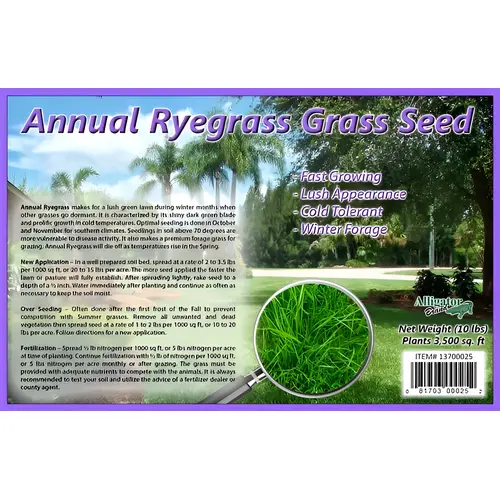
We carry Alligator Brand Gulf Annual Ryegrass Seed in a 10 lb bag at $13.50, and it is in stock now. That is a ryegrass seed, so it is aimed at pasture and grazing. If your goal is a deer plot, check the species on the tag and talk it through with us before you buy. Bring in the plot size, the animals you want to feed and what the ground looks like, and we will go over the seed options with you honestly.
You can reach us at (850) 537-1000 or stop by at 5791 Hwy 4, Baker, FL 32531. We are open Monday through Friday from 8 am to 6 pm and Saturday from 8 am to 2 pm, and we are closed Sunday. Hours are Central Time, and we recommend calling ahead for holiday hours.
Frequently asked questions
Is cereal rye the same thing as ryegrass?
No. Cereal rye is a small grain used in wildlife plots and as a cover crop. Ryegrass is a grass bred for pasture and grazing. The species name on the seed tag tells you which one you have.
Can I use ryegrass in a deer food plot?
UF/IFAS extension material does not recommend ryegrass for wildlife plots. If you want a plot for deer, look for cereal rye or another seed labeled for wildlife use, and check current extension guidance for your county.
Which seed should I buy for cattle or horse pasture?
Ryegrass is a pasture grass and is often considered for grazing animals. Read the tag, match the species to your grazing plan, and ask your county extension office if you are unsure how it will fit your ground.
What if my seed tag does not list the species I expected?
Do not plant it until you have checked. Bring the bag in or call us at (850) 537-1000, and we will help you read the tag. You can also ask your county extension office to look at it with you.
 Ask Daisy