
Deer Corn vs. Protein Pellets: What to Compare
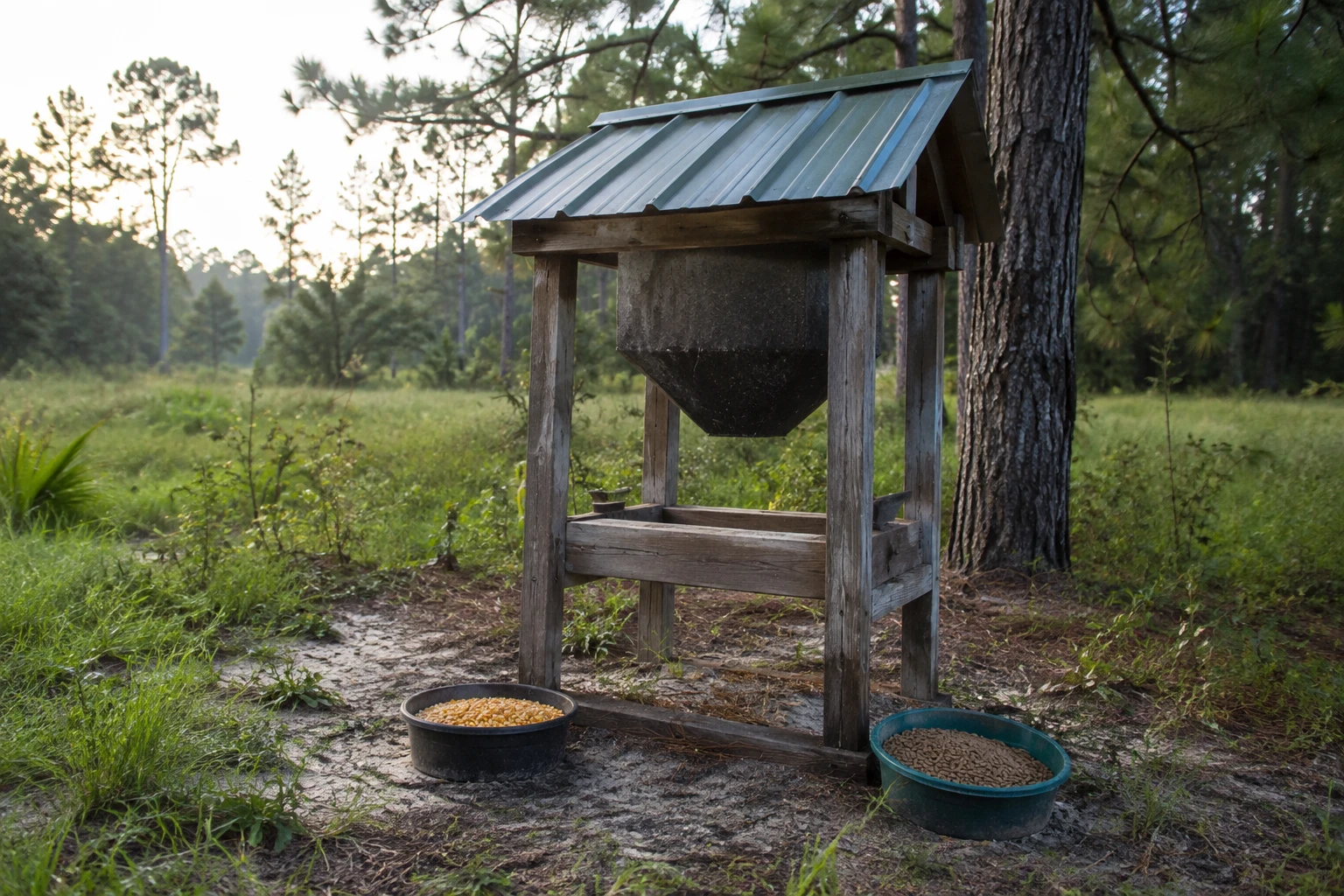
Deer corn is mainly an energy source and attractant; deer-specific protein pellets are a more concentrated supplement that can provide protein and added nutrients. Corn commonly tests around 7–10% crude protein, while deer pellets are often formulated in the 16–20% range. Neither replaces natural forage or good habitat. The right choice depends on your goal, the feed label, feeder setup and whether feeding is allowed on your property. See our deer feed selection.
What each feed does
Whole corn is a high-energy grain deer may readily eat. It can work as an attractant, but it is not a balanced deer diet: its protein and mineral profile are limited compared with a deer-formulated supplement. Calling corn worthless misses the point; treating it as complete nutrition does too. The Texas Parks and Wildlife Department describes corn as typically containing 7–10% crude protein and cautions that it does not provide balanced nutrition on its own.
Protein pellets are formulated to supplement forage with more protein, and some include minerals and vitamins. A 16–20% crude-protein pellet is a common selection benchmark in supplemental-feeding guidance, not a claim that every deer’s entire diet must contain that percentage. A feed’s guaranteed analysis tells you what is in the product; it does not tell you the protein percentage of everything a deer browses.
Check that the bag is made for deer and follow its feeding directions. A generic cattle or livestock pellet is not automatically suitable, and deer pellets are not all complete feeds. Texas A&M AgriLife Extension notes the need to distinguish feeds by intended use. Don’t infer ingredients, mineral levels or feeding rates from the word “pellet.”
Choose by purpose, not just price
Compare the guaranteed analysis, intended species, feeding directions, bag weight and feeder compatibility.
- For an attractant or energy source, corn may fit that purpose, but it is not a substitute for a balanced supplement.
- For a nutritional supplement, look for a deer-specific pellet with a label suited to your intended use. Check crude protein and the rest of the analysis, not just the headline percentage.
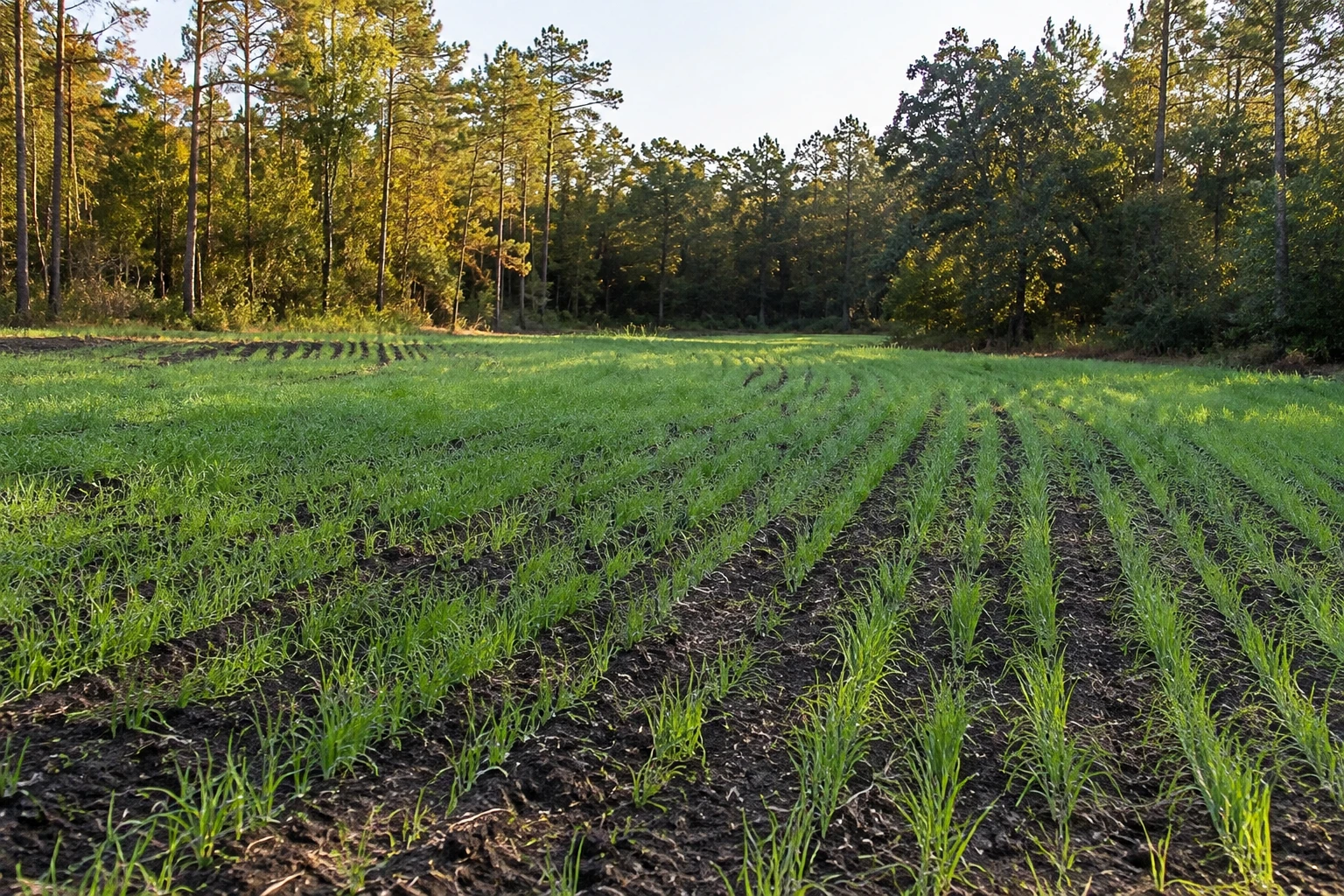
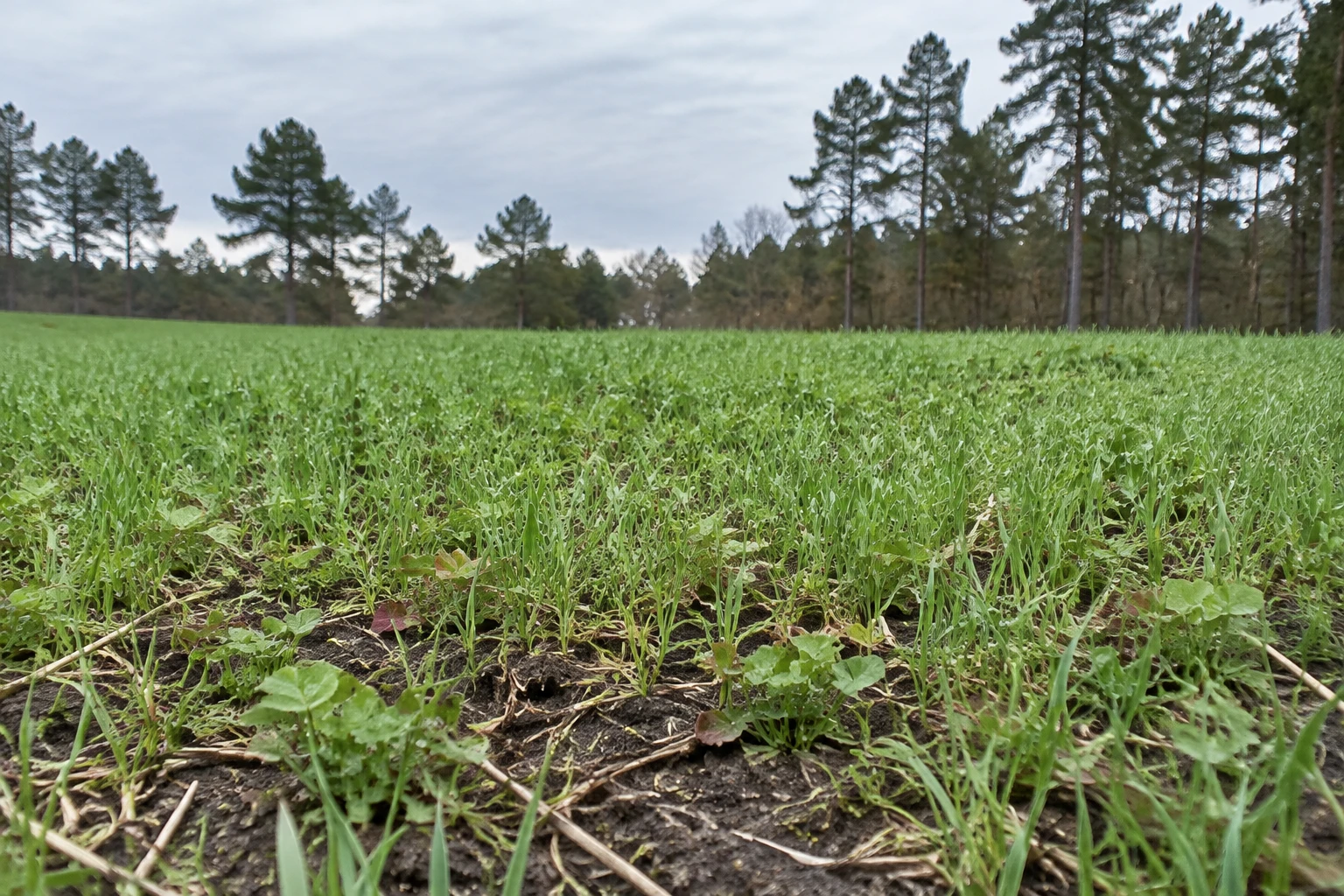
- For longer-term habitat improvement, consider forage as well as bagged feed. UF/IFAS guidance for Northwest Florida discusses warm-season legumes such as cowpeas, soybeans, alyceclover, aeschynomene, lablab and perennial peanut. Match the species to your site and seek local planting guidance.
- Compare cost per usable feed, not just the sticker price. Bag size, directions, how quickly deer consume it, spoilage and uneaten feed all affect the real cost.
A protein percentage on a bag is not an antler guarantee. UF/IFAS notes that nutrition during spring and summer matters for antler development, especially for young deer still growing. It also reports that young, growing deer may need a higher-protein overall diet than mature bucks to maximize antler growth. Forage, deer density, age and overall habitat matter; a bag alone cannot promise a result.
Timing in Northwest Florida
Many people start thinking about deer feed in fall, but Northwest Florida nutrition is not just an October question. UF/IFAS identifies spring and summer as important periods for deer nutrition and antler development. If you are considering a supplement for that purpose, plan ahead, read the product directions and make sure the feeding setup and local rules allow it.
Do not copy a northern-state rut calendar to Baker. Florida breeding timing varies widely, and FWC notes that breeding in Northwest Florida can extend as late as February. A manufacturer’s feeding calendar is product guidance, not a precise local wildlife calendar or permission to feed where restrictions apply. Check FWC’s deer information.
Feeder fit and Florida weather
Before buying, check whether the feed works with your feeder. Corn and pellets may flow differently; pellet size, feeder openings and the manufacturer’s recommendations matter. Some pellet products call for a covered trough or self-feeder. Do not assume a corn feeder will dispense pellets reliably or that all deer pellets work in the same equipment.
Baker’s warm, humid conditions make moisture protection important for both feed types. Store bags in a dry, ventilated place, off damp floors and protected from rodents and insects. Buy an amount you can use in a reasonable time. Keep feed out of rain and condensation, check it regularly, and discard feed that is moldy, clumped, damaged or insect-infested. Oklahoma State University Extension warns that grain sold for wildlife may not be aflatoxin-tested; ask whether it has been tested rather than assuming the label means it has.
Pellets marketed as moisture-resistant still need sensible protection. That feature is no reason to leave feed exposed indefinitely. Clear wet or spoiled leftovers and keep the feeding area from becoming a damp pile.
Change feed cautiously and check the law
Do not suddenly put out a large amount of grain or switch deer from one feed to another with an invented corn-to-pellet recipe. Deer need time to adapt to unfamiliar feed. Texas A&M AgriLife Extension describes digestive risks when adaptation is not managed. Follow the directions for the actual product; there is no universal pounds-per-deer rate that fits every pellet, property and feeder.
Feeding rules are separate from nutrition. FWC’s general hunting regulations say hunting nonmigratory game near a year-round feeding station on private land may be permitted only when the station has been maintained with feed for at least six months before taking game, subject to other restrictions. That is not blanket permission to hunt over newly placed corn or pellets. FWC also has specific rules involving turkey and feeding stations.
Check your exact property against current FWC guidance before feeding. The CWD Management Zone includes portions of Holmes, Jackson and Washington counties; feeding deer there is restricted outside deer hunting season, while food plots are allowed year-round. Boundaries matter, especially for properties farther east. Both corn and pellets can concentrate deer, so changing feed type does not avoid concerns about congregation or CWD. Confirm current FWC CWD guidance rather than relying on a feed label or an old season calendar.
A practical buying checklist
Before choosing a bag, make these checks:
- What is the purpose: attractant, energy supplement, or a more protein-focused supplement?
- Does the label identify deer as the intended species and give clear feeding directions?
- Does the guaranteed analysis fit your goal, and is it clear whether the product is a supplement or complete feed?
- Will the pellets or corn work in your feeder, and can you keep them covered and dry?
- Can you use the bag before heat, humidity or moisture damages it? For corn, ask whether it has been tested for aflatoxin.
- Is feeding legal at this location and time under current FWC rules?
Baker Feed & Country Store carries Backwoods Protein Plus Deer Pellets in a 50 lb bag and Backwoods Apple Flavored Corn in a 50 lb bag. Use the label for the current analysis and directions, and check that the product suits your feeder and purpose. If you are comparing options, bring your feeder details and the label you are using; those are more useful than choosing by bag name alone.
Frequently asked questions
Can deer live on corn alone?
Corn provides energy, but it is not a balanced diet for deer. Natural forage and habitat remain important, and corn alone does not provide the broader nutrition of a deer-formulated supplement.
Can I mix corn with protein pellets?
Do not assume a particular mix or transition rate is appropriate. Follow the pellet manufacturer’s directions and change unfamiliar feed cautiously; there is no universal ratio for every product and property.
Will protein pellets grow bigger antlers?
A protein pellet cannot guarantee bigger antlers. Nutrition is one factor alongside age, genetics, habitat, forage and deer density. UF/IFAS identifies spring and summer as important nutritional periods in Northwest Florida.
How much feed should I put out each day?
There is no reliable universal pounds-per-deer rate. Follow the directions for the specific product and check local feeding rules.
Can protein pellets run through my existing corn feeder?
Maybe, but do not assume they will. Check pellet size, feeder openings and the manufacturer’s equipment guidance before buying, and keep feed protected from moisture.
 Ask Daisy