Establish a low-maintenance warm-season lawn in sunny or lightly shaded areas.
A lawn for less traffic
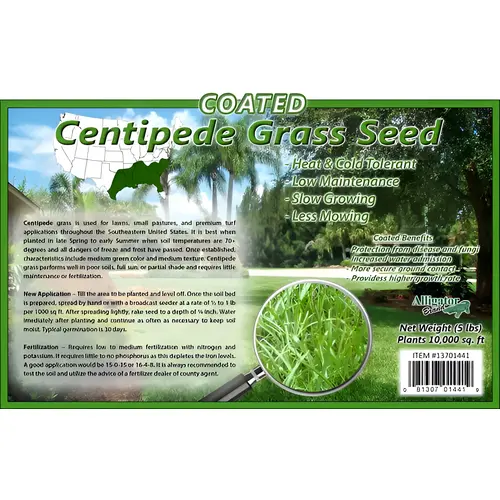
Centipedegrass is a slow-growing warm-season turf for homeowners who want fewer fertilizer and mowing demands. It spreads by stolons and forms a coarse, light-green lawn. It is a poor choice for play areas or paths that take regular foot traffic. Choose it for a yard where you want a lawn with limited maintenance, then give the seedlings time to establish before walking or mowing across the area.
Seed in late spring
Plant after frost danger has passed, when soil is warm and the forecast supports several months of growth. Centipedegrass seed germinates slowly, so plan for a longer establishment period than fast-spreading grasses. Prepare a clean, level seedbed and distribute seed evenly. The small seed is easier to spread evenly when mixed with a dry carrier such as sand. Keep the surface moist until the seedlings appear, without washing seed into low spots.
Match the lawn to the site
Centipedegrass does well in acidic, sandy soils and tolerates partial shade, but heavy shade weakens it. Avoid compacted or poorly drained ground. A soil test can help prevent unnecessary fertilizer, especially phosphorus. Too much fertility can create maintenance problems and encourage thatch. If a yard has deep shade, frequent foot traffic, or soil that stays wet, choose another turf or ground cover.
Mow lightly while it fills in
Wait until the new stand is rooted before mowing. Once established, centipedegrass grows slowly and needs less frequent cutting than many turf types. Keep the mower blade sharp and avoid scalping the lawn. Seed can take two to three weeks to germinate, followed by several more weeks of establishment. Keep the soil lightly moist during that period, and use weed-free mulch on sloping ground to limit seed washout after heavy rain. If the lawn struggles, test soil pH before changing fertility; this grass is adapted to acidic soil and excess nitrogen can cause lasting problems.
Give seedlings time to establish
Centipedegrass grows slowly, so a thin early stand does not mean the planting has failed. Avoid heavy traffic while seedlings root and spread. Centipedegrass seed is very small, so mix it with a dry carrier such as sand to spread it evenly. Coated seed requires more material than uncoated seed to supply an equivalent seed count. The coating makes the seed easier to handle, but it does not remove the need for a prepared bed, regular moisture and weed control.



 Ask Daisy