Add cool-season forage or temporary green cover while warm-season pasture is dormant.
Keep pasture growing through cool weather
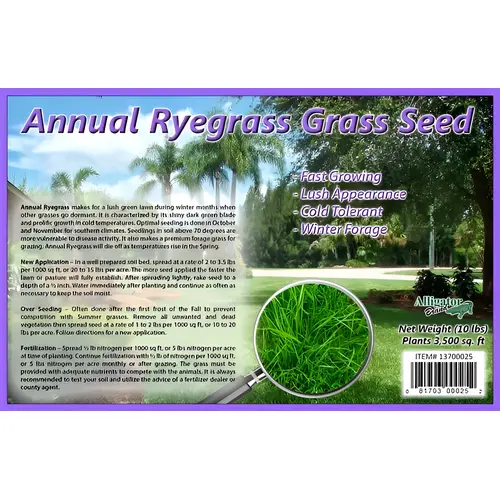
Gulf annual ryegrass is a cool-season forage that can supply grazing when warm-season grasses slow down. It can also be used for hay or silage. The annual stand provides temporary cover through fall and winter, then declines as temperatures rise. This makes it useful for filling a seasonal forage gap, not replacing a permanent pasture grass.
Plant for fall establishment
Seed after summer heat begins to break, while enough mild weather remains for the plants to root before winter. Prepare a clean seedbed or overseed an existing pasture with good soil contact. Keep grazing pressure light until the stand is established. A soil test can help set fertilizer needs, and timely nitrogen may support forage growth where the field requires it.
Use the crop as forage
Annual ryegrass grows leafy and can recover after grazing when plants are not repeatedly grazed too short. Wait until a new stand is about 8 to 12 inches tall and resists a gentle pull before livestock enter. In the vegetative stage, graze down to 2 to 6 inches and allow several weeks for recovery. For hay or silage, cutting around boot to early heading balances harvest with regrowth. Pairing it with a warm-season pasture can extend the grazing calendar, but avoid grazing wet soil hard enough to damage the underlying sod.
Plan for a temporary stand
Because this is an annual grass, plan how the field will transition in spring. It may reseed if seed heads mature, though that may not fit every pasture plan. For overseeding, clip or graze the warm-season sod short enough to reduce competition, then make sure seed contacts soil rather than lodging in old grass. As spring temperatures rise, ryegrass can shade bahiagrass or bermudagrass as those perennial stands resume growth. Graze or cut the annual before it suppresses the summer pasture. Leave enough recovery time for the permanent grass to regain vigor.


 Ask Daisy