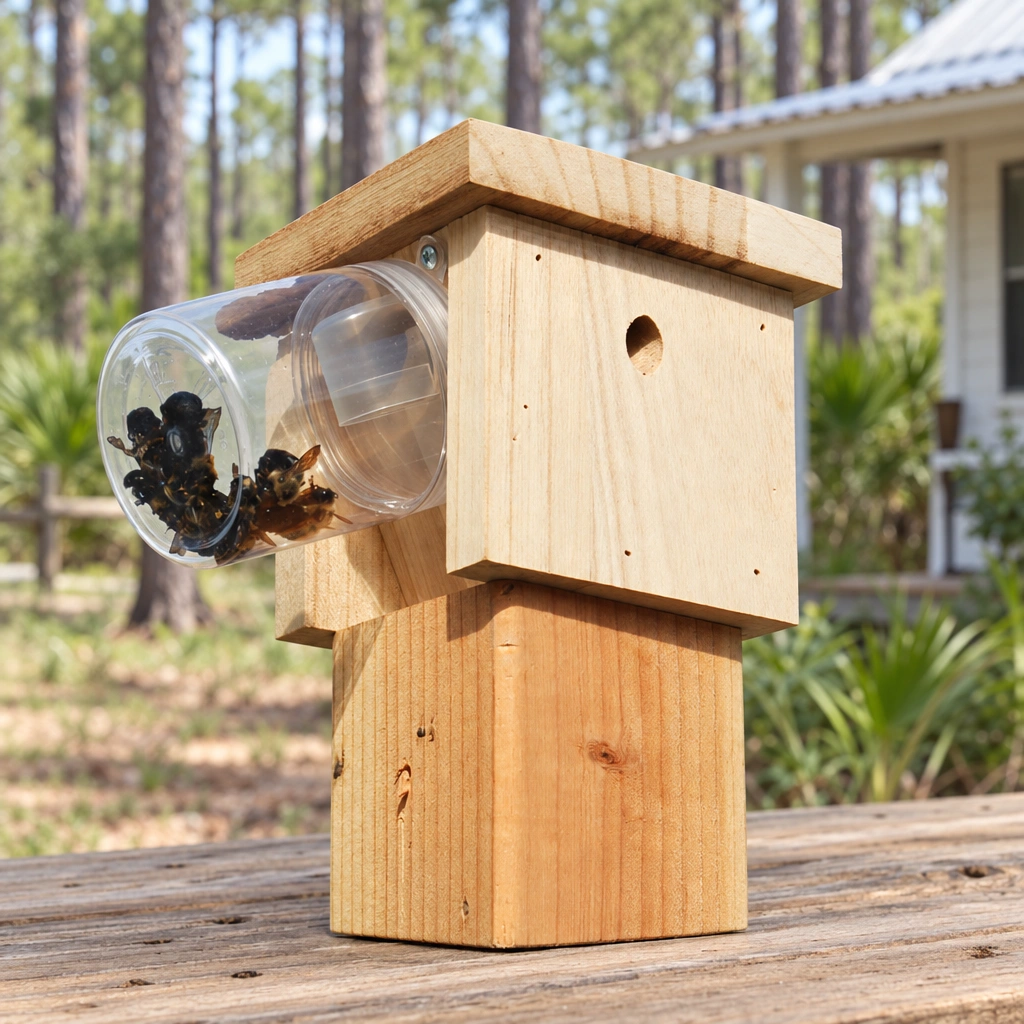
An angled-entry wooden trap with a detachable jar for mounting, hanging or setting near carpenter bee nest sites.
A birdhouse shape with a separate job
The AST trap uses a wooden birdhouse-style body with a detachable jar. Carpenter bees enter through angled openings and are directed toward the collection jar. The jar unscrews for removal, so checking the catch does not require taking down the whole trap. This design differs from a simple box with an internal chamber and from traps made for a single mounting position.
Choose the placement that fits the structure
An AST can sit level on the ground, hang from a tree, or attach to a wooden structure. Place it within 5 to 15 feet of likely nest sites, such as untreated wood where carpenter bees are already drilling. Choose a position where the entry holes are visible to approaching bees and where the trap will remain steady. Avoid a spot where people routinely brush against the hanging or mounted body.
Use the detachable jar for checks
The clear collection jar makes it possible to see whether insects have entered. Unscrew it to inspect or empty the catch, then attach it securely again. The maker’s guidance notes that AST traps can be set, hung or mounted; the mounting choice should keep the body stable and accessible for jar checks. If the jar is difficult to reach, choose another position before the season becomes busy.
Match the trap to the job
AST is the flexible choice when placement options matter. A BM trap is designed to mount flush against wood and uses a plastic catch jar. The STND trap can sit or mount near a nest site, with a separate internal chamber and access door. Those different layouts affect where each type fits. Choose AST when a detachable outside jar and the option to hang or set the unit are useful.
Good to know
Carpenter bees excavate wood to nest, so locate existing activity before choosing a trap position. The trap imitates a nesting cavity and channels arriving bees into the jar. Keep it near the affected structure while leaving room to inspect and unscrew the jar. Do not treat the trap as a general flying-insect catcher; its entry arrangement is built around carpenter bee behavior. Check the body and jar connection during use, especially after weather or repeated handling, and return the trap to a stable position after emptying.
Product details
AST angled-jar carpenter bee trap. Wooden body with angled entry holes and detachable clear collection jar. The matched dealer unit is one trap. Retail GTIN is left blank because a separate four-pack dealer listing reuses the same UPC.
Directions for use
Set level, hang, or mount to a wooden structure. Position within 5 to 15 feet of potential nest sites. Keep the unit steady and the jar accessible for inspection. Unscrew the jar to inspect or empty it, then reattach it securely.
Cautions
Use the trap only for its intended carpenter-bee application. Keep it stable and place it where routine traffic will not strike it. Follow the maker’s current placement and handling guidance.

 Ask Daisy