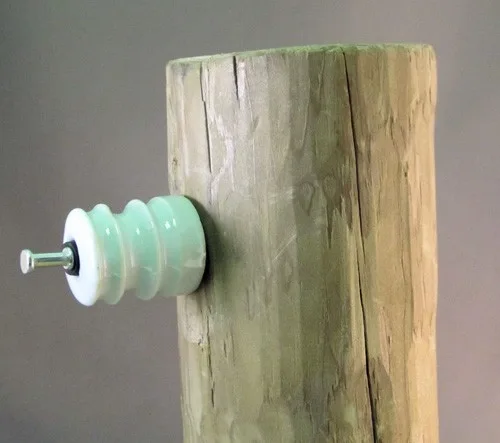
A wire that touches a wood post leaks its charge into the wood, and a fence that leaks is a fence that stops working. These Red Snap-R knob insulators hold the wire out from the post, so the charge stays on the line where your stock can feel it.
The knob style sets the wire out where it belongs, and the nails are included, so a sagging run or a pulled wire takes minutes to fix. The raised boss makes removal easy when you need to move a wire or swap out an insulator.
Highlights
- Holds electrified wire off wood posts
- Keeps the charge in the wire
- Nails included for the repair
- Raised boss for easy removal
- Reusable, made for thin gauge steel wire
At a glance
| Type | Wood post insulator |
|---|
| Style | Knob |
|---|
| Fence type | Electric |
|---|
| Mounting | Wood posts |
|---|
| Includes | Nails |
|---|
| Use | Fastening electrified wire |
|---|
What it's for
Wood post fences are the traditional fence on many farms, and the insulator is what makes them work. Put these on line posts and lane fences where a wire needs to stay clear of the wood, and use a corner insulator where the line turns. They're the everyday part of keeping livestock where they belong.
Keep a handful in the truck for pasture repairs. A tree limb, a loose staple or a gate swing can pull a wire off a post, and a spare insulator gets the line back in service the same afternoon.
They're economy insulators, which makes them the practical pick for everyday fence work. Use them where the wire is thin and the posts are wood, and you'll have a fence that holds.
How to use it
- Hold the insulator against the post where the wire needs to sit, and drive a nail through it or fasten it with a J-bolt.
- Set the wire in the knob, pull it snug and check that it sits clear of the post.
- Test the line after the repair to see that the charge is back.
Good to know
- Keep a few in the barn and a few in the truck, so a broken insulator doesn't wait for a trip to town.
- Pair them with a fence tester or a fence voltmeter to check that the line is hot after a repair.
- Replace cracked insulators before they drop voltage down the line.
- For a loose insulator on a wood post, reseat it with one of the included nails.
About Zareba
Red Snap'r insulators go back to 1952, when North Central Plastics in Ellendale, Minnesota set out to replace porcelain fence insulators with plastic. The line is part of Zareba today, a name in electric fencing for more than 75 years.
Cautions
Note: Not for use with low-impedance fencers. Not for use with high tensile fencing.
Pick up a few before the next wire pulls loose.

 Ask Daisy