Driving fence staples by hand is slow, sore work. A hammer misses, bends staples and tires the arm long before the fence is done. The ST400 pneumatic staple gun drives 9-gauge barbed staples into wood posts at three per second, so you spend the day stretching wire instead of swinging a hammer.
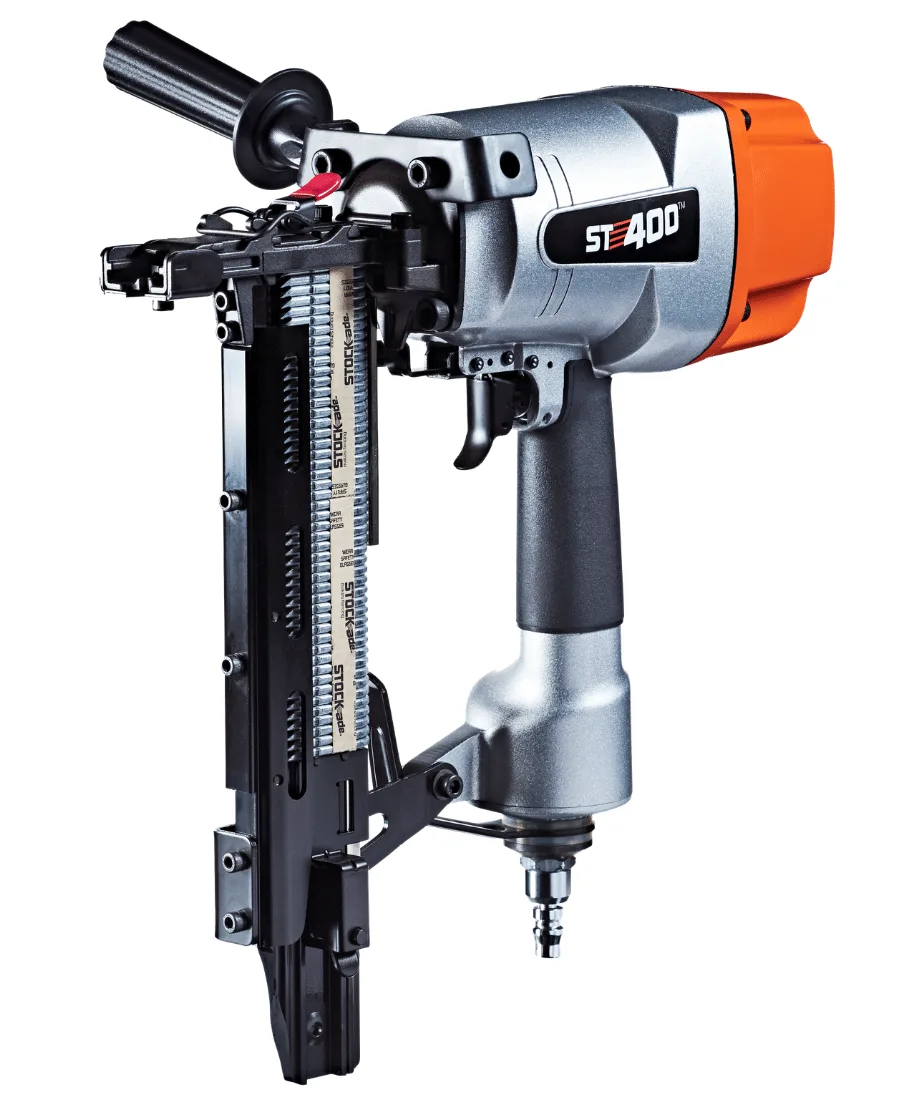
It's built for high-volume fence building and repair. Set the depth you want, and the custom nose locates the wire for a steady, consistent drive. The top-load magazine holds 50 staples in two strips, the air deflector sends discharged air away from you, and the swivel coupling lets the hose follow you down the line. It's heavy-duty rural fencing gear, and it works with the Power Staple Insulator Guide Attachment for electric fence on wood post claw insulators.
Highlights
- Drives 9-gauge barbed staples at three per second
- Adjustable depth and power for varied timber
- Top-load magazine holds 50 staples in two strips
- Custom nose locates the wire
- Sequential trigger for operator safety
- Swivel coupling and adjustable air deflector for comfort
Why use a pneumatic stapler on fence work
A pneumatic tool drives every staple to the depth you set, and that's the part that's hard to do by hand. A staple driven flush holds the wire firmly. A staple driven too deep can crush the wire or split the post. A consistent drive means straighter fence and fewer staples to pull out and redo.
It's the right tool for a long fence line, a new paddock, a run of predator fence or a stretch of repairs after a storm. The time you save on a long run adds up quickly, and the job is far easier on your arm than a day of hammering.
Hard, dense timber takes more power than soft wood. This gun has an adjustable power setting, so you can match the drive to the post in front of you. If you build or repair fence on your own place, a stapler like this saves the most time on the first long run and on every one after it.
At a glance
| Construction | High-impact, corrosion-resistant steel |
|---|
| Tool weight | 8.15 lb |
|---|
| Staple diameter | 9 gauge |
|---|
| Staple finish | Hot-dipped pre-galvanized, 90% zinc and 10% aluminum |
|---|
| Staple lengths | 1 1/2, 1 3/4 and 2 in |
|---|
| Magazine capacity | 50 staples (two strips) |
|---|
| Cycle rate | 3 staples per second |
|---|
| Operating pressure | 90 to 120 psi |
|---|
| Air hose fitting | 3/8 to 1/2 in |
|---|
How to use it
Set up the air supply first, then the depth, and test on scrap wood before you start down the line. Run the middle of the pressure range for most posts, and step up for hard timber.
- Connect the air. Use a 3/8 to 1/2 in air hose fitting, and keep the hose clear of the work so it doesn't snag.
- Set the pressure. Run between 90 and 120 psi. The optimum range is 98 to 105 psi, and hard timber calls for 110 to 120 psi.
- Set the depth. Drive a test staple into a scrap post, adjust the depth until it sits where you want it, then start the line.
- Load and reload. Slide in a strip of staples, and reload from the top when the magazine runs low. Carry a spare strip to the fence line.
Good to know
- A compressor and hose have to keep up with the tool. A small compressor with a long hose can run slowly, so match the setup to the job.
- Pair the gun with Stockade's paper-collated 9-gauge barbed staples, the strips this magazine loads, so you're never stuck mid-line.
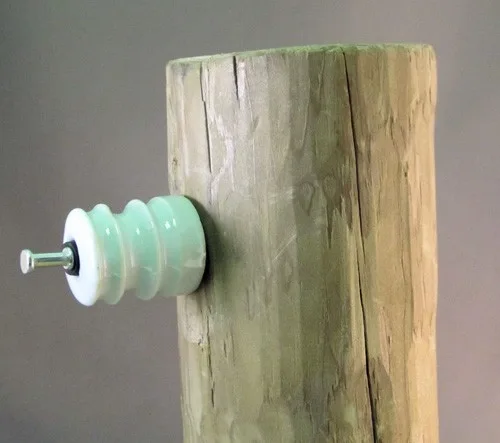
- For electric fence on wood post claw insulators, the Power Staple Insulator Guide Attachment lets you erect the fence with the same gun.
About Stockade
The Stockade fence stapler story starts in 1998, when engineers devised a power-nailing technology for rural fence work. By 2007 the team was working with professional fencing contractors and farmers to build a stapler that could be trusted in the field, and the ST400 is part of that line.
Cautions
READ ALL SAFETY INSTRUCTIONS
Get the gun and a box of Stockade 9-gauge collated staples on the same trip, so the fence line starts the day you get it home.


 Ask Daisy